We use cookies to provide you with a better experience. By continuing to browse the site you are agreeing to our use of cookies in accordance with our Cookie Policy.
By building trust, communicating strategy clearly, approaching difficult decisions with care and investing in employee capabilities, organizations are better positioned to strengthen performance, adaptability and long-term growth.
In this industry, results are earned on the front lines: deliveries, customer relationships, safety and service all depend on people.
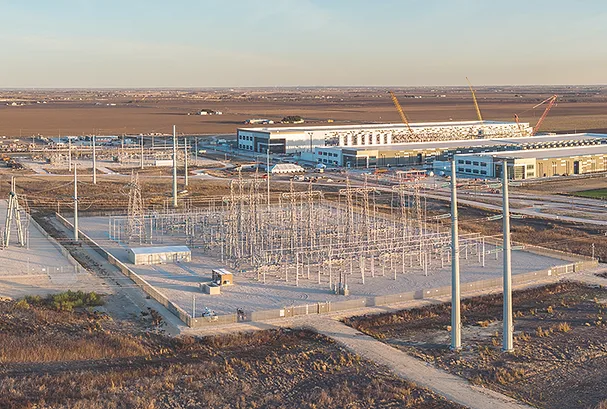
As hyperscalers press ahead with hundreds of billions of dollars in planned U.S. projects, the sector faces mounting constraints from permitting resistance, state-level reviews, grid capacity limits and tightening power-equipment supply.
The data center surge remains the single most powerful driver of industrial spending worldwide as it enters the back half of 2026.
Rising crude-oil volatility, refinery constraints and major pipeline and data center investments are reshaping demand across construction and energy markets.
Renewed tensions in the Iranian-U.S. war resulting from Iranian strikes on U.S. vessels in the Strait of Hormuz and retaliating strikes on Iranian assets have exacerbated crude-oil pricing.
When implemented correctly, the system creates transparency across teams, improves the customer experience and helps sales leaders make faster, more profitable decisions.
CRM is meant to create efficiency. However, when every department uses it in their own way (or not at all), it has the opposite effect.
Perspective, perceptiveness, pioneering and persistence help people and companies build strong relationships, notice important signals and opportunities, keep innovating and stay committed to continuous improvement over time.
If you have been following our reinvention-based series of columns here in The Wholesaler, I have surely been trying to drive home the point that the competitive landscape could not be more different than what it was only a short time ago.
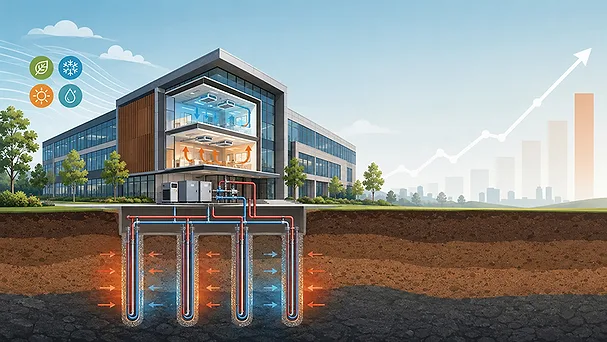
While upfront costs and site-specific considerations remain challenges, the long-term benefits in efficiency, reliability and environmental impact position these systems as a cornerstone of future-ready building strategies.
Increased energy costs have driven HVAC designers to consider the implementation of other, more efficient systems to lower operating costs.
Volunteering gives engineers a voice beyond their technical work — building leaders,
shaping policy, strengthening professional communities and advancing the future of plumbing engineering.
Engineers are trained to solve problems. We calculate, analyze, design and develop systems that make our communities safer and improve everyday life. Yet some of the most meaningful work engineers do never appears on a set of construction drawings.