We use cookies to provide you with a better experience. By continuing to browse the site you are agreeing to our use of cookies in accordance with our Cookie Policy.
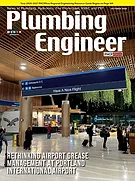
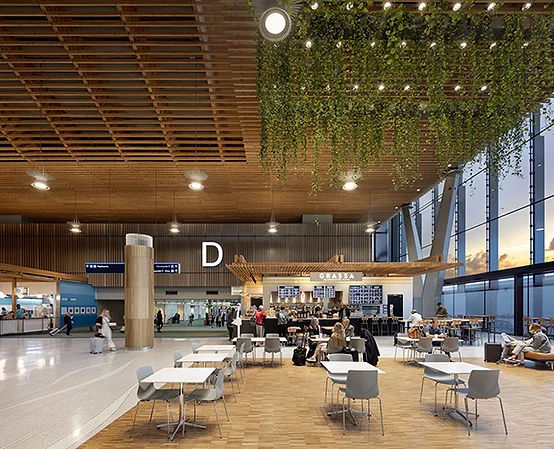
Portland International Airport’s chronic grease-management problem became an opportunity to rethink how food-service waste moves through complex terminal infrastructure and to develop a cleaner, more reliable approach suitable for 24/7 operations.
Portland International Airport, owned and operated by the Port of Portland, had a systemic grease problem across its food concessions.
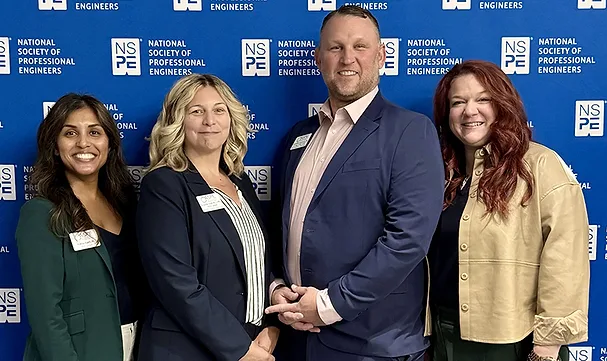
Volunteering gives engineers a voice beyond their technical work — building leaders,
shaping policy, strengthening professional communities and advancing the future of plumbing engineering.
Engineers are trained to solve problems. We calculate, analyze, design and develop systems that make our communities safer and improve everyday life. Yet some of the most meaningful work engineers do never appears on a set of construction drawings.
For plumbing contractors, the real promise of AI is not automation for its own sake, but a better way to preserve job knowledge, improve estimating and build smarter internal tools.
When people talk about artificial intelligence (AI) in construction, they jump straight to the shiny stuff: the robots, the automation, the blueprint-reading software, and the latest pitch that makes it sound like the trades have been standing still while everyone else has discovered the future.
This preventive alternative to traditional water-based fire protection continuously maintains oxygen levels low enough to limit fire spread, making it especially suitable for tightly enclosed, highly automated freezers with limited occupancy.
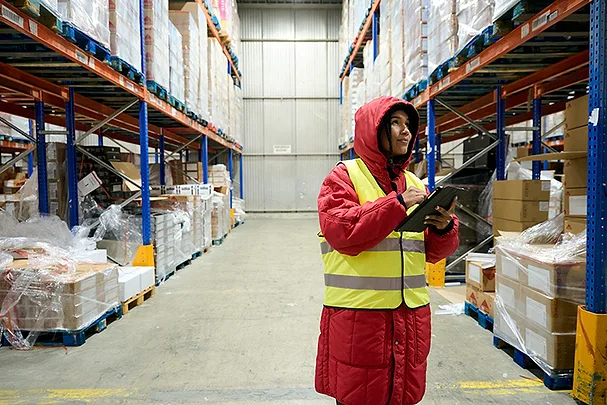
Cold storage warehouses present significant challenges for conventional water-based fire protection systems due to large quantities of combustible commodities, high-bay rack storage and complex storage arrangements.
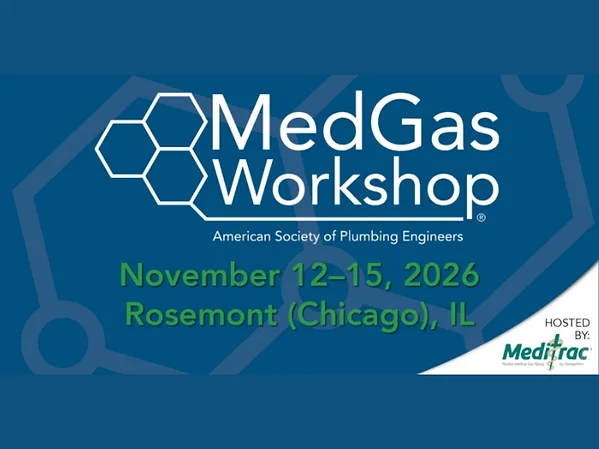
ASPE’s MedGas Workshop is set for Nov. 12–15, 2026, at its Rosemont, Illinois, headquarters, just minutes from O’Hare Airport and within walking distance of several hotels.
Guszcza brings more than 25 years of experience in the built environment spanning the public, private and nonprofit sectors in the U.S., UK, Europe, Middle East and Africa.
Hydronic systems can deliver superior comfort and energy performance, but first-cost concerns limit adoption. Single-pipe and integrated piping approaches show how proven technology can reduce materials, simplify design and make hydronics more competitive.
You can enjoy the best comfort, the lowest energy costs and a competitive first cost. That may sound too good to be true, but with creative hydronic system design it is more than possible — and it has been demonstrated for more than 50 years with proven results.