When Kristin Doerrer joined Cox Engineering, Randolph, Massachusetts, as vice president of marketing in May 2025, she came carrying a résumé built on consumer brands — footwear launches, athletic gear, the kind of content that fills Instagram feeds and drives retail clicks.
Now she was being asked to market … a mechanical contractor? As it turns out, however, the playbook isn’t so different.
“I get asked the question all the time,” Doerrer says. “How does my experience translate into mechanical construction marketing? Although consumer products are different than what I’m now marketing and trying to raise brand awareness for, the tactics and the approaches are very, very similar to my past experiences.”
What drew Doerrer to Cox in the first place was, in part, what she saw already happening on the company’s social media channels before she arrived. That was the work of Alyssa Nelson, Cox’s social media and content manager. Two years earlier, Nelson was handed a camera and told “to get creative,” as she puts it.
Together, and with the enthusiastic backing of CEO Jon Desmond, the two women have built something rare in the mechanical contracting world: an old-school union PHCP mechanical shop that is genuinely fun to follow online.
Built for the small screen
Cox includes the typical mechanical construction, prefab and precon operations, process pipe, plumbing and a service division. Its sister brands include Cambridgeport and recently acquired Starboard Controls. Combined, the entities employ around 900, including a unionized workforce affiliated with Local 537, Local 12 and Local 17 working job sites throughout the region.
That spread-out workforce presented a communications challenge. Before social media took hold, internal communication at Cox was, as Doerrer puts it, “functional and effective,” but also very much top down.
“It was mostly, ‘Here’s what’s happening in the business,’ or ‘This is what HR needs you to do,’” Doerrer explains. “There wasn’t really that strong sense of visibility or connection across teams and job sites and offices.”
Obviously, installers and service techs are anywhere and everywhere except parked in front of a computer terminal.
“We felt it would be a really good way to create a sense of pride and shared identity,” Doerrer says, “if we were able to make employees out in the field see themselves reflected in what’s happening across the company.”
Nelson was the first person hired specifically to run social media at Cox, and her origin story says something about the way a new generation is beginning to find its way into the trades. Her father has spent his entire career in the sheet metal union, but she admits she never really understood what that meant until she started working at Cox.
A business and organizational communications major with a social media marketing minor, she had tried other work after college before her aunt, a Cox employee, forwarded her a job posting for a social media manager.
When Nelson walked into the job it was just her and one other person on the staff. Her first instinct was not to start filming and posting content. It was to start learning.
“My marketing brain went right to a marketing basic: Learn the brand,” Nelson adds. “Social media is all about how you want your brand to be perceived. So my first task was to learn about the people who I would be working with every day — to be out on a jobsite so that I can take that message and put it out to the world.”
Nelson spent months building relationships on job sites and in the shop.
That patient groundwork paid dividends since this isn’t the usual environment to show up with a camera.
“A huge part of what Alyssa originally did was she built up trust with everybody,” Doerrer adds. “When she first started, there was a pretty big hill to climb in terms of getting people to see the value of social media. You have these guys that are working all day in the shop or out in the field — they don’t want a camera in their face.”
Platform by platform
Cox is now active on Instagram, LinkedIn, and TikTok. For example, LinkedIn is treated as the professional showcase.
“The less trendy or funny content we don’t necessarily put on LinkedIn, “Doerrer explains. “It’s more what we’re doing as a company, employee updates and business initiatives.”
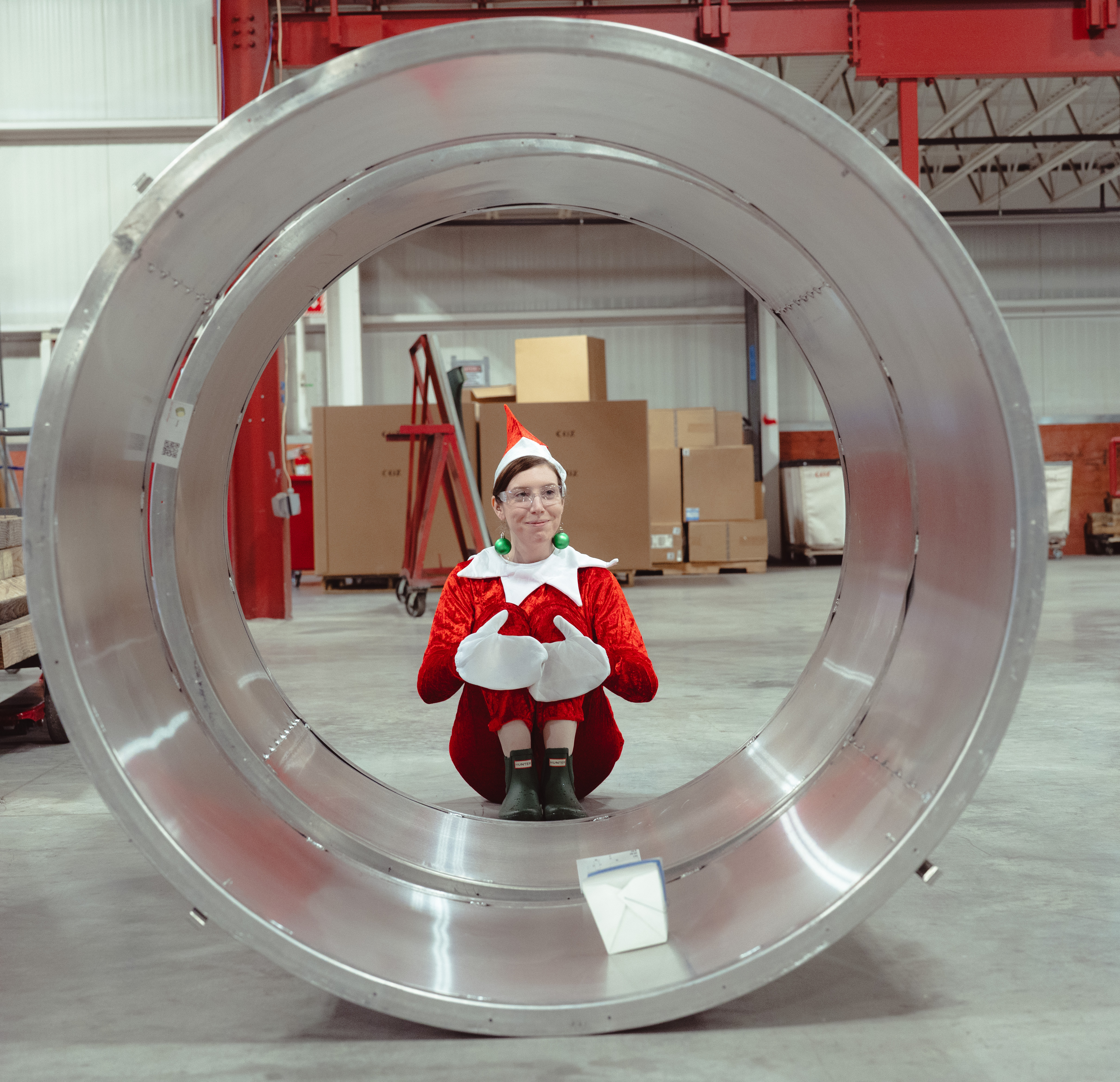
Instagram is described as a mix of everything: project showcases, employee spotlights, humor, and trending video formats. TikTok leans even further into the informal. Office pranks, a Christmas elf-on-the-shelf bit, a viral “We work at Cox, of course we … ” video. These Instagram and TikTok posts present a face of the company that no brochure could replicate.
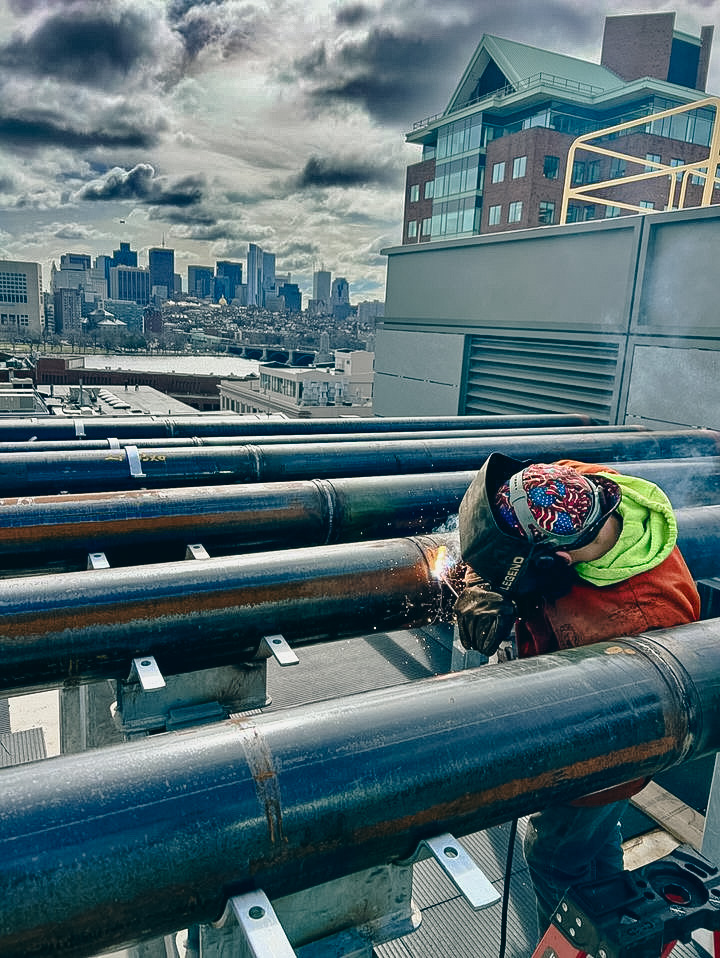
Nelson identifies the best-performing content as the kind that blends craft with personality.
“I think the best product I can put out there and that usually gets a lot of engagements is showing off the work we do, and then also showing off the people who work for us, and also may be getting a laugh in or two,” she adds.
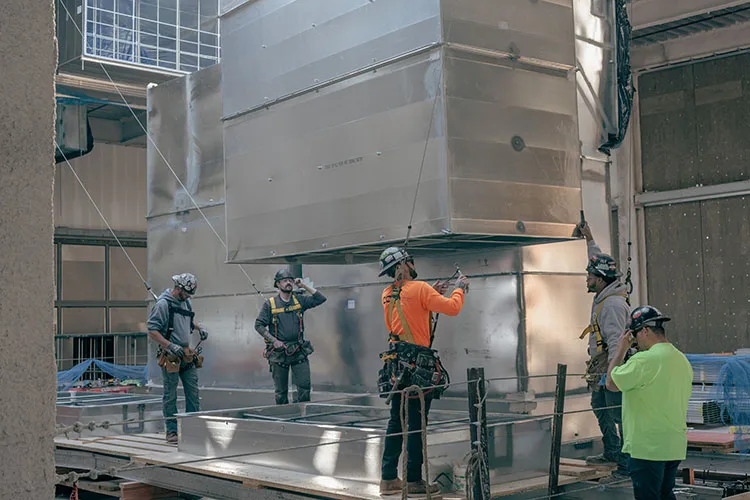
Specifically, among the most durable content formats has been video that’s the process of the work Cox does, from the blueprints to prefab and from job sites to completed installations.
“A lot of those do really well because people love to see how we do our work,” Nelson says. “People are nosy on the internet. They want to see what we do.”
These behind-the-scenes glimpses of skilled, technical work serve a dual purpose: they demonstrate the company’s culture to potential employees and its competence to potential clients.
Instagram as recruiting tool
Ask many PHCP contractors where the next generation of workers is coming from, and the answer is often a shrug of the shoulders. At Cox, social media has become part of the answer.
Desmond, who currently leads the third-generation family business, was initially skeptical that Instagram reels had any place in the usual business-to-business marketing strategy.
“At the time, I thought LinkedIn was the only thing we should be spending any time or effort on,” he admits. “I was confused where we’d get any value from it.”
That view, however, quickly changed. Desmond not only saw the value in the promoting Cox through social media, but also saw how it helped attract the next generation of skilled tradespeople.
“I realized and appreciated that such a huge part of our success has been building a really strong culture and recruiting people,” Desmond explains. “When you have a company with 900 people, they all like seeing themselves on social media.”
And when a company is recruiting people of a new generation, Instagram is probably the first thing they’re going to go check out.
“I bet you we have people we’ve hired that have never even seen our website,” Desmond adds. “They go straight to Instagram.”
A decade ago, that wasn’t the case. The first place someone interested in working at Cox would be to checkout its website.
“But now people go to Instagram and if they see the cool projects we’re doing, but then also see dogs running around the office,” he adds. “There’s a lot of fun here that everyone can see on social media. I think it’s a big advantage.”
Nelson hears it firsthand.
“When people start working here and meet me,” she explains, “a lot of them say they decided to apply to Cox because of the care they see on our posts in the work done in the field. Or maybe it’s because they saw these goofy girls just walking around the office and figured a lot of our work reflects well off the people who work here.”
Doerrer frames it as a transparency play. Younger workers entering the trades want to see the reality of the job and work environment before they commit.
“They really want to see what the job actually entails day to day,” she adds. “They want to know more about the people they’re going to workwith, what the office feels like, what type of personalities they’re going to interact with. Social media really allows us to showcase a real potential career path, the technology we use, the job sites we’re on, and most certainly our culture.”
CEO’s buy-in
Desmond actively engages with what his team puts out and regularly texts thanks-yous to anyone who appears in a video. That kind of C-suite congratulations signals to everyone at Cox that the social media effort, which many can easily not take seriously, is, in fact, taken seriously at the company.
His case for social media as a business development tool is also clear-eyed.
“When you spend enough time building a brand as we’ve done,” he says, “there’s no way that decision-makers at our clients’ offices aren’t seeing our social media efforts. Maybe they don’t make major dollar decisions just off of an Instagram reel, but that Instagram reel keeps us front and center. And when we do good work, it’s just another thing that reinforces what the company and the brand are all about.”
He is also candid about what Nelson navigates every day. “Construction’s a rather male-dominated industry,” Desmond says. “She fits in with all the guys. She can talk to them about anything, get them excited about what they’re doing. It’s been really great to watch her work really hard and come up with something cool that gets all the buy-in from the teams, because they respect what she does a lot.”
What’s next
The team is formalizing what has largely been a responsive, agile effort into something more deliberately planned. Doerrer and Nelson now meet regularly to map out posting calendars, coordinate around company milestones, and manage separate channels for Cox and Cambridgeport.
But for now, Cox’s channels are growing, employees are engaged, and candidates are showing up to interviews because of what they likely saw on Instagram. And all because a company whose work is largely hidden below the floors, inside walls and above the ceilings is finally getting seen on what many people would have thought not that long ago would be the most unlikely place to showcase PHCP expertise.
“The people who work here are the smartest people I’ve ever met in my life,” Nelson says. “Either in the office or in the field. I just love being able to show it off.”