We use cookies to provide you with a better experience. By continuing to browse the site you are agreeing to our use of cookies in accordance with our Cookie Policy.
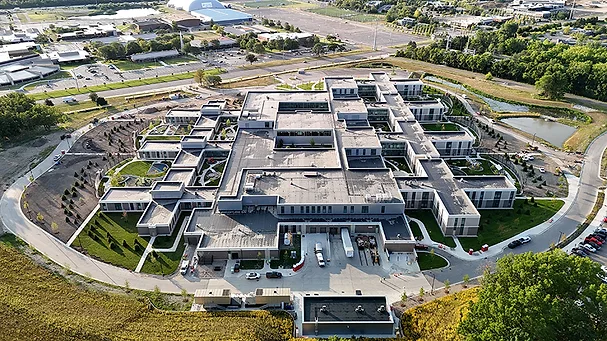
Sized above code and built with redundancy, Fuse at Mason Square shows how plumbing systems can prepare buildings for a wetter, less predictable climate future.
For most plumbing engineers, designing water systems means designing to code.
The new reference kits simplify engineering, help reduce redesign risk, and help accelerate deployment for high-density AI factories and data center projects.
This the association’s annual recognition of the contractors, service managers, and volunteers whose work sets the standard for professionalism in the HVACR industry.
APM Steam’s Heat Exchanger Assessment and Testing Service helps facilities identify leaks, prevent costly failures and optimize energy efficiency through proactive inspection, pressure testing and maintenance.
The partnership will support Winsupply’s growth in the Southern California market where it has nearly two dozen local companies operating under local ownership.
From domestic supply to RODI systems, effective laboratory water design requires separation from domestic systems, backflow protection and water treatment strategies that support equipment reliability and repeatable research outcomes.
Water use in laboratories is fundamental, as professionals rely on it while searching for solutions or answers through experimentation and research.
The Hurricane Helene recovery effort underscores the importance of infrastructure solutions designed for durability, repairability and resilience — including precast concrete systems
Selecting the right pressure boosting system for commercial, industrial and municipal applications goes beyond comparing common specifications. Here are six best practices to consider.
One of the biggest challenges for professional engineers, distributors and contractors is low or non-existent water pressure in busy spaces.
As HVAC systems become more advanced, sound fundamentals, clear controls and simple design choices remain the best path to stable, efficient systems.
In the HVAC industry, it’s easy to feel like everything is becoming more advanced and more complicated. Building automation systems (BASs) are more capable.