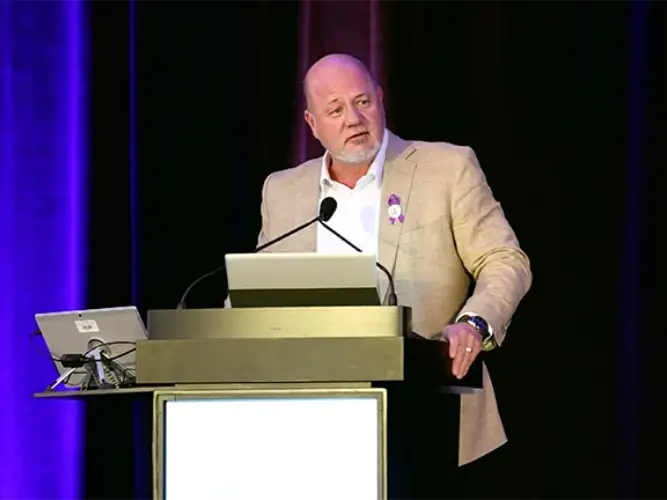
The first-ever UA-MCAA Mental Health Summit, held Oct. 18-21 in Washington, D.C., brought labor and management together around a shared goal: making mental health and well-being an integral part of workplace safety and health.
For MCAA President Curtis Harbour, the summit represented an opportunity to build on the industry’s progress in physical safety.
“We’ve made huge progress in physical safety, and we now have the opportunity, the awareness, the support, the desire to make mental health, psychological health just as important as physical health,” Harbour said.
UA General President Mark McManus reinforced that commitment, emphasizing that mental health needs to become part of the industry’s ongoing safety conversation.
“You never stop talking about safety. You never stop talking about training. … We’re never going to stop talking about mental health,” McManus said.
That message was at the heart of the summit’s theme, “From Awareness to Action.” Rather than simply discussing the mental health challenges facing the construction workforce, the program focused on practical solutions, candid conversations and resources attendees could take back to their organizations, locals and jobsites.
The summit opened with a welcome from McManus, followed by a keynote from suicide prevention and mental health advocate Kevin Hines. Over the next two days, industry professionals and individuals with lived experience addressed some of the most difficult issues facing the construction workforce.
Sessions explored recognizing and responding to signs of mental health distress, suicide prevention and postvention, substance use awareness, Narcan administration, employee assistance programs, peer ally programs, leadership’s role in supporting mental health and treatment resources.
The emphasis throughout was on turning awareness into action. Programs including VitalCog, peer ally initiatives, EAP strategies, Hard Hat Courage and the SAFE Project Wellness Workshop provided attendees with tools and approaches they could put into practice. An optional full-day VitalCog Train-the-Trainer program also prepared participants to bring mental health awareness training back to their organizations.
Harbour encouraged contractors and labor leaders to continue that work after leaving the summit.
“What we do with this from here is what’s going to make the difference,” Harbour said. “If we take it home and do nothing with it, we’ve accomplished nothing.”
He also encouraged contractors and labor leaders to use mental health as an opportunity to work together and strengthen their relationships.
“I can’t think of a better subject to work on jointly that would be more meaningful and impactful,” Harbour said.