We use cookies to provide you with a better experience. By continuing to browse the site you are agreeing to our use of cookies in accordance with our Cookie Policy.
Innovative electric heating systems, such as heat pumps and sewage waste energy exchange, can enhance sustainability and efficiency in building design.
In their joint article, Anthony Winning and Lhymwell Manalo explore the growing shift from natural gas to electrified systems in modern buildings—highlighting the role of early coordination, heat pump technology, and innovative energy recovery strategies that redefine sustainability and resilience in 21st-century design.
Learn more about the key innovations that are currently driving the integration of sustainable plumbing practices.
From rainwater harvesting to geothermal systems and smart leak detection, John A. Mullen explores how cutting-edge plumbing strategies are reshaping sustainable design in 2025 to meet the challenges of climate change, efficiency, and public health.
I represent various industry players in construction contract negotiations and, invariably, at least one party wants a “waiver of consequential damages” clause in the agreement.
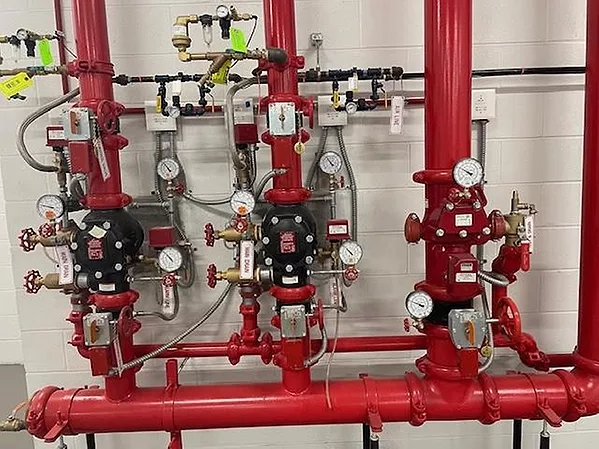
Coordinating drain locations and discharge points with plumbing
engineers and architects ensures water is safely diverted, preventing damage and maintaining system reliability.
Proper drainage is a critical yet often overlooked aspect of fire sprinkler and standpipe system design—Eugene Green, PE, explores essential coordination strategies to prevent water damage and ensure fire protection systems operate effectively when needed.
Building owners, operators or water management teams can use a checklist to develop a customized emergency flushing and disinfecting protocol or use it as part of a water management plan.
With Legionnaires' disease outbreaks on the rise across the U.S., building owners must act fast—this article outlines critical emergency flushing and disinfection steps to stop Legionella bacteria before it spreads.
Simplicity and durability of its product line and a team of dedicated employees and manufacturers’ reps are key to this organization’s successful business model.
The 173,000-square-foot addition nearly triples the size of the facility, creating new opportunities to expand production, enhance efficiencies, and continue meeting the rising demand for renewable energy technologies.