We use cookies to provide you with a better experience. By continuing to browse the site you are agreeing to our use of cookies in accordance with our Cookie Policy.
Through initiatives like Sewing Seeds of Hope and partnerships with
programs such as Days for Girls, the international group helps young women stay in school and gain skills for self-sufficiency.
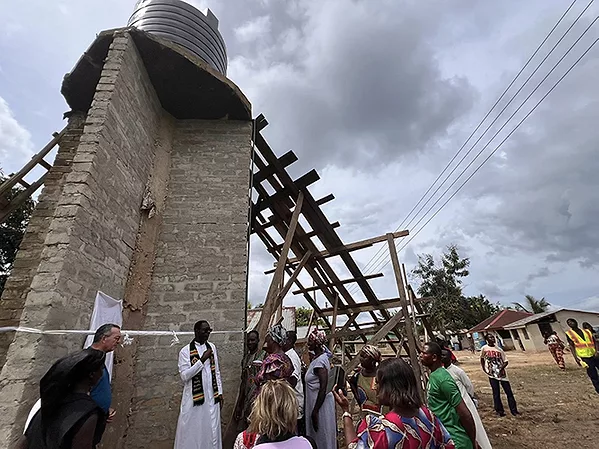
From building schools to empowering women and improving health care, Rotary International’s Ghana mission highlights sustainable education, economic development, and life-changing support for children and families.
Learn more about the key innovations that are currently driving the integration of sustainable plumbing practices.
From rainwater harvesting to geothermal systems and smart leak detection, John A. Mullen explores how cutting-edge plumbing strategies are reshaping sustainable design in 2025 to meet the challenges of climate change, efficiency, and public health.
The use of plastic pipe wins industry award for Waterline project.
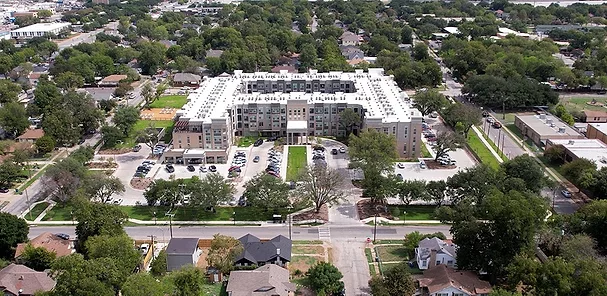
Austin’s tallest building, the 74-story Waterline, uses PEX and CPVC piping to boost energy efficiency, cut installation costs by 20%, and meet LEED Gold goals—earning Project of the Year honors.
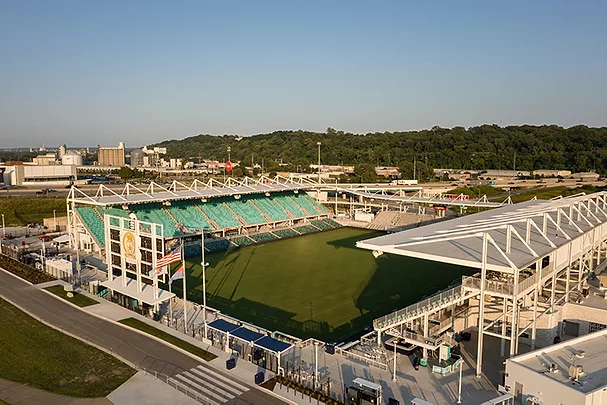
Teamwork and coordination during design and construction resulted in a widely celebrated venue listed on Time magazine’s World’s Greatest Places of 2024.
What does it take to build the world’s first stadium for a professional women’s soccer team? At CPKC Stadium, sustainable plumbing, smart drainage, and innovative design come together to redefine game day — and green building — in Kansas City.
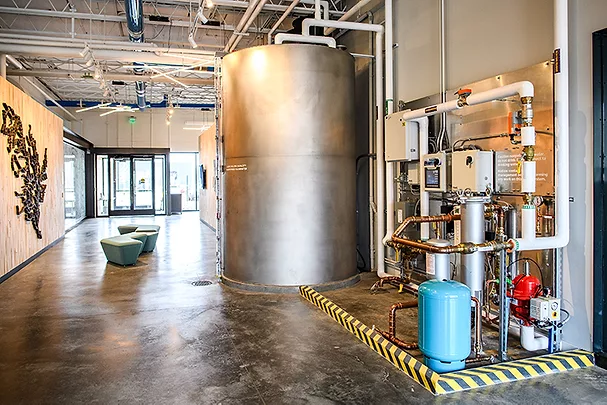
Sustainability and performance can go hand-in-hand when water is collected, treated and recycled throughout the life cycle of a building.
From stadiums to civic offices, cutting-edge rainwater reuse systems are transforming green plumbing from theory to reality—saving water, slashing costs, and reshaping the industry’s role in sustainability.
The project includes 321 vertical boreholes drilled nearly 500 feet deep, using advanced HDPE piping for efficient energy transfer.
The 1 Java Street project in NYC’s Brooklyn borough is the largest mixed-use development in New York state to incorporate a ground-source geothermal system for heating and cooling.
With far-reaching goals for providing a roadmap for water use in Living Buildings,
this project is an attempt to close the water cycle.
A contestant in the International Living Future Institute’s Living Building Challenge, the PAE building’s sustainable water management showcases a comprehensive approach to achieving net-zero water use while redefining traditional notions of waste and promoting a closed-loop water cycle within the building.
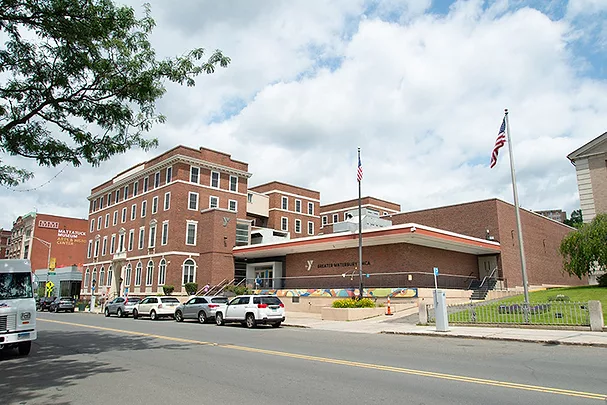
Installing water-efficient toilets in an affordable senior living complex results in savings that can be used in other parts of the community.
Discover how water-efficient toilets can provide cost savings for affordable senior living apartments that can be invested in other parts of the community for lifestyle amenities.