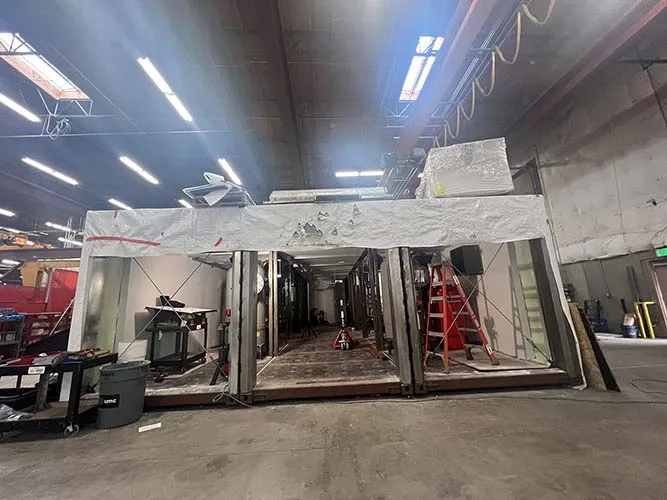
Off-site manufacturing (OSM) involves planning, designing, procuring materials and building a pre-defined scope of work in a controlled manufacturing environment, offering numerous advantages over traditional on-site construction. Many mechanical contracting companies have long engaged in fabricating plumbing and HVAC assemblies and skids.
Today, mechanical contractors embracing a manufacturing mindset have advanced by adopting the OSM approach, including prefabrication. Simply put, fabrication traditionally supports a construction project that mechanical contractors install. OSM transforms the building process into a fully integrated manufacturing operation, enabling tailored solutions for any client, anywhere.
In traditional fabrication settings, the field foreman is the primary customer, whose client is often the general contractor. In OSM, your customer base expands significantly to potentially include mechanical contractors, GCs or the project owner or building tenant directly. OSM is not limited to construction projects — you can manufacture anything, whether a single component of a project or a standalone skid.
Conventionally fabricated products are typically designed for on-site installation, tying the manufacturing process to the project’s location. With OSM, the separation of manufacturing and installation allows products to be shipped domestically, expanding opportunities beyond the local markets.
By mastering fabrication, optimizing costs and maintaining high-quality standards, mechanical contractors and subcontractors gain the expertise to “sell abroad,” working with a broader range of customers and extending their reach nationally, unlocking new possibilities for growth and collaboration.
The industry is undergoing a shift driven by increasing workloads, a limited skilled labor pool and OSM opportunities. Understanding the advantages of OSM over traditional construction methods is essential for builders and developers to remain competitive. By embracing OSM, mechanical contractors can enhance their value and push the boundaries of their scope, expanding capabilities beyond the construction market.
In OSM, the scope of the project is defined by the customer. In fabrication, often the scope can be elusive or ill-defined depending on company standards, who the foreman happens to be and how on-site conditions actively change whether the fab makes sense.
The key distinction with OSM lies in a mindset shift: treating fabrication not only as a value-added service for projects, but as a standalone business. This positions companies as builders or manufacturers, enabling them to leverage their expertise and accelerate their skills into a revenue stream, not only as a strategy for staying in business but to capture greater market share.
OSM benefits
Unlike traditional construction, where designs often require on-site execution, OSM establishes a predetermined scope, enabling seamless manufacturing and assembly. Early design integration allows manufacturers to produce prefabricated elements to exact specifications, minimizing errors and eliminating rework.
This approach promotes direct collaboration between the owner and the manufacturer, bypassing the typical inefficiencies of traditional construction, such as coordination meetings, requests for information and change orders. They are necessary for maintaining contract terms and chain of custody but often cause production lags. OSM simplifies communication, creating a precise and efficient connection where the owner engages directly with the builder for optimal cost, schedule and design alignment.
Aligning designs with manufacturing capabilities and project requirements reduces the likelihood of conflicts or delays.
By resolving design challenges early and directly, project teams can minimize errors by adopting a communication loop. Prioritizing design in the initial project stages maximizes OSM projects’ efficiency, quality and predictability.
With OSM, the work is completed in a controlled environment where variables such as labor, material procurement and production are tightly managed. Unlike on-site construction, which is subject to unpredictable factors such as weather delays, fluctuating material prices and labor shortages, OSM operates within a more predictable environment overall.
This consolidates essential activities such as coating, painting, testing and shipping into a streamlined process within the manufacturing facility. As a result, customers benefit from more succinct delivery, with every critical step completed and verified before the product leaves the facility.
Additionally, OSM offers a higher accountability standard than traditional construction by committing to predefined welding, cleaning, purging and testing procedures during the bid process, backed by quality control documentation. Traditional construction relies on post-production inspections to catch errors; OSM places greater responsibility on the manufacturer, delivering a superior and more reliable result for the customer and positioning OSM as a higher-value solution.
OSM mitigates risk for the owner by offering a more predictable and controlled process, effectively delegating technical details, responsibilities and subcontracting to ensure consistent quality and precision in production. Its controlled nature also allows for more accurate scheduling and resource allocation, reducing the risk of unexpected delays or budget overruns.
High-level benefits of OSM include:
Direct communication ensures clear requirements and faster decisions;
Defined scope enables fixed pricing, shifting risk to the manufacturer;
Reliable manufacturers provide and stick to an upfront schedule;
Manufacturers handle additional tasks, offering a complete, streamlined solution.
Harnessing mechanical contractor expertise
These days, many businesses are venturing into manufacturing what would traditionally be considered mechanical work. Still, the distinction between a pipe or fittings manufacturer, a distribution partner and a mechanical contractor is significant.
Only a mechanical contractor understands the demanding nature of welding specifications and dimensional tolerances, while also bringing a stable labor pool and the expertise to facilitate installation by considering all factors and limitations involved.
Mechanical contractors offering OSM stand out due to their unique blend of technical expertise, practical experience and project management skills. Unlike vendors and fitting manufacturers primarily focus on producing and delivering components, mechanical contractors oversee the integration of these elements into systems tailored to each project’s specific needs.
Their in-depth understanding of real-world project dynamics enables them to provide accurate estimates, reduce change orders and align manufacturing packages with design intent and on-site conditions. This holistic approach minimizes errors, enhances efficiency and ensures the success of OSM projects.
OSM role in the Bellingham District Energy Utility
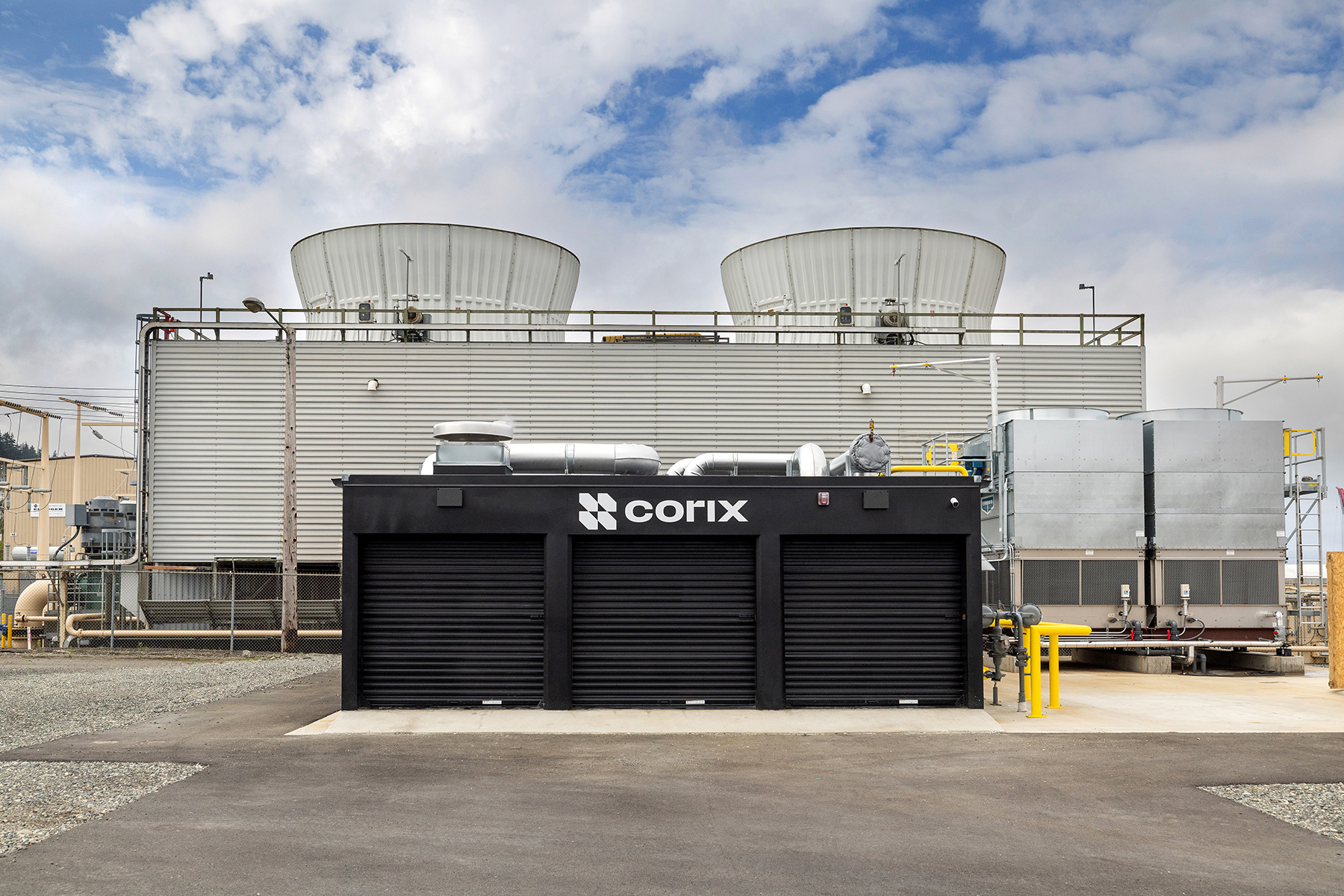
The Bellingham District Energy Utility (BDEU) is a groundbreaking project revitalizing the downtown Waterfront District in Bellingham, Washington. Spearheaded by Corix, the project enlisted mechanical contractor UMC (Lynnwood, Washington) to design and construct the district energy plant for the new, low-carbon district energy system.
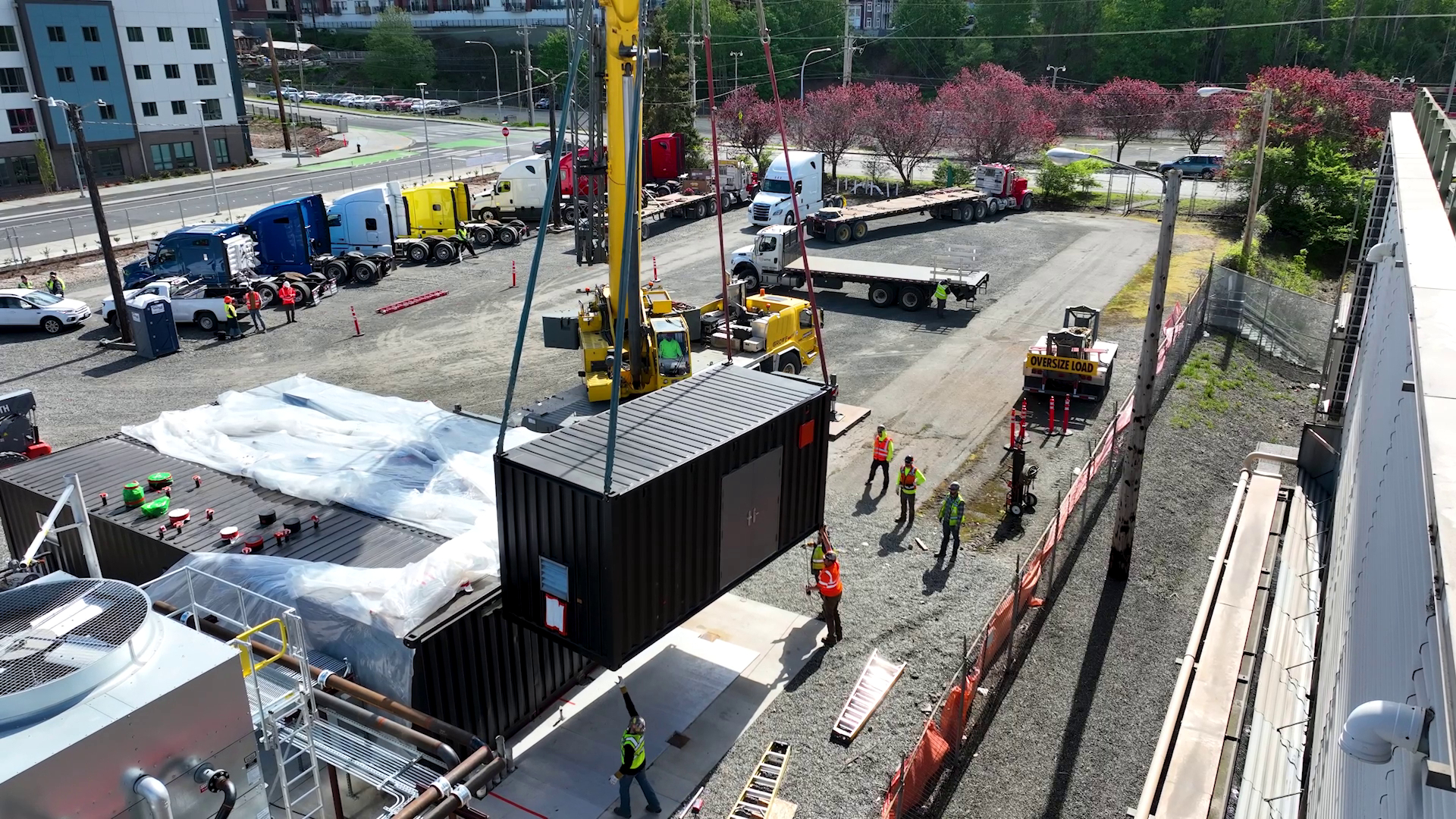
Building the district energy plant with reconditioned shipping containers off-site in UMC’s manufacturing facility allowed all the critical site work and infrastructure to be built simultaneously.
Once the completed units were built and equipped with all the piping, heat pumps and other systems needed to make the energy plant work, they were completely tested off-site and then delivered en mass to the site and installed to complete the district energy system.
Innovation and efficiency in modern construction
OSM is a significant advancement for the construction industry, particularly in projects like the BDEU. UMC’s expertise in manufacturing and the systems involved in district energy enabled it to integrate intricate systems with precision and efficiency. This showcased the method’s ability to ensure quality, reduce environmental impact and streamline timelines. Projects in all markets across the industry can benefit from the value of OSM.
Overall, OSM improves coordination between design, fabrication and installation, and raises the bar for what can be delivered to the field, setting a new standard for the industry. This approach is increasingly necessary for handling work in specific markets, as it transforms communication between teams by cutting through red tape and streamlining processes. OSM also provides significant certainty for owners, which is often lacking in traditional construction practices.
Whether the OSM packages are large or small, part of a larger construction project or standalone, the key innovation is that with a manufacturing contract, owners can know exactly what they are getting and when. This shift introduces a level of predictability and efficiency that transforms an otherwise slow and cumbersome industry.
Julianne Mattecheck serves as UMC’s off-site manufacturing sales lead. Over the past nine years, she has progressed through roles, including fabrication coordinator, project engineer, and fabrication and purchasing manager roles before stepping into her current role.



