One of the biggest challenges for professional engineers, distributors and contractors is low or non-existent water pressure in busy spaces. Low pressure creates serious challenges across applications, leading to uneven irrigation in agriculture, unreliable fire hydrants in municipalities and costly disruptions for commercial operations.
In each industry, the need for higher water pressure is the same; however the path to the right solution can vary. Commercial buildings, such as hotels and office complexes, often prioritize noise reduction and compact design due to space constraints. Hospitals and universities require systems that guarantee uninterrupted clean water supply for sanitation and fire safety.
Beyond these building types, municipal systems and large public facilities, like stadiums, demand multistage pumps capable of handling high flow rates and complex distribution networks. Fire protection systems require pumps that meet stringent reliability and compliance standards, often with backup power and redundant configurations.
In each of these examples, one size does not fit all. To find the right system for operational demands, it’s important to understand how a facility’s specific needs factor into pump selection, the capacity the system can accommodate, and the control features required.
Consider these six best practices to choose the right pressure boosting system for the intended application.
1. Start with flow and head.
Determining the correct flow rate and head pressure is the foundation of booster pump sizing, which relies on fundamental hydraulic equations. Flow rate is typically expressed as gallons per minute (gpm) and calculated based on peak demand scenarios that can vary by application type.
For example, a hotel has high use in the morning and a stadium during breaks in play. Proper sizing based on flow and head ensures that booster pumps operate efficiently, reliably and safely when they’re needed most.
Incorrect sizing can lead to energy waste, premature equipment failure and noncompliance with regulatory standards. The following formulas form the basis for selecting pumps that meet operational and safety requirements.
The total dynamic head (TDH) is calculated as the sum of static head, friction losses and pressure requirements:
TDH = Static Head + Friction Loss + Pressure Head
Brake horsepower (BHP) is calculated using the following formula:
BHP = (Flow × Head × Specific Gravity) / (3960 × Pump Efficiency)
Engineers must also account for net positive suction head (NPSH) to prevent cavitation, which can damage pump components. Net positive suction head available (NPSHa) must exceed the pump’s NPSH. This is calculated by considering suction pressure, vapor pressure and friction losses.
2. Account for environmental factors.
Factors such as water temperature, ambient temperature, pump location and altitude are also important to consider since they can influence pump performance. For example, high-temperature water requires pumps with specialized seals and materials, while installations at higher elevations may need adjustments for reduced atmospheric pressure.
Any time you add equipment to a building, you need to consider the space it occupies and the noise it generates. Whether the system goes on a production floor or in a tiny maintenance room, these factors can make or break the system’s effectiveness, since many traditional pumping stations are loud and large.
Newer systems address these drawbacks by offering smaller footprints, more flexible installation configurations and quiet operation, without compromising boosting power.
The electrical capacity of the application may also factor into selection. What’s the pump’s anticipated power consumption, and can the building handle it? Confirming input power will reduce errors, trips and maintenance issues down the road.
3. Understand the amount — and type — of pressure needed.
Operational factors can heavily influence the amount of added pressure an application requires. A 100-unit apartment building that rises 120 feet into the air will require significantly higher psi than a one-story building with 10 units.
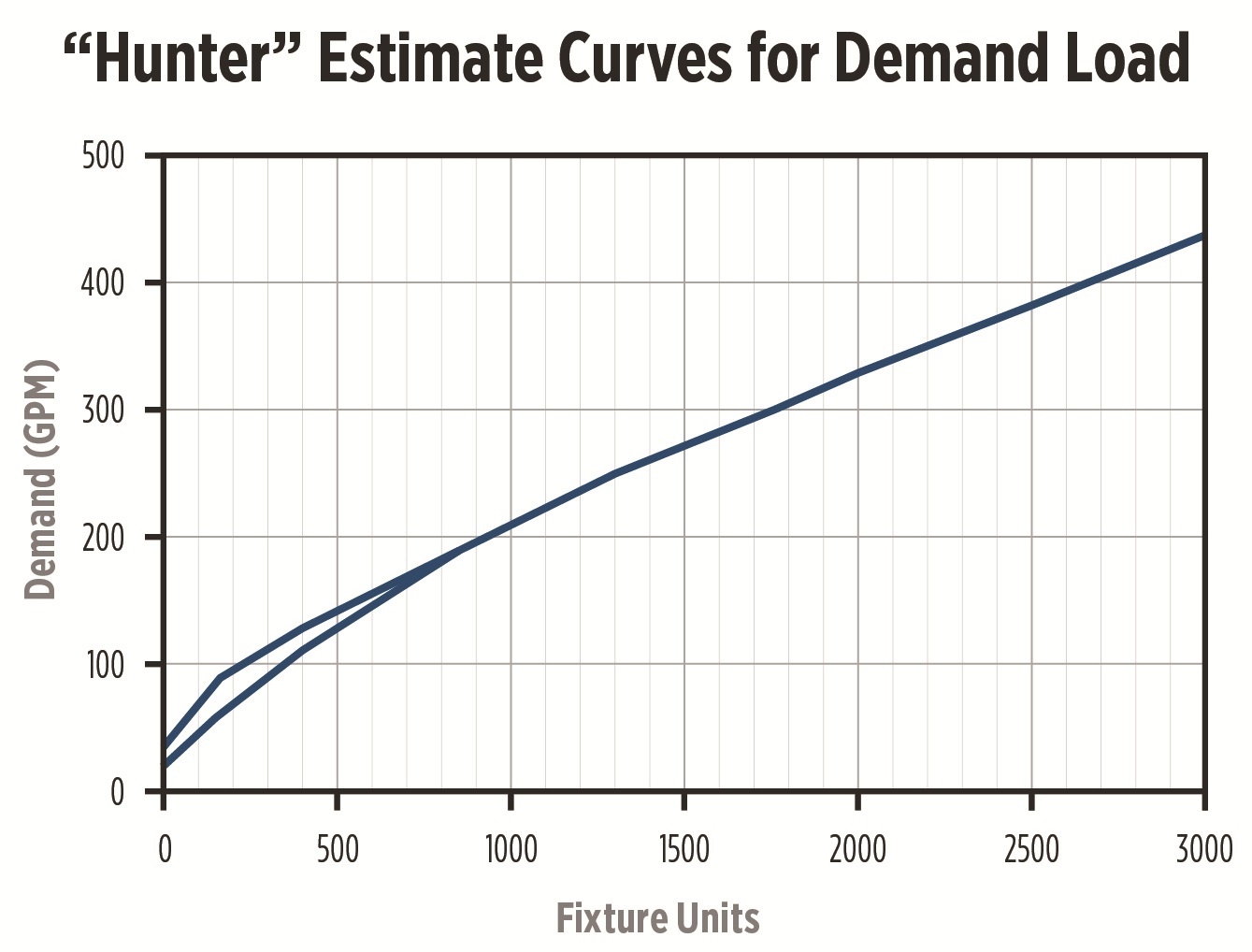
Calculations will need to consider the water source (city or tank) and water pressure entering the system. Backflow prevention measures and the number of water meters can lead to a loss in psi, which the boosting system will need to overcome. Finally, the number and type of fixtures and their gpm demands will need to be calculated using Hunter’s Curve.
If all toilets in a 100-unit building flush at once, what does it mean for the water demands?
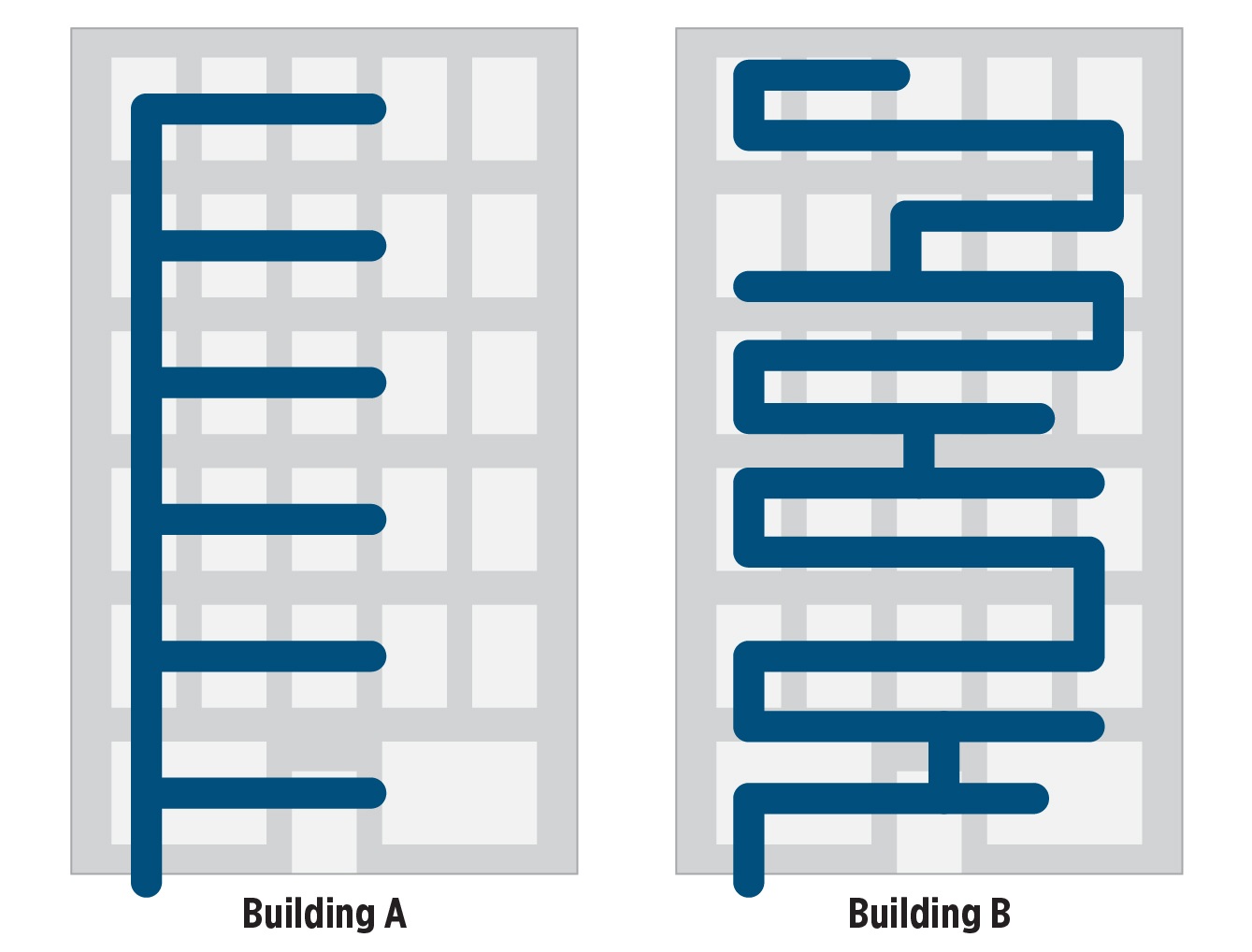
Piping type and piping runs will also influence the psi needed. Pressure through a piping network is affected by friction loss in the system, length of pipe, diameter and each fitting (elbow, tee, valve and so on) adds friction loss and reduces the overall pressure. Consider these two buildings:
They are the same height, however the different piping layouts mean they need a different booster pump solution. Building B will have more friction loss and require a larger pump.
4. Consider load capacity needs.
A building’s load profile represents demand throughout the day. Very few buildings will demand full system performance 24/7, so a system can be built around a specific building’s needs.
This could involve installing multiple pumps of the same size or using a jockey pump. A jockey pump is a system with a small lead pump that handles low demand periods and larger lag pump or pumps that handle high demand periods.
The benefit is that the small lead pump uses less energy while the jockey pump assures users are never without the required water pressure.
5. Customize as needed.
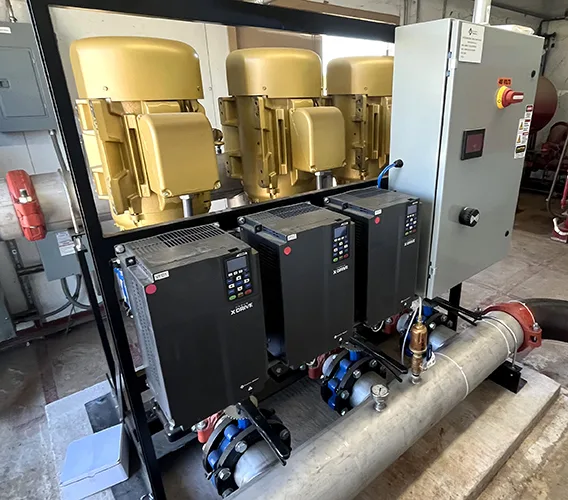
Booster systems are rarely one-size-fits-all; customization is often necessary to meet unique operational needs. The addition of a variable frequency drive allows pumps to adjust speed based on demand, improving energy efficiency and reducing wear.
Multistage pumps are preferred for applications requiring high pressure without excessive flow, while single-stage pumps may suffice for simpler systems. Engineers should also consider redundancy through duplex or triplex configurations to maintain service during maintenance or failure.
Energy efficiency standards, such as ASHRAE 90.1, Energy Standard for Sites and Buildings Except Low-Rise Residential Buildings, influence design choices, encouraging the use of high-efficiency motors and optimized control systems. Customization ensures that systems deliver consistent performance while minimizing operational costs and environmental impact. Systems can also be customized to the space available.
6. Use industry resources to narrow your search.
Several tools and resources assist engineers in sizing booster pump systems. Booster pump manufacturers offer online selection tools that allow users to input parameters such as building type, flow, head and operating conditions to generate pump recommendations. These enable performance matching and configuration for specific applications.
Industry guidelines, such as those published by the Hydraulic Institute and the American Society of Plumbing Engineers, offer standardized methodologies for pump selection, installation and operation. These resources streamline the design process, reduce errors and ensure compliance with best practices and regulatory requirements.
Head and flow needs are important considerations that ensure that a booster pump meets performance requirements; however, these are just the start of the information needed to select the best system for a commercial, industrial or municipal space. By considering durability needs, operational must-haves and environmental factors, organizations can optimize system performance, reduce lifecycle costs and ensure consistent water delivery for critical applications like fire suppression and potable water supply.
Aaron Jackson is the national sales development manager for industrial distribution at Franklin Electric. He’s spent more than 20 years working in pump sales and application engineering and enjoys helping commercial and municipal customers work through real-world water system challenges.
Shukri Elmazi is director of global product management for Surface Pumps at Franklin Electric. A mechanical engineer by background, he’s closely involved in developing solutions like VersaBoost Pro, VR SpecPAK and Inline SpecPAK, with a focus on practical performance in tight or low pressure applications.
Derrick Oberdorf is senior product manager of multistage and packaged systems at Franklin Electric. He brings more than 11 years of industry experience in application engineering and product management, playing a key role in supporting and launching new products across the packaged systems, controls and IoT spaces.