
Everything Leon Garrett owned fit inside a single trash bag. He had one outfit, one backpack and a cellphone charger for a belt. Years of addiction had left him cycling through jail, treatment and life on the streets, surviving multiple overdoses that repeatedly brought him to the verge of death. During the most recent, he had come to on the bathroom floor, his body weight cutting off circulation to his leg for so long that he developed a blood infection.
That version of Garrett bears little resemblance to who he is today. Ten years later, the 31-year-old is sober and has built a life centered around his family and business, Kenco Plumbing & Drains in Rollinsford, New Hampshire.
Through the trades, Garrett found the stability and sense of purpose he previously struggled to imagine. The support he once needed to rebuild his own life has become the foundation for how he approaches his work: creating opportunities, investing in others and passing his second chance forward.
Benjamin Lavine
Garrett’s exposure to addiction began long before his own struggles with substance use. Born in Haverhill, Massachusetts, he says his mother was a drug addict who abandoned him at a “crack house” in Lawrence when he was just an infant. Eventually, someone at the house brought Garrett to a hospital, where he was admitted under the name Benjamin Lavine. Garrett is unsure whether he spent weeks or months at the hospital before his father managed to find him.
Shortly after, Garrett and his father moved to New Hampshire, where Garrett grew up in a trailer park. He spent most of his time at his grandmother’s house while his father worked odd jobs to support themselves, with cousins, aunts and uncles often visiting. Garrett also made friends in the neighborhood, but many of their parents suffered from drug addiction as well.
“It was honestly normal,” he says. “I was just so immersed in that lifestyle that it became second nature to me.”
When Garrett started attending school in Conway, New Hampshire, a scenic tourist and ski destination, he became more aware of the differences between his life in the trailer park and those of his new peers. Friends he met at school often came from well-off, structured families, and visiting their homes planted an insecurity that stayed with him.
“My dad was great and did a lot for me,” Garrett says. “There were always presents under the Christmas tree. But I always felt like I wasn’t good enough to be in those environments.”
 Truancy and a Troubling Pattern
Garrett began experimenting with alcohol and marijuana when he was 12 years old, and by 14, he had essentially stopped attending school. Truancy and substance use eventually landed him on juvenile probation, and he got sent to Eckerd Wilderness Camp.
“That was the first time I felt like I was legally facing consequences for taking substances,” Garrett says.
When he returned, Garrett stayed sober for about two weeks before he began drinking again. Attempts to return to school proved unsuccessful as well. Garrett even tried an alternative night school, but after further problems, he ultimately dropped out.
Everything got worse from there. By 16, he started hanging out with people who were using hard drugs. Despite growing up surrounded by examples of where addiction could lead — including his own mother — drugs provided an escape from those feelings of inadequacy he had carried since childhood.
“Drugs and alcohol made the world sort of look OK from my lens,” he says.
Garrett describes the next few years as a “stereotypical picture of a drug addict,” couch surfing and doing anything he could to get high. He also began using pills, heroin and fentanyl. Having never experienced withdrawals before this time of his life, Garrett was now “all in” on drugs.
He also found himself in legal trouble again — this time facing charges as an adult at 17 years old. Jail became part of a familiar cycle: Garrett would be incarcerated, return to the outside world and begin using again.
“It’s not that I was trying to get in trouble just to get in trouble,” he says. “It was just because I loved getting drunk and high so much. Plus, I really didn’t have any sort of life skills or anything at the time.”
At 19, Garrett was offered what appeared to be a way out: A stay at a treatment center could count toward his latest jail sentence. While part of him wanted help, another part also just saw it as a way to get back to the streets faster.
“If you ask a drug addict if they enjoy what they do every day, nine times out of 10 — and I’m only speaking from my experience — the answer would be ‘no,’” Garrett says. “I didn’t aspire to grow up like this and be in these positions.
“But you know, at the same time I was sort of OK with going to prison, and I was sort of OK with not living anymore,” Garrett says. “That’s what I saw as my future. I had kind of accepted my fate.”
Despite being on the fence, Garrett decided to stay at the treatment center in Dover, New Hampshire, and got his first taste of what recovery could look like. He was introduced to the Alcoholics Anonymous (AA) 12-Step Program and did well, grateful to be out of jail.
Unfortunately, after leaving, he relapsed. He would return to jail, enter another sober living environment, begin using again and overdose. The cycle still continued — until an unexpected encounter offered him another chance.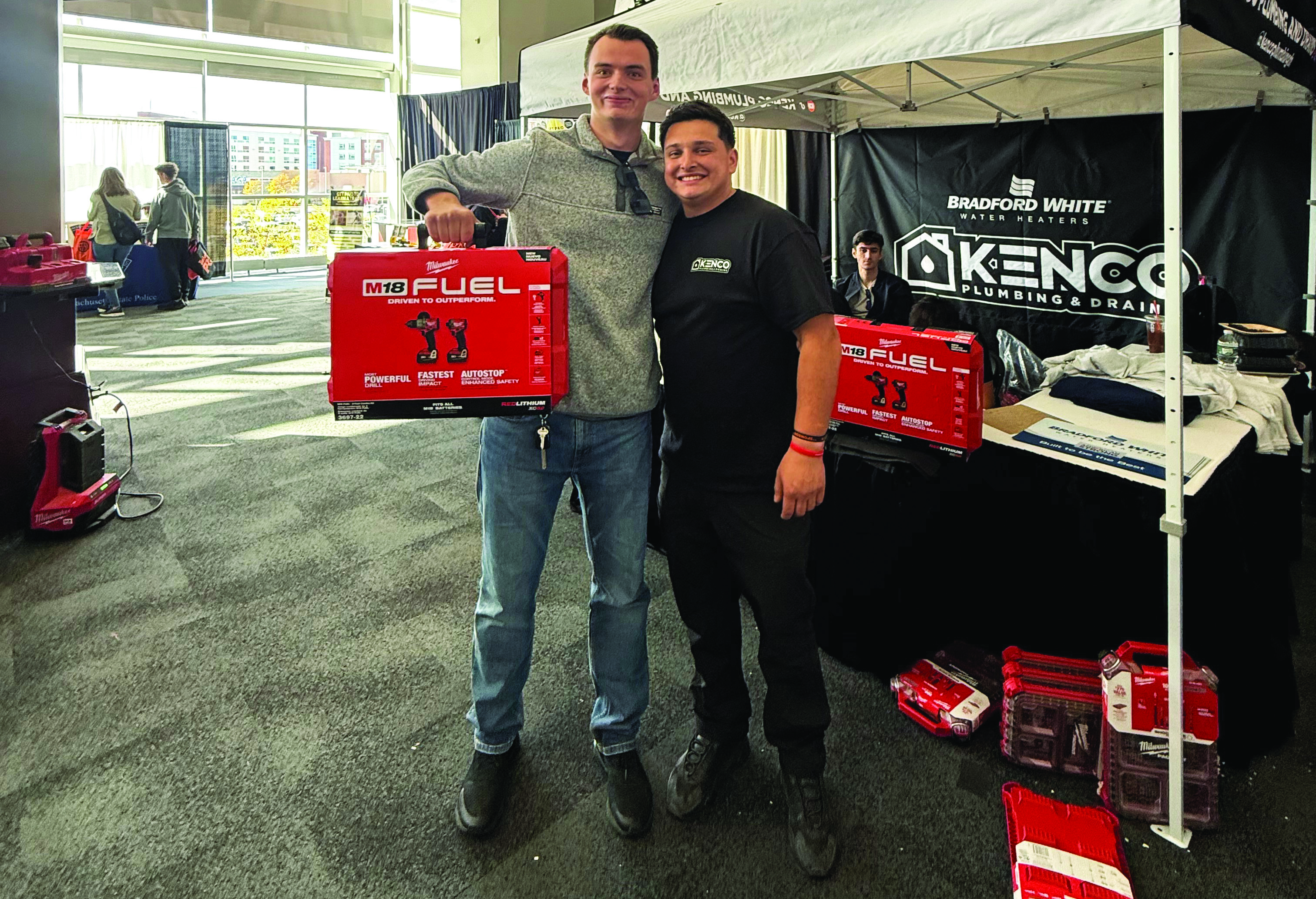
The Call That Changed Everything
Shortly after his overdose on the bathroom floor, Garrett was connected to an individual named Dean. He offered Garrett $40 to participate in an interview about addiction. Garrett agreed, but the interview never quite happened.
Instead, when Dean saw the condition Garrett was in with his blood infection, he took him to the hospital (physically so, because Garrett could barely walk at this point). Dean stayed and hung out with Garrett overnight as he received treatment for the infection.
“It was funny because he was a big name in recovery in my area at the time,” Garrett laughs. “His face was all over the hospital. So, I was talking to him, and directly behind him was his photograph.”
Dean helped Garrett get set up at a hotel and called some people for help. Soon afterward, Lauren, a woman Garrett knew through the recovery community, contacted him with an opportunity: There was an open spot at a men’s treatment center in Wimberley, Texas.
Garrett had been down this road before. He was tired of being warned that his addiction was going to kill him; he already knew that. What he hadn’t encountered was someone who could reach him on his own terms.
When Garrett called Cole, the treatment center’s co-owner, he was met not with another dire warning, but with humor and bluntness. The approach caught Garrett off guard — and immediately connected with his own personality.
“Cole was like, ‘You’re that crack-smoking, drug-addict junkie from the Northeast, right?’” Garrett says. “That was exactly my sense of humor — I thought that was God showing up in a way that knew how to reach me. So, I just laughed and replied, ‘Yeah, that’s me.’ He said, ‘We’d be glad to have you.’”
Finding His Superpower
Leaving the general New England area for the first time in his life, at the treatment center, Garrett found the same straightforward, “less is more” approach that had drawn him in during that first phone call. During his previous attempts at sobriety, Garrett would often stay at treatment centers for up to six months at a time. Here, his total stay would ultimately only be 30 days.
“I basically needed a miracle overnight,” he says. “When I had to work on my sobriety over a longer timeframe, it was just too hard on my mind. I have a short fuse and can’t sit for too long; the obsession of getting high preceded everything.”
The transformation did not happen immediately. Garrett spent the first two weeks detoxing and recovering physically and mentally before he felt capable of fully absorbing what was being taught. But once he could, the work moved quickly.
During his roughly monthlong stay, Garrett worked through the 12 Steps again and began confronting his ego and the parts of his past he had carried with him for years, including his history with his mother. Each morning started with motivational videos from Eric Thompson, which pumped Garrett up and exposed him to the possibility that there were still things worth getting excited about.
“Overall, the treatment center was showing me that life could be really cool, which inspired me to get better,” he says.
Garrett describes the program as “very brief, but very real” and underwent both a spiritual experience and a “psychic change” — one that fundamentally altered how he viewed himself and his future.
“I could chalk it up to nothing but being God, for sure,” he says. “One hundred percent. It was divine intervention. I felt like I was given a superpower that I could apply to anything, and I really relied on that when I got back home.”
He would soon have plenty of opportunities to test that belief. When Garrett returned to New Hampshire, many of the external circumstances of his life remained unchanged. His belongings still fit inside the same trash bag, he still had legal issues to address and he still needed to find work. Yet there were no thoughts “weighing him down” anymore, and he was ready to share his journey with others and begin rebuilding his life and relationships.
Recovery Comes Full Circle
By 2018, Garrett had gone from needing someone to guide him to providing that guidance for someone else. That person was Zach, a man who was in a similar position to the one Garrett had been in two years earlier. Garrett became his sponsor, leading him through the recovery process and sharing the same message that had helped change his own life.
Eventually, Zach landed a job with EJC Engineers, a mechanical contractor in Nashua, New Hampshire. With previous experience in the trades, he encouraged Garrett to come work alongside him.
“I just thought that getting into the trades was a stereotypical thing,” Garrett says. “That’s part of my problem — that I always think that I know everything. I had a very limited view of what a plumber was.”
His first day quickly changed that. The company specialized in new construction and commercial plumbing, and there was nary a plunger or toilet in sight. Instead, Garrett found himself running a RIDGID 300 threading machine, helping build headers for boiler piping and hanging baseboard for the heating system.
“I was super inspired,” he says. “It wasn’t like the other jobs I’d had where everyone was just coasting by. It sounds cliché, but I saw that the people I was working with in the field actually had stuff to show for it — they had homes and were able to provide for their families. They had everything that I’d actually been looking for.
“So, from that first day, I made the decision that this is what I’m going to do,” he continues. “I gave everything that I had into it, and I never looked back.”
But while the trade provided the career and stability he had been searching for, he found the culture he encountered on some jobsites objectionable. Garrett continued to see addiction, untreated alcoholism and mental health struggles among tradespeople. He also witnessed apprentices being berated, yelled at and disrespected by the people responsible for teaching them.
“People say that the younger generation — my generation — is soft,” Garrett says. “This is often a child who’s coming into the field. You’ve got to nurture them and lead them in the right direction. There’s an effective way to do that, and it’s not screaming and yelling at them — that’s just a cop out. Nobody wants to be spoken to like that.”
Garrett promised himself that if he were to ever start his own plumbing business, he would create an environment where apprentices could develop their skills without being humiliated in the process.
From a Promise to a Philosophy
After spending years working toward his plumbing license, Garrett’s longtime goal became a reality. In 2023, he launched Kenco Plumbing & Gas with $4,000 in the bank and no experience running a business.
“I just knew how to be a plumber,” he says.
When Garrett and Zach were brainstorming potential names for the company, Zach suggested Garrett name it after his daughter, Kennedy, who had been born in 2018. While the name came easy, the rest did not. With his history in commercial plumbing, Garrett first leaned into new-construction jobs. It took him about two years to realize that wasn’t the direction he wanted his company to head in.
Early on, Garrett brought in another person to help with a project, but when the arrangement fell apart and the money disappeared, Garrett was left responsible for completing the work. Rather than make the problem the customer’s, he finished the job and absorbed the loss himself.
The timing made the setback particularly daunting. Garrett’s son, Benny Lavine (the name Garrett was given at the hospital after being abandoned as an infant), had recently been born. Garrett was doing his best to support a growing family while getting his new business off the ground.
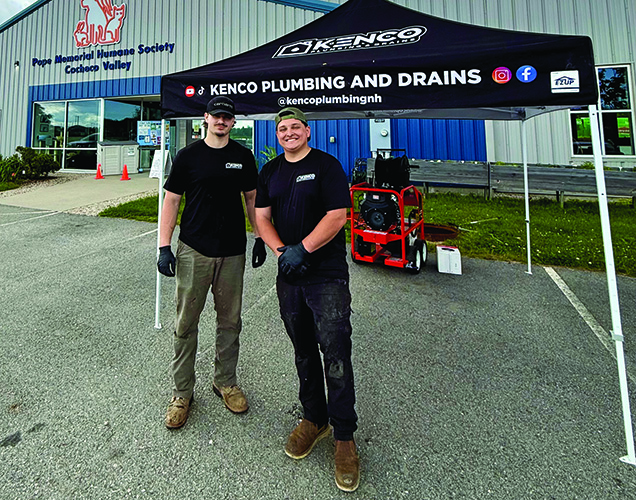
However, slowly but surely, more jobs started to come in, and the business decided to rebrand as Kenco Plumbing & Drains — now operating solely as a home service company. Today, Garrett co-owns Kenco with his fiancée, Paige, whose mom also works for the business as an office assistant.
“We are truly a family business,” Garrett says. “Even my kids get to see what’s going on day-to-day and know exactly what their parents do at work.”
They also have three other employees on their team — two who just earned their journeyman licenses and one who will be kicking off his apprenticeship shortly. Garrett does everything he can to live up to the promise he made to himself eight years ago.
“Our philosophy is that we want to train our own guys, teach them our way and nurture them the way that we want them to be nurtured,” he says.
Despite once believing that becoming a successful owner meant he needed to get out of the van, Garrett has embraced remaining in the field. Employees shadow him as he enters customers’ homes, assesses problems and develops solutions. This hands-on approach allows him to teach both the technical side of plumbing and how to build trust with customers, delivering the level of service Kenco wants associated with its name.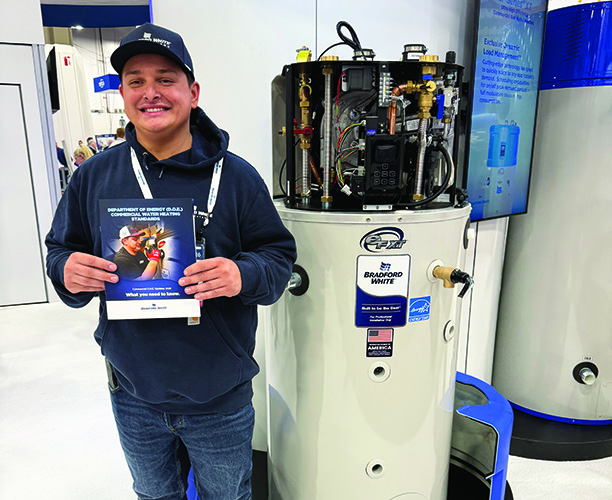
From the Ground Up
At the same time, Garrett is still learning himself. He and Paige have invested in business coaching to better understand the financial and operational side of running a home-service company. They participate in regular coaching sessions, while the Kenco team holds weekly service meetings to discuss what went well, what can improve and how the company can reach its goals and give back to the community. A scoreboard helps track specific targets and measure their progress.
Garrett has also used the last few years to hone his social media skills. Initially only using social media to promote his business, he soon noticed other tradespeople sharing their day-to-day work online and decided to do the same. He has since amassed nearly 300,000 followers across platforms, building relationships with fellow tradespeople and manufacturers, including Oatey and Bradford White.
“I’ve been using Bradford White my whole career,” Garrett says. “That’s the best of the best when it comes to water heaters. So, when I got the opportunity to be a brand ambassador for them, it was like a dream come true for me.”
Another partnership Garrett holds close to his heart is Bring Back the Trades (BBTT), a non-profit organization committed to providing scholarships and equipment to students pursuing careers in the skilled trades.
He first learned about the organization through Paige’s father, Jason, former owner of Ben’s Auto Body in Portsmouth, New Hampshire, and a friend of BBTT Founder Steve Turner. (At the time, Garrett was still an apprentice himself and even applied for one of the organization’s scholarships but didn’t receive it.)
Years later, after launching Kenco, Garrett finally connected with Turner when Kenco was a vendor at BBTT’s first Skills Expo at Ben’s Auto Body. Garrett’s involvement grew from there, including meeting apprentices, creating promotional videos and helping spread the organization’s message through social media.
Eventually, Kenco became a Platinum Sponsor of the 2025 BBTT Skills Expo at Gillette Stadium with support from Bradford White and Milwaukee Tool. The event drew approximately 3,000 attendees and became “one of the highlights” of Garrett’s life.
“Bring Back the Trades is such a great organization,” he says. “It’s like a larger scale version of my vision for my company — nurturing people and training them from the ground up.”
Seeing the Big Picture
Speaking of vision, Garrett is constantly thinking about “what’s next.” Even when he gets a rare break from the demands of running Kenco, his mind tends to jump to how he can maximize time with his family when he’s off of work. Garrett admits there are times when the pressures of business and life get to him — only for him to feel guilty for being frustrated when he considers where he started.
“What’s really kept me on track is seeing the big picture,” he says. “It’s not just about clearing a drain or whatever. This business is named after Kennedy — the goal every single day is to continue to build it and provide for my children.”
Garrett also credits prayer and meditation for helping to keep him sober, healthy and focused, although today those routines are not as prominent as he would like them to be. He hopes that sharing his story can help chip away at some of the shame surrounding addiction and encourage others to speak up when they need support.
“There’s plenty of guys like me who on a day-to-day basis live and breathe their life mission to help that next sick and suffering person,” he says. “There’s help out there, there’s resources out there and there’s people who care. I care.”
And for those looking for a new direction, Garrett believes the skilled trades can offer much of the same personal development they offered him.
“If somebody like me can be in the position that I am today, anything’s possible,” he says. “This line of work’s not for everybody. But if it is for you, you can dive in and make a lot out of it. The trades have given me tenfold what I’ve put into them.”
Grounded in Gratitude
For Garrett, much of that return can’t be measured in a paycheck. Instead, it’s the life he now gets to come home to.
Recently, after another busy day at work, he stretched out on his back on his front lawn. For nearly an hour, he looked at the sky, occasionally dozing off and allowing his mind to quiet.
“It’s as simple as just being able to breathe air,” Garrett says. “Sometimes it’s enough for me to get emotional and tear up, because it’s just like — I’m actually here.
“Just thinking of all the different scenarios of how my life could have gone is definitely what keeps me going,” he continues. “As long as I can still tap into that state of appreciation during moments of solitude, I know that I’m going to be OK.”