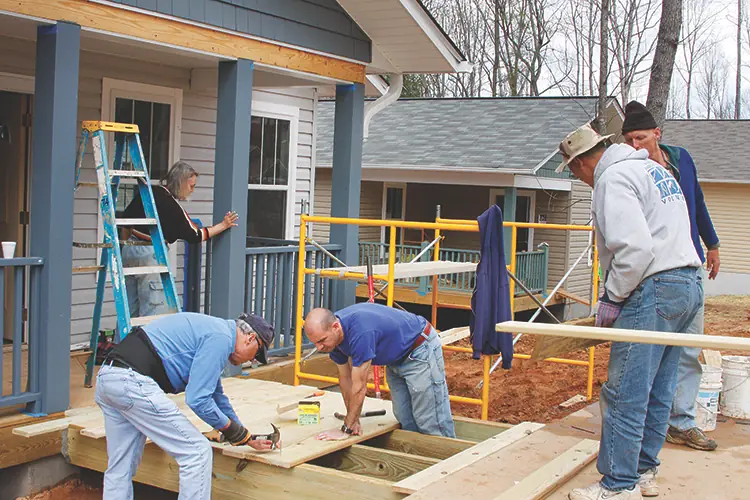
I still remember the first time I realized the tools in my truck could do more than finish a job. They could restore something. Not just a pipe. Not just a fixture. Not just a mechanical system. I’m talking about restoring dignity for someone who had been through a hard season. Restoring safety for a family that needed help. Restoring a little bit of hope in a place where people felt overwhelmed.
That is one of the unique things about the trades: We do practical work that has immediate human impact.
When plumbing fails or the heat goes out, people feel it. When water is not safe, a home is damaged or a community is trying to recover after a storm, people feel it. The trades are not some abstract industry sitting in the background; we are right there in the middle of life getting back to normal.
That is why skill-based volunteering matters. For tradespeople, service is not just writing a check or showing up for a photo. It can be putting real professional skill to work for someone who needs it. It can be a company team helping a family, a group of technicians serving after a disaster, or an individual tradesperson using what they know to repair something that changes somebody’s week, month or year.
And when we do that, something happens to us, too. We reconnect to why the work matters.
The Trades Are Built for Practical Service
A lot of people want to help others, but they do not always know where to start. Tradespeople are different; we have skills that solve real problems.
A plumber can restore access to clean water, an HVAC technician can bring heat back to a home and an electrician can help make a space safe. Those are not small things.
The work we do every day carries weight. We protect homes, businesses, schools, churches, community buildings, shelters and gathering places. We keep systems running that most people only think about when they break.
That gives the trades a unique opportunity to serve in a way that is tangible. When tradespeople volunteer their skills, they are not just donating time. They are bringing years of training, problem-solving, safety knowledge and practical experience into a situation where those things can make a direct difference. That kind of service reminds teams that the work is bigger than the invoice.
Service Builds Pride in the Trade
One thing I have seen over and over again is that tradespeople want to be proud of what they do. They want to know the job was done right, their work helped somebody and their skills matter. But in the daily grind of running calls, managing customers, scheduling jobs, dealing with callbacks, ordering parts and trying to hit margins, it is easy to lose sight of that pride.
You start seeing the work only through the pressure: How fast can we get there? How much will it cost? Who is available? Is the customer upset? What else is going wrong today?
That constant pressure can drain the meaning out of work that is actually deeply meaningful. Skill-based volunteering gives that meaning back. When a team steps into a service project, the usual scoreboard changes. It is not only about billable hours or job profitability. It is about using skill to meet a need.
That does something inside a team. A young technician sees that the trade has purpose. A seasoned technician remembers why they were proud to learn it. A business owner gets reminded that building a company is not only about growth but also about impact. Pride grows when people see the good their work can do.
Teams That Serve Together Trust Each Other Differently
There is a difference between working together and serving together. On a normal job, everyone has a role. There is pressure, schedule, customer expectations and a business outcome attached to the work.
On a service project, the pressure can still be real, but the posture changes. People are there for a shared purpose. That shared purpose builds trust.
You see who steps up, who teaches and who stays patient. You see who encourages the newer tech, who notices the details and who cares when no one is keeping score the usual way. That kind of experience can strengthen a team in a way another staff meeting never will.
It builds camaraderie because people are doing something meaningful side by side. It builds respect because team members see each other’s skills in a different light. It builds humility because service has a way of reminding all of us that we are part of something bigger than our own workload.
A team that serves together often comes back with better connection, and connection matters in the trades. When trust is stronger, communication improves. When communication improves, mistakes go down. When people feel connected, they are more likely to help each other, teach each other and carry the standard together.
That is culture — not a slogan or a poster in the breakroom. Culture is what your team experiences when they are working shoulder to shoulder.
Volunteering Develops Leaders
One of the best leadership development tools is responsibility in a real situation. Skill-based volunteering gives people that.
A service project may require planning, communication, coordination, materials, safety awareness, customer care and problem-solving. That creates opportunities for team members to step into leadership in a way that feels practical and real.
You might ask a younger technician to help organize tools or a senior tech to mentor newer team members during the project. You might ask someone who has been quiet in the company to lead a small part of the work or your team to help identify what needs to be done before you ever arrive. Those moments matter.
Leadership is built when someone is trusted with responsibility and then coached through the process. Service projects can reveal leadership potential that owners might miss during normal production work.
The technician who is not the loudest person in the room might be the one who calmly helps everybody stay organized. The apprentice who is still learning technical skills might show real care for people. The experienced tech who usually keeps to himself might become a great mentor when the setting gives him a reason to teach. When you create opportunities to serve, you create opportunities to see your people differently.
Individual Service Can Change Perspective, Too
Not every act of service has to be a company-wide event. Sometimes it starts with one tradesperson helping one person.
Maybe a technician volunteers after a flood. Maybe an owner helps repair something for a family going through hardship. Maybe a tradesperson joins a community project on a weekend. Maybe someone uses their skill to help a nonprofit facility that could not afford the work otherwise. Those experiences can reshape perspective.
It is easy, especially as owners and leaders, to get consumed by the stress of the business. Payroll, customers, employees, margins, scheduling, growth, conflict, decisions — all of that is real.
But service has a way of pulling our eyes up. It reminds us that our skills are valuable, the work matters, and people are on the other side of every system we install, repair or maintain.
It also builds gratitude. When you serve someone who is in a difficult situation, your own problems do not magically disappear. But they often get put back into perspective. That perspective is healthy. And in an industry where burnout is real, perspective can be fuel.
Make Service Part of the Culture, Not a One-Time Event
If you own or lead a trades company, you do not have to start with something complicated. You can start small.
Pick one service opportunity a year, then maybe one per quarter. Ask your team what causes matter to them. Look for local needs where your skills actually fit. Partner with organizations that understand service work and can help match skilled people with meaningful opportunities. The key is to make it real.
Do not turn it into a marketing stunt, use service as a way to pressure your team into unpaid work or make it about looking good. Make it about purpose.
If your team serves together, talk about why it matters. Before the project, explain the need. During the project, teach and encourage. After the project, reflect as a team. Ask the following:
What did we learn?
Who stepped up?
What skills made the biggest difference?
How did this remind us why our trade matters?
What can we carry back into our daily work?
Those conversations help service become part of the culture, not just something you did once.
The Role of Organizations in Creating Service Opportunities
One of the encouraging things happening in the trades is that more organizations are helping skilled workers find ways to serve. Disaster relief, humanitarian projects, local repair needs, community support and trade-based service opportunities all create a bridge between skill and impact.
Groups like Hope for the Trades, a nonprofit serving the trades community, are helping create spaces where tradespeople can reconnect with purpose, develop as leaders and use their professional skills in meaningful ways.
That matters because many tradespeople want to serve. They just need a path, a place to start, organization, and projects that respect the value of skilled labor and put it where it can do real good.
When those opportunities exist, everybody benefits: Communities receive practical help, tradespeople remember the value of their work, teams grow stronger, leaders develop and the trade itself becomes healthier.
Service Helps the Business, Too
Some owners may hear this and think, “This sounds good, but I’m already busy. My team is already stretched. How does this help the company?” It helps because people want to be part of something that matters.
Yes, wages matter. Benefits matter. Good equipment matters. Clear systems matter. But meaning matters, too. A company that creates opportunities for purpose can become a place where people are more proud to work. Service can help attract the kind of people who care about quality, teamwork and community. It can help retain employees who want their career to be about more than running the next call. It can also strengthen the owner.
Because sometimes leadership becomes heavy. You carry the numbers, problems, customers and team. Service reconnects you to the human reason behind all that effort.
You are not just building a business; you are building a team that can do good work in the world. That is worth remembering.
Start With What is In Your Hands
The trades are full of people who know how to solve problems. We know how to show up when something is broken, work with our hands, figure things out in imperfect conditions and make things function again. Those skills are needed in homes, communities, disaster zones, humanitarian projects and the lives of people who cannot always afford the help they need.
Skill-based volunteering is not separate from the trades; it is one of the clearest expressions of what the trades can be. So start small. Find one need. Use one skill. Invite one teammate. Serve one family, one organization, one community. Then pay attention to what happens.
Your team may come back with stronger trust. Your technicians may come back with deeper pride. Your leaders may come back with more perspective. You may come back remembering why you picked up the tools in the first place.
Because a wrench can do more than tighten a fitting. In the right hands, and for the right purpose, it can help rebuild hope.