There is a rhythm to distribution — it can be felt in the way orders are placed, trucks loaded and products moved. That rhythm is built on relationships, trust and the expectation that when a customer places an order, the answer is yes — we have it, or we can get it. Within that rhythm exists another layer, one that lives beneath the surface. It’s the part of the business that isn’t always neatly organized or efficiently managed — the long tail of products distributors need but can’t always justify stocking in depth. These are the items that complete the job, the ones that turn an order into a true one-stop solution. For some, they’re known simply as “C” or “D” items — however, their impact on customer satisfaction is anything but small.
For many distributors, this part of the business can be the most challenging. How do you ensure every order is complete, especially when it includes products you don’t typically carry? How do you support your customers at the moment they need a part, when it’s not something that sits on your shelf every day? And how do you do so without creating inefficiencies in your own operation?
Today, that challenge has a name: tail spend. And, it has a solution.
That solution often comes in the form of a partnership with a strategic supply partner, often referred to as a master distributor, one that can round out offerings and provide access to those hard-to-source items quickly and reliably. Tail spend has long been one of the most difficult areas for distributors to manage. It’s fragmented, time-consuming and requires constant coordination — a balancing act that can pull focus from core operations and stretch resources thin. However, with the right partner, it becomes far more manageable.
“We’ve got the ability to essentially consolidate down an entire tail spend,” says John Wisniowski, chief procurement officer at Everflow Supplies.
It’s a simple statement, but one that reflects a larger shift across the industry. Distributors today are navigating more complexity than ever before — more suppliers, more SKUs and more expectations yet less tolerance for delays. The ability to simplify that complexity, while still delivering a high level of service, has become essential to staying competitive. Who can you turn to for help? Increasingly, distributors are turning to partners that combine the reach of master distribution with deeper product control and sourcing capabilities.
Everflow has built its business around that reality. While many in the market categorize Everflow as a master distributor, the company operates differently – developing and sourcing its own branded products, functioning more like a vertically integrated specialty provider than a traditional aggregator of third-party lines. Operating within the master distribution channel, the company serves the PHCP channel by specializing in plumbing, electrical, fire protection and industrial products for wholesale distributors. Founded in 2000 by David Templer, Everflow has grown from a regional Northeast supplier into a nationwide platform offering tens of thousands of SKUs across multiple product categories.
“From the beginning, the focus was simple – take care of the customer and find a way to deliver,” says founder David Templer. “We built the business by being reliable, responsive and making sure our customers could count on us when it mattered most. That foundation is still very much part of who we are today.”
“We’re building on that foundation with a clear focus on what our customers need today and where the industry is going,” says CEO Andrew Pacifico. “Having been in the distribution environment, I understand how impactful it is on your business and cash flow when you’re carrying excess inventory or working with an unreliable supplier. That’s why partnership, reliability and consistency matter so much in this model.”
Headquartered in Carteret, New Jersey, Everflow operates a network of distribution centers across the United States and is known for its focus on inventory breadth, supply chain efficiency and customer service, positioning itself as both a vertically integrated specialty provider and a “virtual manufacturer,” supporting distributors with reliable, consolidated sourcing solutions. At its core, Everflow blends elements of distribution, sourcing, and manufacturing – creating a hybrid model that goes beyond the traditional definition of master distribution.
That national footprint is not incidental — it is foundational. With distribution centers strategically positioned across the United States, Everflow has built a system designed to reduce the distance between product and customer. That proximity translates directly into speed, reliability and consistency — all critical in a business where timing matters.
And increasingly, timing matters more than ever.
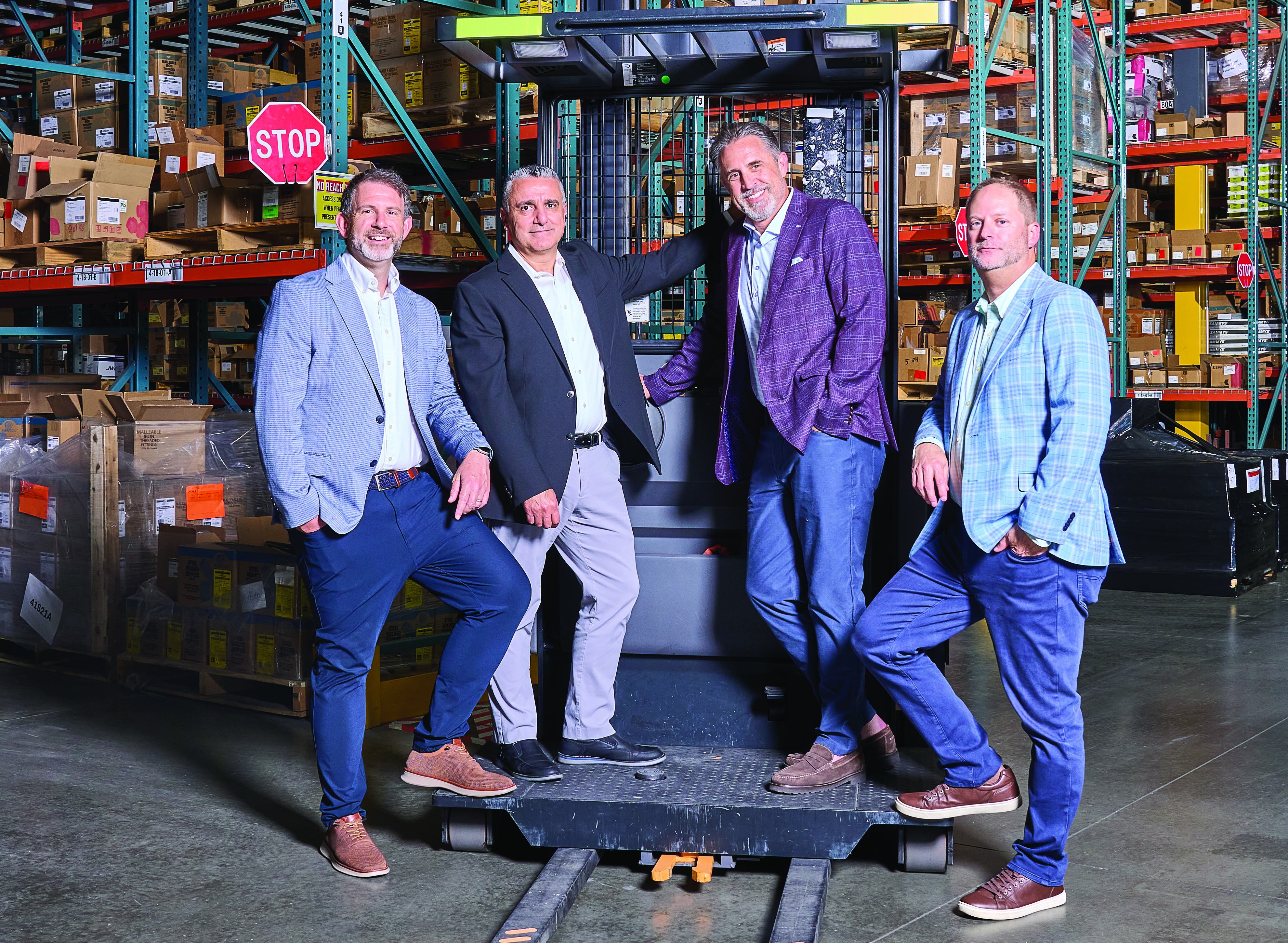
Eliminating friction
Everflow’s history is built on recognition and service — understanding where distributors struggle and committing to solving those challenges with consistency and scale. Founded in the plumbing vertical, Templer established the business as a Northeast supplier, where it quickly gained traction through its product offering and service model.
“Everflow has evolved from a strong regional distributor into a more scaled, data-driven national platform,” says Ayman Sawaged, chief operating officer. “We’ve strengthened our infrastructure-expanding our distribution network, investing in more advanced systems, and building a more disciplined, scalable operating model- while staying grounded in a customer-first mindset.”
“Having been part of Everflow through multiple phases of growth, I’ve seen that evolution firsthand while helping ensure we stay grounded in what has driven our success,” Sawaged adds. “What has remained constant is our customer-first mindset, entrepreneurial culture and commitment to delivering for our customers.”
“David Templer built this company through his passion for delivering service, value and quality products to customers,” says Kurt Schwahn, chief revenue officer, Everflow. “It’s very exciting, and important, to look back at a founder-owned business that was built through hard work and relentless focus on servicing the customer. As David would say, it was built by ‘grinding’ every day.”
That philosophy, being an extension of the customer, remains central to how the company operates today. It is not only a principle; it is a standard that guides how the business is run. It explains how Everflow approaches growth, evaluates opportunities and measures success.
Everflow’s leadership team brings firsthand experience across the wholesale distribution, operations, sourcing and supply side of the business. That perspective provides practical insight into the pressures distributors face every day, from inventory carrying costs to supplier reliability and customer project demands.
The company has evolved through a series of strategic steps. The first was building the business on Templer’s experience and passion for supporting customers, and sourcing and developing products they needed. The second was expanding geographically, adding distribution centers to serve a broader market. The third came through acquisition.
In 2019, the company acquired Sigma Piping Products, expanding its reach beyond plumbing and into electrical, fire protection and mechanical product lines. The move strengthened Everflow’s ability to support distributors across multiple trades, providing a more comprehensive offering and reducing the need for multiple sourcing partners.
With significant growth and expansion, and a continued focus on serving the customer, the company reached a point where additional support was needed to sustain its trajectory.
Everflow was acquired in 2025 by Paceline Equity Partners. The partnership provided capital to accelerate expansion, infrastructure and acquisitions, while maintaining the company’s core focus on serving the customer.
“That commitment carries forward into the company’s next phase,” Pacifico says. “It’s not a shift in who we are – it’s an accelerator that comes from having the capital available to us.”
“As we scale, consistency in execution becomes even more critical-across inventory, fulfillment and service,” Sawaged adds. “Maintaining accountability and speed in decision-making is core to how Everflow operates and will continue to be essential as we grow.”
Beyond traditional master distribution
While Everflow operates in the master distribution space, its leadership team is deliberate in defining the company’s role.
“We want to remain the supplier choice to our wholesale distributors, who are our primary customers,” Pacifico notes. “The goal is not simply to participate in the channel, but to become the partner distributors turn to first when reliability, breadth and control of product matter most.” These priorities reflect the company’s core focus on quality, service, execution and value.
At the same time, Everflow views its model differently than traditional players in the space.
“We are not a traditional master distributor — instead we are a specialty provider,” Wisniowski says. That distinction is intentional. While traditional master distributors often focus on aggregation and logistics, Everflow’s model goes further, integrating sourcing, product development and supply chain control into a more comprehensive offering.
This approach also ensures alignment with its customers. Everflow is not looking to compete in the channel, but support it, eliminating the risk of channel conflict.
Today, we have manufacturing capabilities spanning 14 countries, including domestic production capabilities,” Wisniowski explains. “We work with 350 factories on a regular basis. That gives us the ability to be nimble in sourcing products and responding to supply chain disruptions.
That global sourcing network is paired with a domestic distribution infrastructure designed to move products quickly and efficiently. Today, the consolidated Everflow platform operates eight strategically located distribution centers across New Jersey, Texas, Georgia, Illinois, Oklahoma, and California, allowing the company to fulfill orders rapidly, often the same day, across multiple regions.
This model gives Everflow greater control over the products it brings to market – an important point of differentiation within the channel.
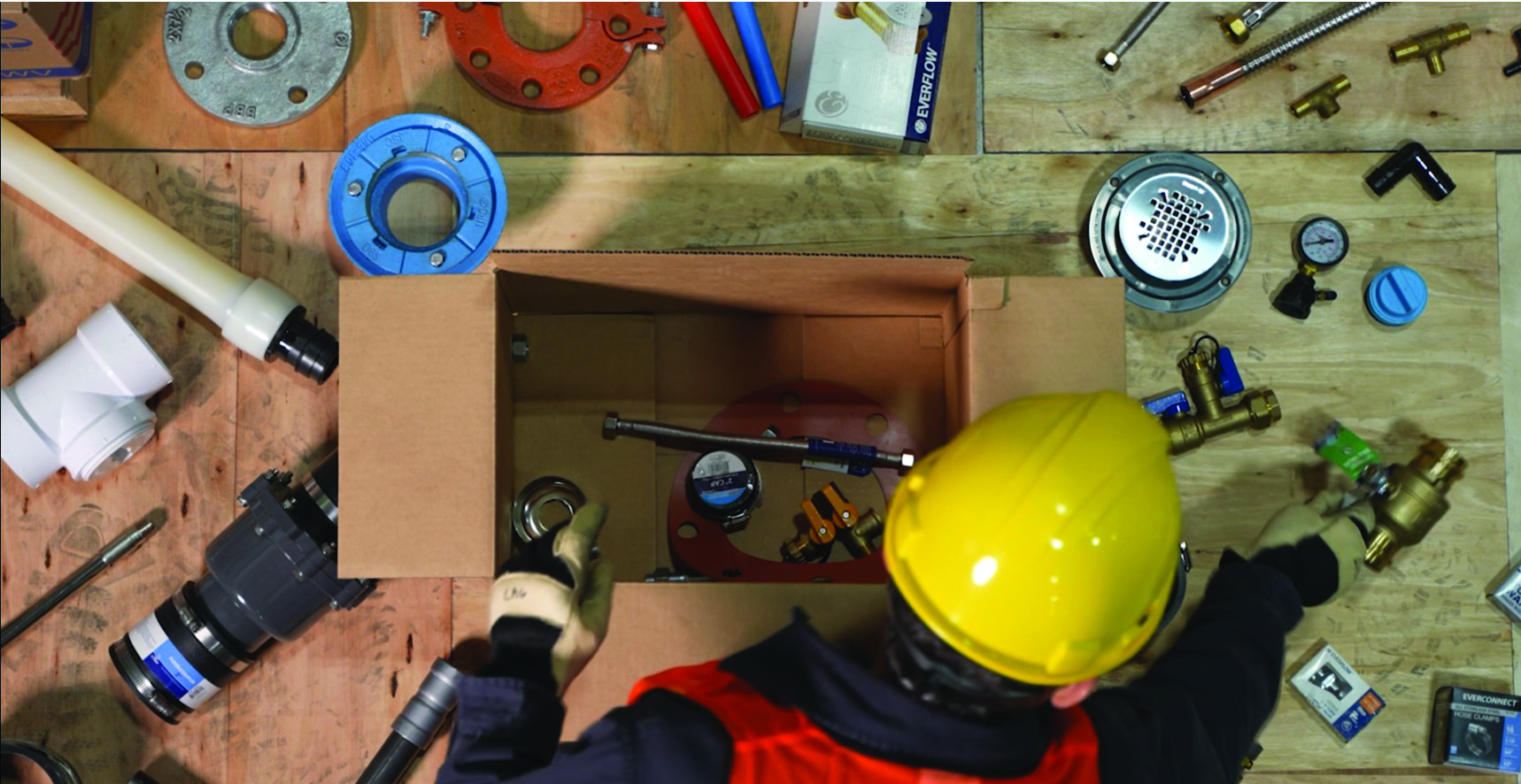
“We don’t sell any products that are not our brand and not our source- a key distinction from traditional master distributors that primarily aggregate third-party brands,” Pacifico says.
Wisniowski adds, “We also have an in-house engineering team and strong quality control processes, allowing us to develop, source and stand behind products under our own brands.”
“We have something unique,” Schwahn says.
That uniqueness is not defined by a single capability. It is defined by how those capabilities come together — sourcing, manufacturing, distribution and service — to create a more complete solution.
Redefining the specialty provider
As the role of the master distributor continues to evolve, so too does the language surrounding it — and for Everflow, that shift is intentional. “We consider ourselves a specialty provider of branded products, supported by global sourcing and in-house product development capabilities” Pacifico says.
“We source from more than 300 suppliers leveraging those relationships to develop and deliver our own branded product lines,” he adds. And the depth shows. The company carries more than 40,000 SKUs that span multiple verticals: plumbing, electrical, fire protection,HVAC and mechanical, allowing distributors to consolidate purchasing across categories and reduce supplier complexity.
The work is ongoing. As customer needs evolve, so too does the long tail of products required to support them, and Everflow continues to expand its offering to meet that demand. That flexibility extends to private label opportunities, allowing distributors to build their own brand presence while leveraging Everflow’s sourcing and manufacturing capabilities.
“We view our products and warehousing of our products as an extension of our customers’ warehouses,” Pacifico says. And it shows. More and more customers are relying on the speed, efficiency and depth of inventory to round out their stock. And doing so with a partner such as Everflow makes it easier to fill orders with inventory one might not traditionally carry. The ease of doing a “one-stop shop” with Everflow makes sourcing easier for wholesaler distributors particularly when paired with the consistency of owned brands and controlled supply.
The ‘Amazonification’ effect
Pacifico came up with a word that describes what customers want now — he calls it the “Amazonification” of business. It’s a term he coined to capture how customer behavior is reshaping expectations across the distribution channel.
“Contractors are used to ordering product from Amazon,” he explains. “They’re used to seeing availability of product and getting it the same day or the next day.” That shift has not stayed confined to the consumer world. It has moved directly into the trades, influencing how contractors expect to interact with distributors — and, in turn, how distributors must operate to meet those expectations.
What was once a service differentiator — visibility, speed, accuracy — has now become a baseline expectation. “Contractors don’t want to call 17 times to determine where the product is,” Pacifico says. They want to know what is available, when it will arrive and that it will be accurate when it gets there. And they want that information without friction.
This creates a ripple effect across the channel. Distributors are now expected to deliver with the same level of responsiveness and certainty, placing increased pressure on their supplier partners to perform at that level.
“If you’re not removing friction from the process for our customers, then you will eventually become obsolete,” Pacifico says. For Everflow, this shift reinforces the importance of aligning inventory, infrastructure and execution. It is not enough to have the product — it must be positioned correctly, visible within the system and delivered quickly. That is where the company’s national footprint, sourcing capabilities and product breadth come together, enabling distributors to meet rising expectations without compromising efficiency.
The distribution center backbone
As Everflow continues to grow, so too does its physical footprint. The company operates multiple distribution centers across the United States, with key locations in New Jersey, Texas, Illinois, Georgia and, opening soon, Los Angeles. They form the backbone of a national platform designed to serve distributors with consistency and speed.
However, the footprint is more than a map of locations — it is a strategy.
By positioning inventory closer to the customer, Everflow reduces transit times, increases delivery reliability and allows distributors to operate with greater confidence. In a business where timing can determine whether a job moves forward or stalls, that proximity becomes a competitive advantage. It allows product to move quickly and gives distributors the ability to meet customer expectations without overextending its own inventory positions.
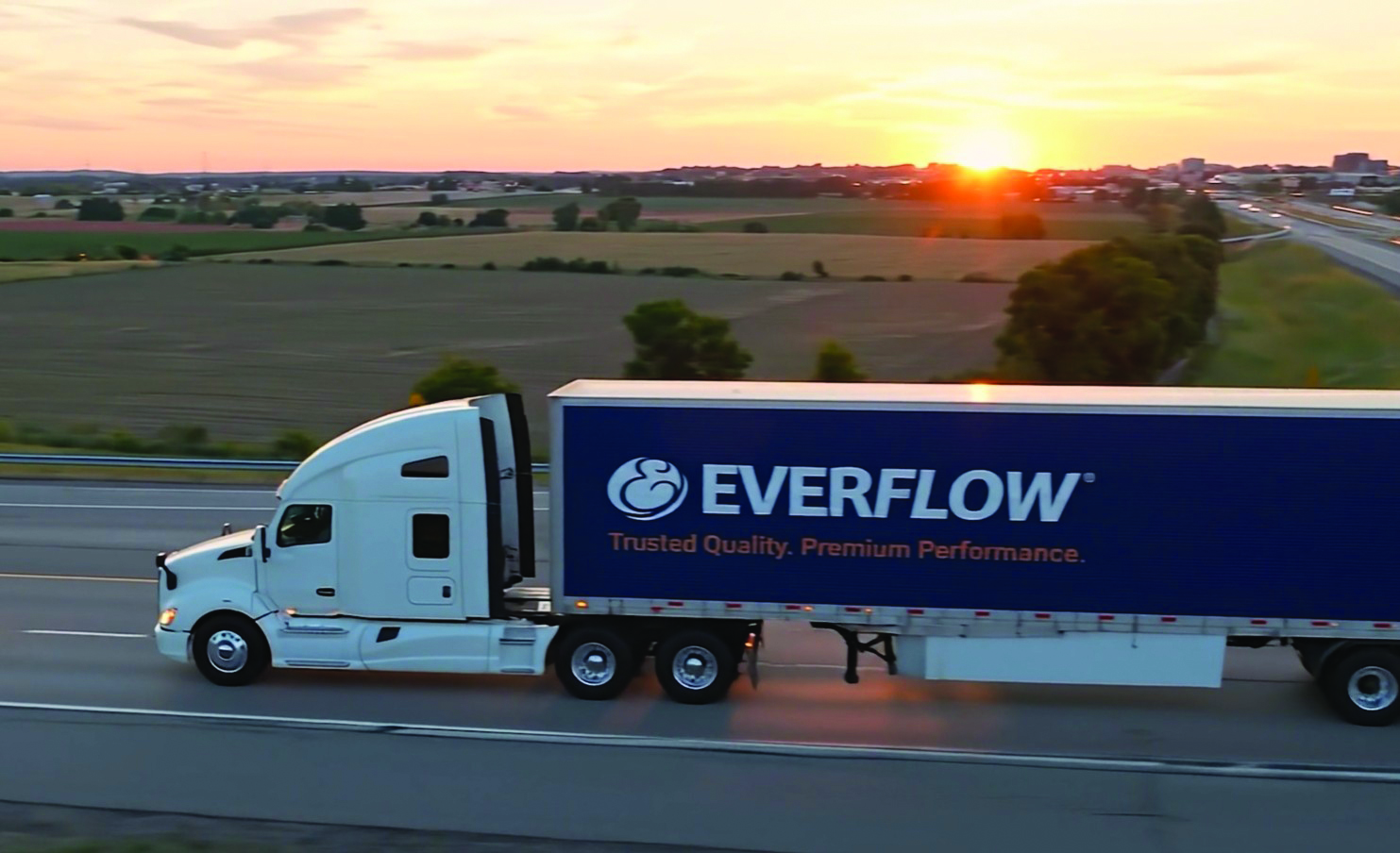
“It’s about being able to serve our customers in their market,” Schwahn notes.
That philosophy continues to drive expansion. Earlier this year, Everflow acquired a facility for its California distribution center, expected to open by the end of May 2026. The addition strengthens the company’s ability to serve the West Coast while also creating access to an additional port of entry, reducing dependence on East Coast and Gulf shipping lanes and improving supply chain flexibility.
“We’re building a repeatable, high-performing operating model that supports both organic growth and the integration of future acquisitions in a disciplined way” Sawaged says.
The expansion is both practical and strategic. It enhances service levels in a growing region while reinforcing Everflow’s broader goal of building a truly national platform — one that enables distributors, regardless of geography, to access the products they need quickly and reliably.
Everflow has built its model around removing friction for its customers, allowing distributors to order exactly what they need, when they need it — without the burden of minimum order requirements. That flexibility helps customers better manage inventory, preserve cash flow and respond quickly to jobsite demand without overcommitting to stock.
Just as important is Everflow’s attention to how product leaves the warehouse. Orders are packed and palletized with the customer in mind, whether that means configuring shipments for easier handling at the branch level or tailoring pallet builds to align with how products will be staged, stored or delivered in the field. The result is a supply partner that not only provides access to product but does so in a way that supports efficiency from the dock to the jobsite.
The company’s focus remains laser-sharp on placing inventory where it matters, delivering it quickly and ensuring that distributors can deliver to their customers with confidence.
Long-term vision
The road ahead provides many opportunities, but one thing remains constant — ensuring the company, brand and service are customer-centric.
As Pacifico explains, the company’s acquisition strategy is grounded primarily in culture. He notes that Everflow seeks management teams that want to be part of a high-growth environment — leaders who are eager to join, collaborate and build something together.
Rather than acquiring companies for the sake of scale, the focus is on true partnership. “We’re not this massive organization where we have all these alliances and, hey, we don’t need you anymore — we’re only buying your brand. That’s not us,” he says. Instead, Everflow looks for like-minded businesses, particularly in the virtual manufacturing space, that align with its long-term vision.
And, in honoring the channel in which it serves. Pacifico is also clear about what the company will not do: it has no intention of moving into heavy manufacturing, and remains firmly committed to avoiding channel conflict. “We’re never, ever going to purchase somebody that is a customer of ours today,” he says, reinforcing that Everflow understands and respects its role within the supply chain.