We use cookies to provide you with a better experience. By continuing to browse the site you are agreeing to our use of cookies in accordance with our Cookie Policy.
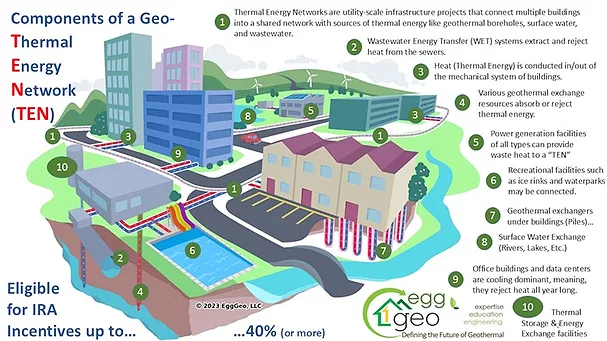
Decarbonizing buildings and industry is crucial for reducing global energy consumption, predominantly in the form of heat. Thermal energy storage plays a significant role in this process by reducing reliance on electrical energy and batteries. Thermal energy networks that connect multiple buildings into a shared energy network can significantly reduce electrical demand and consumption.
Today’s data storage centers require considerable amounts of additional energy. Air-cooled systems have been the norm for data storage; however, liquid-cooled systems can handle greater internal heat displacement. This makes them ideal for energy-hungry AI tasks and preserving electricity.
Plastic pipe, typically made from materials such as PVC, PE and PP, does not contain PFAS, synthetic chemicals used in various industrial applications and consumer products. Stringent regulations and standards govern plastic pipe production, especially those used for our drinking water supply.
Thermal energy networks help buildings communicate with each other in warmth and coolness through piping networks. New columnist John Mullen explains how these shared energy networks use “waste” heat from sewage wastewater, collected stormwater or existing fire suppression systems to use elsewhere in buildings.
While the ‘electrify everything’ trend may be relatively new, many homeowners have been steadily electrifying their energy sources for more than five decades.
\What is now hot and dry Mexico City used to be a lush agricultural area. Shifting water levels caused by flooding were controlled with floating agricultural infrastructure. The Spanish conquistadors decided to build there, but constant flooding resulted in draining the once enormous Lake Texcoco. Today, much of Mexico City rests in the lake basin; the city’s population explosion depletes groundwater.
Wastewater energy transfer has risen to the top as a preferred initial method to begin the decarbonization efforts for commercial buildings and thermal energy networks of all types and sizes.
When imagining a distribution warehouse, setting up shop in an old, underground mine doesn’t come to mind. And while PHCP tools, equipment or building materials don’t need to be housed in a cool climate, an underground space can help curb the theft of expensive materials such as copper pipe and fittings.