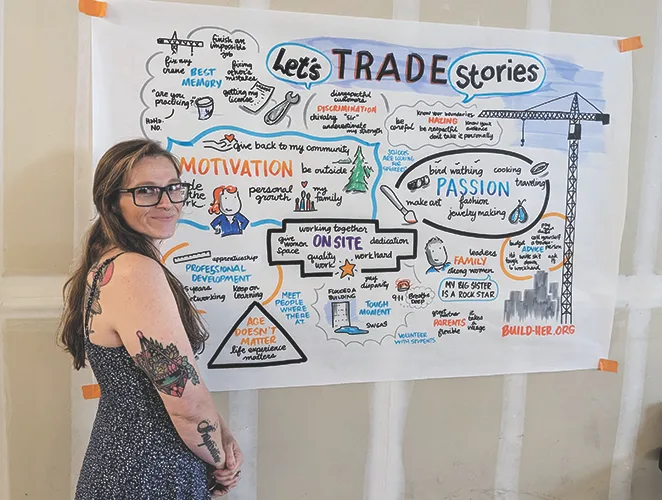
After surviving heroin addiction and an abusive relationship, Alayna Chavez was looking for a way to start over. Then, she saw a flyer for trade school.
“My mom said, ‘This is your second chance,’” Chavez says. “‘Why don’t you just try it and see what happens?’”
Just 10 months later, Chavez graduated near the top of her class. Today, she’s an 11-year-sober plumber, mentor and trades advocate who’s living proof that one’s past doesn’t have to define their future.
Childhood Interrupted
Chavez was born and raised in Arizona but moved to Colorado after her parents divorced. Now just living with her mother who struggled with a gambling addiction, the instability that followed forced Chavez to grow up quickly.
“It definitely burdened my sister and me,” she says. “We were always home alone, adulting when we didn’t need to be adulting.”
After a few years in the state, her mother got into legal trouble because of her addiction, and Chavez and her sister moved back to Arizona to live with their father. Unfortunately, the challenges continued.
Financial hardships led the family to live with Chavez’s older brother until her father eventually remarried. However, after they moved out, Chavez and her father’s new wife could not get along. Chavez was promptly kicked out, and she moved back in with her brother permanently at just 14 years old.
“My brother basically adopted me,” Chavez says.
High school was another uphill battle, so much so that she had dropped out shortly before moving in with her brother.
“I was not book smart,” Chavez says. “I didn’t like concentrating. I hated sitting in one spot through multiple classes.”
After a year, her brother was able to get her back into a charter school. Along with his support — and that of guidance counselor Tony Britton, who helped provide Chavez with transportation, daily lunches and school supplies — she was ultimately able to graduate on time.
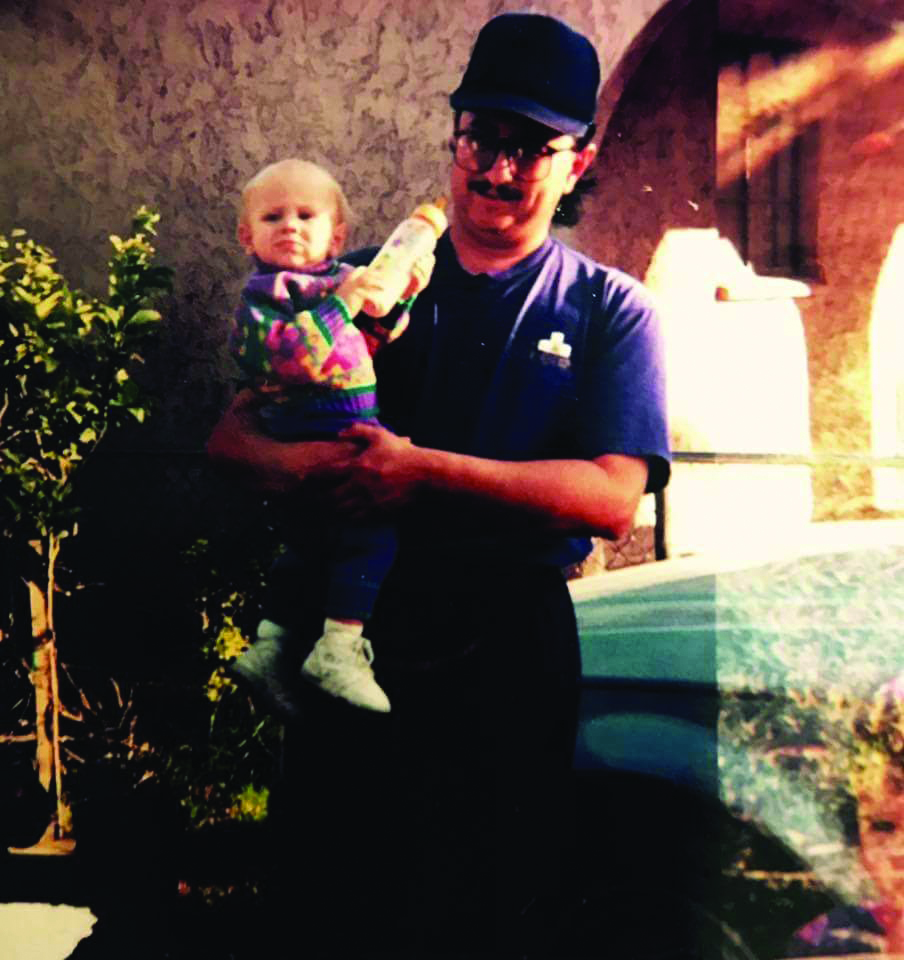
It was an especially impressive feat considering life had just dealt Chavez another devastating blow: Her father died from a heart attack when she was 17.
“I was doing really good, and then my father died and I just fell into a really deep depression,” Chavez says. “I didn’t want to be around anybody. I was closed off in my room; I wasn’t showering and I was playing video games to distract myself.”
The Road to Rock Bottom
Chavez began searching for direction. After graduating high school, she spent years traveling across the country, living in Texas, Colorado, Wyoming, California and Oregon. Chavez was eager to experience new places and was especially drawn to the outdoors.
“I was a hippie just living life up,” she laughs.
But everything changed when Chavez entered a relationship with the man who introduced her to heroin at 21 years old.
“I occasionally drank alcohol or smoked pot growing up, but I was never that into drugs,” she says. “I never thought I would do heroin and use a needle to get high.
“It was ultimately my choice to begin using heroin, but it came down to just surrounding myself with that person,” Chavez continues. “It was an abusive, controlling relationship.”
Within a year, her life completely unraveled. Back in Arizona, the people around her became almost exclusively other drug users, while she withdrew from the family who cared for her most. Any time she needed money for drugs, Chavez would lie to her brother or sister.
“They always gave it to me because I was hiding my addiction from them, and they didn’t know what I was spending it on,” Chavez says. “In reality, as soon as they handed me money I thought, ‘I got what I needed, and now I’m going to go get high.’”
Chavez was honest with her friend Kimmy when it came to her boyfriend, though. Any time Chavez needed support, Kimmy would pick her up and let her stay over.
“She always told me I should leave the relationship and that I deserved better,” Chavez says. “I never really took into consideration that I was just settling because I didn’t know what a real relationship was.”
Eventually, the abuse escalated into a domestic violence incident that forced Chavez to confront the reality of where her life was headed.
“I had realized I was going to end up dead — either from my boyfriend, on the side of the road shot and killed by drug dealers, or by overdosing,” she says.
Thus, she decided to enter rehab. After completing treatment, Chavez’s mother welcomed her into her home in Florida and helped her get back on her feet.
While working her job at a local women’s resource center, Chavez’s mother came across the trade school flyer that changed everything.
“I knew I needed to figure things out,” Chavez says. “And that’s when I was like, ‘OK, I’ll get a job. I’ll try going back to school.’ And I just fell in love with the trades from there.”
Finding Purpose in Plumbing
A decade-plus after graduating from trade school, working as a plumber has proven to be more than just a rewarding career for Chavez.
“It definitely has helped keep me sober,” she says. “It keeps my mind busy and I just constantly want to go, go, go.”
Plumbing has taken Chavez from Florida, where she worked as a service technician specializing in backflow prevention, back to Arizona, where she now provides a broad range of residential services for Parker & Sons.
“The sky’s the limit with plumbing,” Chavez says. “As long as you want to keep learning, there’s always something to learn more about.”
That mindset has helped shape her career over the past 10 years. And while Chavez prioritizes staying up to date on new technology and code changes, she’s not afraid to ask questions when she has them, either.
“I don’t have an ego,” Chavez laughs. “I’m the first to be like, ‘Hey, I don’t know what I’m doing and I want to learn. So can you take the opportunity to teach me?’ And that’s why I really enjoy working for Parker — they provide a community that’s always teaching us.”
She credits that culture of mentorship — and the close friendships she’s built at the company — with accelerating both her technical skills and confidence. Those relationships have also helped her navigate the unique challenges of being the only woman in Parker & Sons’ plumbing department.
Chavez recalls when the company decided to kindly “fire” a customer who refused to let her install a toilet because he thought she would drop and break it. Sometimes, the skepticism happens before Chavez even shows up to the customer’s door.
“I will call the customer and say, ‘Hi I’m Alayna, the plumber for Parker & Sons. I’ll be coming out in about 45 minutes,’” she says. “And they completely ignore everything and say, ‘Thanks for letting us know he’s coming out.’ And then I have to repeat myself: ‘No. I’m the plumber. My name’s Alayna — I’m the one coming out for the job!’”
Despite these frustrating experiences, Chavez says her favorite part of working in the trades is building lifelong relationships with co-workers and customers.
“When I get those customers that absolutely adore that I’m a woman plumber, I’m their plumber for life,” she says. “There are customers who will literally wait weeks on end for me to come to their house to do their plumbing because they trust me.”
Creating More Second Chances
When Chavez reflects on her career and looks back at her high school days now, she realizes things may have turned out differently during her youth if the skilled trades had been presented as an option. Like many students in the early 2000s, she remembers hearing a single message from teachers and guidance counselors: success means earning a four-year college degree.
“Kids are unaware of what’s available out there,” Chavez says. “You can literally get paid while you’re learning, build a career, make a great living and do something that’s serving people. The trades have been life changing for me — I never knew I was going to have a car, own a house or be sober as long as I have been.”
Spreading that message has fueled Chavez’s passion for mentorship. She began working with children while in Florida, where she volunteered with the Boys & Girls Club. Chavez taught introductory plumbing classes one afternoon each week, and she was thrilled to see that the same kids kept returning to learn more.
One of her favorite memories was helping students build lightsabers for Halloween using tools, PEX pipe and flashlights — giving them hands-on experience with plumbing materials in an unexpected manner.
“They thought it was the coolest thing ever,” Chavez says. “One of them said, ‘I didn’t think plumbing was this fun.’” If even one out of those five kids become a plumber, then I accomplished what I needed to.”
Chavez continued to expand her trades advocacy from there, giving presentations to students at her former trade school, Suncoast Technical College in Sarasota, Florida. Since returning to Arizona in 2022, she has also spoken at several career fairs and industry events. Organizations such as Build-her.org, Move Over Bob and Welders Workshop have invited her to share her story as well, particularly her experiences as a woman in the trades.
An organization that hits particularly close to home for Chavez is OCJ Kids, a nonprofit that supports foster and at-risk children by providing emergency resources, mentorship and transition programs.
“When I speak to those children, I let them know, ‘I might not have lost my parents in the way you have, but I was given up by them. I’ve been there,’” she says. “I just want them to realize it’s not the end of the road, and there are amazing opportunities out there like the trades if they don’t have the funds for college.”
It’s important for Chavez to spread positive messaging about the trades online, too. Through her social media channels, she shares her daily work with 5,000-plus followers. She particularly enjoys partnering with different industry manufacturers to demonstrate products, educate homeowners and inspire future tradespeople.
She hopes to one day bring these manufacturer partnerships full circle. Chavez’s long-term vision is to open a plumbing supply store in her hometown — a place where local contractors can access the products they need without driving almost an hour to what’s currently the nearest supply house.
“I eventually would like to transition out of field work, because it does really wear and tear on your body in the long run,” she says.
Working Smarter, Living Stronger
Of course, Chavez has experienced firsthand the physical demands that come with being a plumber. But rather than just accept the aches and pains as part of the job, she has chosen to make wellness a daily priority.
Most mornings begin with a 6 a.m. Pilates class, followed by a healthy breakfast before heading to her first service call.
“I’m really proactive about working out and stretching,” Chavez says. “Some plumbers will go home and just sit there and drink a beer after work. You don’t really want to always do that — you want to keep moving.”
She started taking her commitment to health more seriously in 2022 after routine bloodwork showed her A1C levels were in the prediabetic range. It did not come as a complete surprise to Chavez, as her father’s heart attack was due to complications from diabetes, and her brother currently lives with the disease.
“But in my head when I saw the results I was like, ‘I don’t want to die at 58 like my dad,’” Chavez says.
Over the next year, she “dialed in” and lost 83 pounds through consistent exercise and healthier eating habits.
“I feel so much better now,” Chavez says. “I have more energy and I’m more confident. And, I don’t have to have diabetes because I changed my diet.”
She notices the difference at work as well, especially during Arizona’s extreme summers, where staying hydrated and physically fit can be crucial to staying safe on the jobsite. Chavez says meal prepping and protein shakes are key to her daily routine and highly recommends both for busy tradespeople looking to improve their nutrition habits.
She’s incorporated this ‘smarter not harder’ approach into protecting her body on the job, too. Throughout her career, Chavez has invested in tools to ease physical strain, such as the motorcycle lift she uses to load water heaters up and down.
“I’m only 5’4”,” she laughs. “Some men can lift a water heater like it’s nothing, but I have to work differently to get the job done — safely for myself, but also because time is money.”

A Testament
Coincidentally, a few years after Chavez began using the motorcycle lift for her work, riding motorcycles became one of her favorite hobbies.
“It’s like that song, ‘Free Bird,’” she says. “Literally feeling so free that your mind completely shuts off. Riding at night is really cool, because you get to see the moon and the stars in a whole different way compared to when you’re in a car.”
Chavez is also an avid birdwatcher, a hobby that offers a similar type of escape.
“To be able to sit down, not think about anything, look at nature and hear the water in the river going by — it’s just relaxing,” she says. “It’s like a minor reset for me.”
Her favorite bird is the northern flicker, a member of the woodpecker family that has even become part of her other longtime passion: tattoos. Chavez has gotten more than 22 over the past several years, including depictions of the northern flicker and other birds. She visits her tattoo artist about every four months and has already filled one leg — with plans for more.
“I’m probably going to be fully covered by the time I die,” she laughs. “That’s my goal.”
For Chavez, her hobbies give her space to be something other than a plumber. Previously, she had felt she was having time management issues and hired a life coach, Amanda, to get to the bottom of them.
“She made me realize that I was putting work first and myself last,” Chavez says. “Plumbing is always going to be important, but there’s a time and a place to say, ‘OK, I’m off today. I’m putting my phone on silent.’”
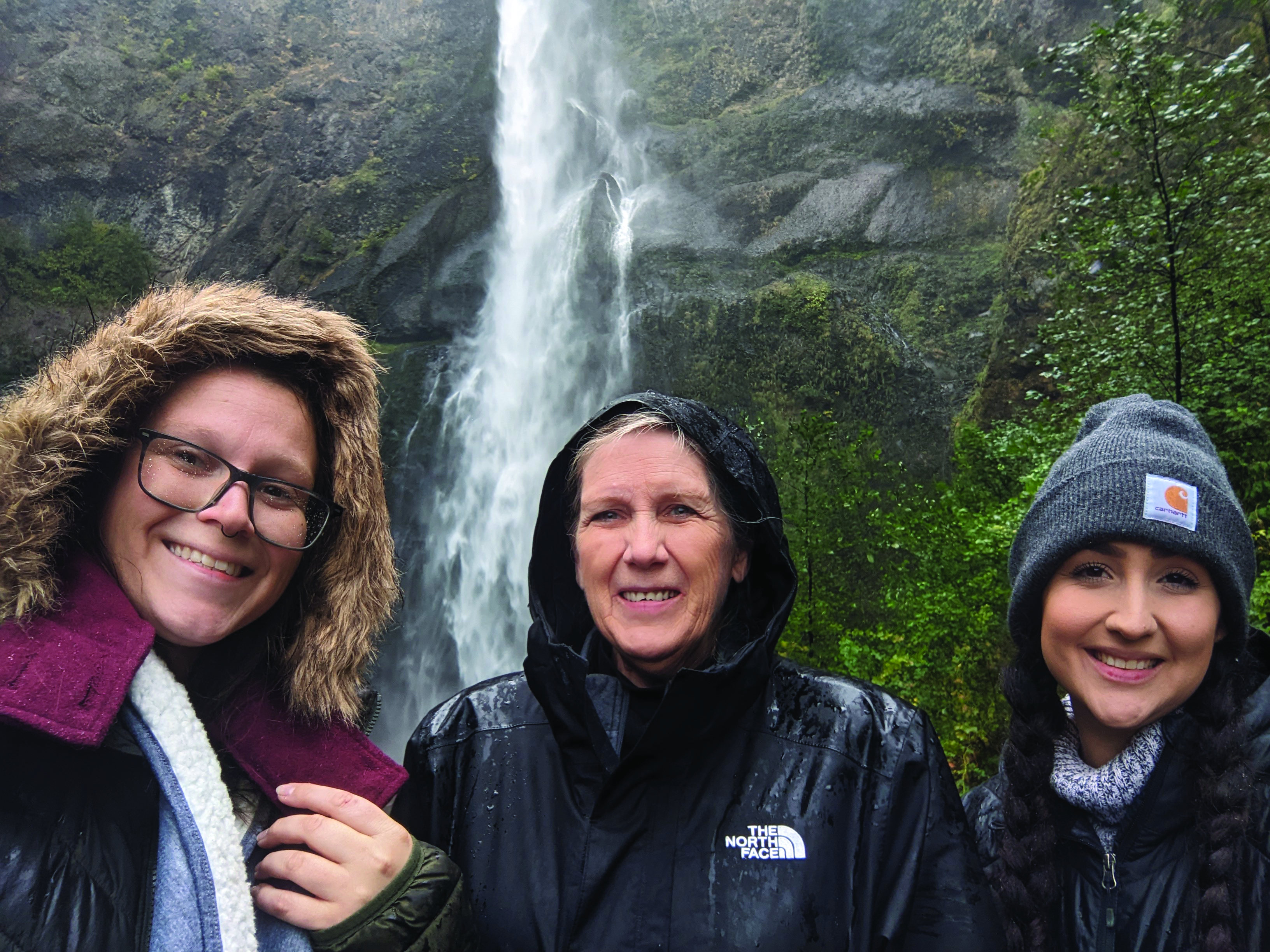
Improving her work-life balance has made all the difference for Chavez’s mental health and given her more time to strengthen her connection with her community. She regularly attends church services and events, and finds they give her the opportunity to meet people her age, discuss her faith, hear different perspectives and spend quality time with her best friends, Tina and Tara.
“Anytime I need anything, there’s no judgment,” she says. “I can call them and they’ll pray for me. It’s so great to hang out together and just be ourselves.”
That type of support has been especially important for Chavez during some of the darkest times of her life. One particularly difficult period occurred about two years ago, when she experienced suicidal thoughts following a series of personal circumstances. Her brother, sister and sister-in-law responded by checking in with her every day and making sure she knew she wasn’t alone.
“It was nice to be able to recognize that people love me and they don’t want me to exit life like that,” Chavez says. “That’s the biggest thing — just reaching out to other people who love you, because they’re going to be there for you no matter what. Unconditional love is real.”
Soon after, she began Christian-based therapy, and while she may still have days when she doesn’t want to talk to anyone or be around people, she now has the tools to recognize self-isolation isn’t the answer. Whenever she feels depressed, Chavez aims to leave the house, grab a coffee and hang outside with a friend. She says keeping her schedule and mind busy are key practices that help her maintain her sobriety as well.
“I always thought after I became sober that I would be embarrassed, but it’s actually a testament,” she says. “It’s helping and showing other people that they can get out of it, too.”
It’s clear that her shift in perspective has become central to the way Chavez approaches life.
“You have to learn to forgive yourself for things that you put yourself through, because they’ve made you who you are,” she says. “Sometimes, you’re going to be your biggest enemy — but sometimes, you’re also going to be your biggest hero. Just look in the mirror and tell yourself, ‘Today’s my day.’”