HVAC Service Technician Adam Nasser learned how to carry responsibility early. With the tragic loss of his father at a young age, Nasser matured quickly and began working at just 12 years old while growing up in Lebanon. By the time he left the country at 17, the most he had ever earned was about $200 a month.
Following the footsteps of his oldest sister and mentor who had immigrated to the U.S. 10 years prior, Nasser moved to Los Angeles in 2017 and took whatever job he could find — waiting tables, running a cash register and working at a smoke shop, where earning $12 an hour felt like life-changing money. But deep down he knew he was destined for more.
When his brother-in-law, a mechanic, suggested a career in the trades, Nasser stood in line to enroll in trade school before changing his mind at the last minute and walking away.
“I actually lied to my family,” Nasser says. “I told them all the spots were taken. And then, for some reason, being back at the smoke shop just didn’t feel right. I just thought, ‘Yeah, I want to do HVAC.’
“Maybe it happened for a reason, maybe it didn’t,” Nasser continues. “I’ll never know what would have happened if I started in HVAC six months earlier. Maybe I would have felt that I forced myself into it, and I wouldn’t have enjoyed it as much. My point is, if something doesn’t feel right at the time, it’s OK. Sure, sometimes opportunity only comes once. But in my situation, it wasn’t only once — school wasn’t going anywhere.”
Today, the 25-year-old lives in Colorado and loves what he does — even viewing HVAC as more of a hobby than a job. He relishes the chance to discuss industry technology and trends, communicate and build value with homeowners, and share his passion for the field online, even winning the Best Social Content category at the 2026 HVAC Tactical Awards in Las Vegas this February.
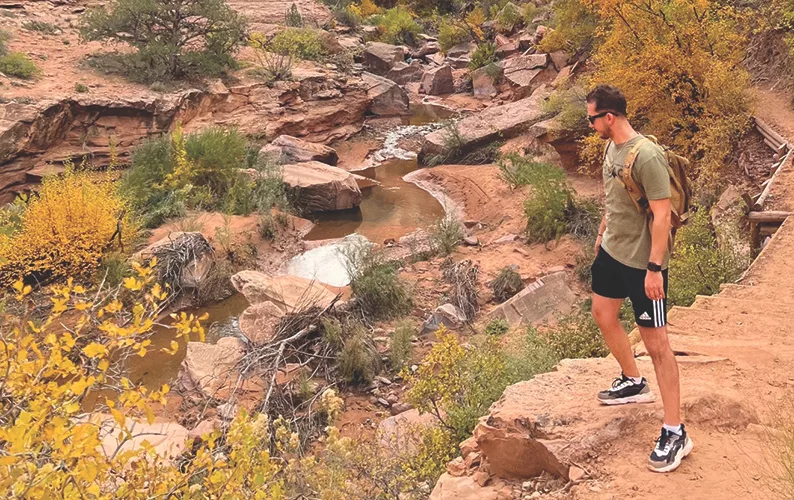
When we spoke to Nasser to learn more about his journey, we found that the same drive that fuels his work in the trades is balanced by a deep appreciation for the outdoors, where the quiet beauty of nature offers a place to recharge and reflect.
RUGGED: What was your experience moving from Lebanon to the United States?
Nasser: It was a culture shock for sure. One of the things that I’ve mentioned before is in Lebanon — or I would even say the Middle East as a whole (and honestly maybe the entire world) — people don’t really appreciate blue collar work as much as it’s appreciated in the United States. So, you’re looked down on as a mechanic, as an HVAC guy, as a plumber. Moving helped me realize, “Oh, anything I do here is appreciated.” You don’t have to go to college here to be successful. You can do anything that is useful to others, and you will be successful.
Did you feel others were supportive when you moved here?
At the beginning, not so much. Not a lot of people know this, but my real name is actually Mohamad Ali Nasser, not Adam. I definitely ran into some scenarios where when people learned my name, you could feel the tone change a little bit. That’s the reason I changed my name to Adam. I definitely felt less support in the jobs that I worked prior to joining the HVAC field than what I feel now, though; eventually, I did feel welcomed. (I actually felt less support from Middle Eastern people who looked down on some of the jobs I took when I moved here.)
What are some of your favorite parts of your work?
I would say driving around and just seeing different cities during my route. I like to look up new coffee shops or breakfast or lunch places I can visit. I can just pull up, take my break right there and spend an hour somewhere I’ve never been before. Colorado is beautiful, so sometimes if I’m driving in the mountains, I’ll just park on the side of the road and have a drink, smoke a cigarette or eat a snack while I enjoy the view — take a minute to relax and breathe.
I’m a very outgoing person, so just communicating with different people as well — seeing how everybody has a different perspective. I also like the freedom of not having a boss above my head watching everything I do.
What are some stressors you experience during your job?
I would say driving again, actually. I don’t mind driving an hour, two hours to a call — I have absolutely no problem with that as long as it’s an empty road. But once the traffic hits, I don’t like being stuck.
I also don’t like when I’m stuck on a job diagnosing something and I can’t figure it out — I get so frustrated. It brings me down and makes me feel like I’m a failure; I just get in my head too much. It takes a couple days for me to believe in myself again. What helps me afterward is talking to some of my friends in the field or watching videos and doing research on what I experienced to try to never run into the same issue again.
In residential work, you also run into a lot of customers who are frustrated. They can start blaming you for things that you had nothing to do with, or maybe they’ve been screwed by another contractor. But you need to realize it’s not your fault — they just need somebody to vent to. I’ve gotten really good at turning these types of customers around: hear them out, see what it is they’re actually frustrated about and try your best to help them solve it. Then, everyone’s calm.
Mentally, something that especially helps me comprehend different perspectives and communication styles are my twice weekly therapy sessions. These also allow me to vent freely to someone with no biases and gain a better understanding of life in general.
What about the physical effects of the job? Is there anything you do to relieve the stress on your body?
I like to take a shower when I get home, or maybe even a salted bath with essential oils. I also just like to lie in bed or make a cup of coffee, chill and sit outside on my porch. I like being outdoors a lot.
What else do you do in your free time that brings you joy?
Recently I started getting into hiking, which I really enjoy. I like traveling, too. I haven’t been outside of the U.S. since I moved here, but I’ve traveled to a lot of other states. I also have a motorcycle back in California. Whenever I want to decompress, I take a two-hour flight, hop on my motorcycle and enjoy it for the weekend. When I lived in California, I would take my bike out on the Pacific Coast Highway (PCH) and ride alongside the ocean every weekend.
What motivates you to keep going?
In the past I’ve tried to listen to motivational podcasts and videos. Unfortunately, they do not work for me. You can put me in a room full of motivational speakers, and it just won’t affect me. Ultimately, what works for me is motivating myself. Growing up with no money, I’ve always been very money motivated. I periodically look at my financial situation and think, “OK, how can I achieve what I wanted to when I was younger? How can I do better?” I look in the mirror and self-talk. One of my favorite shows is “Suits,” and I quote it a lot: “When your back is against the wall, break the goddamn thing down.”
What advice would you give to other tradespeople?
Don’t focus on the negatives in your life, because they will drown you. You may have 10 negatives and then just two positives that happen, and that’s OK. Focus on the positives. You can’t change the past. The only history that matters is the history that you write today.
Follow Nasser on Instagram @wolfofhvac.