The United States is currently facing a severe housing crunch. One recent Axios analysis (https://tinyurl.com/yww8mkxx) found that the U.S. housing market is short 3.2 million homes, noting “there aren’t enough homes to keep up with the increase in households.”
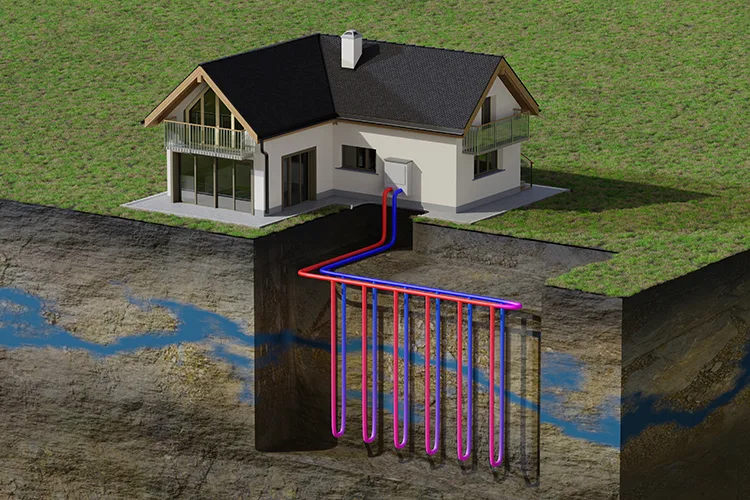
With energy prices rising and demand for energy-efficient homes growing, builders and developers are increasingly looking for energy-efficient HVAC solutions. Geothermal is over four times more efficient than a furnace or boiler and twice as efficient as an air source heat pump. As a result, geothermal HVAC can help builders and developers meet these demands as they construct the next generation of American housing stock.
When installed in new neighborhoods and developments, the collective savings can be enormous. For example, when Dandelion Energy partnered with Lennar to bring geothermal heating and cooling to new communities in Colorado, the estimated cost savings exceeded $30 million over 20 years (https://tinyurl.com/2mxyk4jz) compared to air-source heat pumps.
Why build with geothermal
Geothermal HVAC allows builders to construct a better product that consumers love. The advantages are multifaceted:
Maximize home price potential: Heating and cooling amount to the most significant utility costs for homeowners. With electricity prices surging and continuing to rise, geothermal technology gives builders a true pathway to deliver a high-end premium product without downgrading the comfort experience that customers expect from conventional fossil fuel systems.
This ability to offer customer-satisfying comfort while meeting modern electrification requirements allows builders to maximize the home’s price potential and deliver a truly future-proof product.
According to one 2025 analysis (https://tinyurl.com/2j38v93m), properties with eco-friendly features sell for nearly 15 percent more than their traditionally built counterparts. Geothermal heating and cooling systems offer a highly efficient and long-term solution to rising energy costs that buyers are willing to pay a premium for.
Unlock financial incentives: The financial landscape for geothermal HVAC is changing as incentives from the Inflation Reduction Act end and provisions from H.R.1, a reconciliation bill incorporating legislation from several congressional committees, take effect.
Under H.R.1, several long-standing programs were revised, and new pathways were introduced to expand access to geothermal energy and reduce its cost.
One of the most significant changes is the authorization of third-party ownership (https://tinyurl.com/yc5zb48e): Qualified companies can now finance, install and own a geothermal system on a homeowner’s property. This unlocks up to a 50 percent federal tax credit and allows the homeowner or building owner to lease the system for a predictable monthly payment. By removing high upfront costs, builders can more readily offer premium, energy-efficient geothermal solutions at greater scale.
Although the federal residential 25D geothermal tax credit ended last year, many state and local governments are rolling out new or expanded incentives. Utilities and public agencies increasingly recognize the long-term value of geothermal systems, from lowering household energy bills to easing demand on the grid.
Added up, federal, state and local policies have made geothermal HVAC more affordable than ever for residential, multifamily and commercial properties. As a result, geothermal systems today can match, or even beat, the cost of traditional HVAC options while delivering the same comfort and reliability.
Use geothermal to future-proof: Integrating geothermal systems from the start is a strategic move to future-proof new construction against regulatory shifts and emerging consumer expectations.
Unsurprisingly, people want to purchase homes constructed with the most efficient, reliable and durable solutions even when housing options are limited. Increasingly, state and local building codes are supporting these priorities, mandating electrification and implementing efficient standards to support consumer outcomes.
Geothermal technology is already positioned to meet the high-performance requirements of an electrified future in ways that air source heat pumps and other technologies can’t.
This approach also avoids locking new homes into outdated energy infrastructure for the next several decades while providing the best HVAC solution available today.
The U.S. needs more housing. Now. This is both a challenge and an opportunity. While there are real hurdles to building enough housing to lower costs and improve accessibility, builders, developers, and HVAC professionals have the chance to equip the next generation of homes with the most efficient, affordable and longest-lasting heating and cooling solutions.
By integrating geothermal HVAC from the ground up, professionals in the building industry can maximize a home’s value, leverage powerful financial incentives and future-proof their projects without sacrificing comfort or harming the environment.
The solutions to our housing crisis must be as durable and efficient as the homes we build. Embracing geothermal technology is a strategic move that delivers on all fronts.
Wyatt Roberts is head of new construction for Dandelion Energy (dandelionenergy.com), a leading provider of residential geothermal heating and cooling solutions. He is a builder and a building scientist, and is passionate about reducing the impact of our built world on the global environment.



