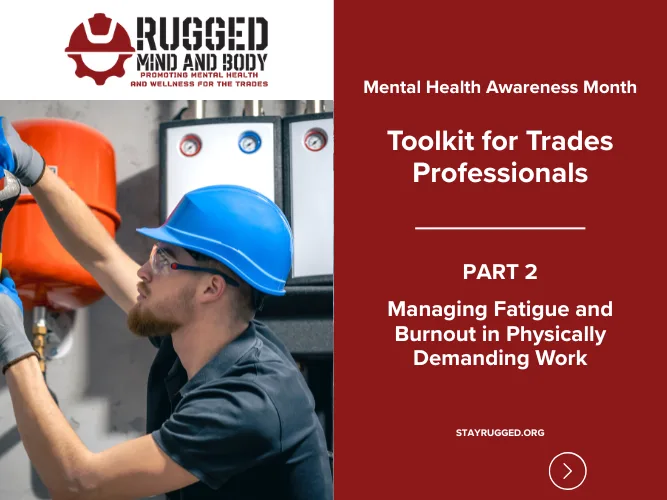
As Mental Health Awareness Month continues, RUGGED Mind and Body is adding to its Toolkit for Trades Professionals with practical resources focused on the realities of trade work and supporting both well-being and performance.
The second article in the series explores burnout and fatigue, and how to care for yourself in a physically demanding trade. Read on for practical information and tips you can apply in your daily work and life. In case you missed the first article in this series, check it out here.
Managing Burnout and Fatigue in Physically Demanding Work
Mental Health Awareness Month highlights an issue often accepted in the trades: chronic exhaustion. Long hours, on-call shifts, and physical demands are common in the industry.
But fatigue and burnout are not the same. Failing to recognize the difference can affect performance, increase safety risks, and harm long-term health. Managing both starts with awareness and intentional recovery.
Differentiate Fatigue From Burnout
Fatigue and burnout can look similar, but they are different and require different solutions.
Fatigue is usually short-term physical or mental exhaustion that improves with rest.
Burnout is more serious and long-term, involving emotional exhaustion, low motivation, and a reduced sense of effectiveness.
Recognizing the difference matters. If a full night’s sleep restores function, the issue is likely fatigue. If exhaustion continues along with frustration, detachment, or cynicism, burnout may be developing and may require broader lifestyle or workplace changes.
Prioritize Sleep and Recovery, Even With Irregular Schedules
Irregular hours can make recovery harder, and sleep is still essential for focus, reaction time, and safety on the job. Habits to prioritize quality sleep include:
Keeping a consistent sleep window as much as possible, even on variable schedules
Creating a dark, quiet sleep environment to improve sleep quality during off-hours
Limiting caffeine and screens before rest periods
Lack of sleep can affect focus, decision-making, and reaction time similarly to alcohol impairment. In addition, studies show insufficient sleep is linked to increased workplace errors and injuries.
For trades professionals, this translates directly to job performance and safety. Recovery is essential for both safety and performance, not a luxury.
Know When to Step Back Before Mistakes Increase
Ongoing fatigue or burnout can lead to reduced situational awareness and increased risk of error. Warning signs to be aware of:
Slower reaction times or repeated small errors
Trouble focusing on routine tasks
Increased near-misses or safety lapses
Studies show fatigue is a significant contributor to workplace incidents and injuries. Furthermore, chronic stress and exhaustion reduce cognitive performance and decision-making ability. Stepping back can mean taking a short break, asking for help, or adjusting workload when needed. In safety-sensitive work, knowing limits is a responsibility, not a weakness.
Fatigue and burnout are common in high-demand work, but they can be managed with the right habits. Distinguishing short-term exhaustion from burnout, prioritizing sleep, and noticing early performance decline can help prevent more serious problems.Mental Health Awareness Month highlights the issue, but maintaining performance and safety requires ongoing attention to recovery and limits year-round.
Interested in learning more? Connect in two ways to stay informed on trade-focused mental health and wellness content:
Subscribe to PHC News magazine for quarterly print and digital issues
Sign up for the monthly RUGGED Mind and Body e-newsletter
*https://www.mayoclinic.org/healthy-lifestyle/adult-health/in-depth/burnout/art-20046642
***https://www.cdc.gov/niosh/bulletin/2020/fatigue-work.html