We use cookies to provide you with a better experience. By continuing to browse the site you are agreeing to our use of cookies in accordance with our Cookie Policy.
There is one provision in both the Uniform Plumbing Code (UPC) and International Plumbing Code (IPC) that endangers public health and bloats construction budgets: the requirement to provide hot water at all public lavatories.
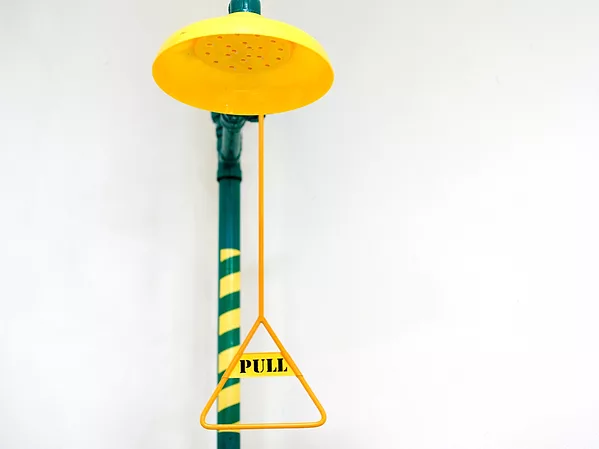
Selecting a water heater for a facility where there is a combination eyewash and emergency shower.
December 3, 2018
One of the most critical applications faced by plumbing engineers is selecting a water heater for a facility where there is a combination eyewash and emergency shower. These fixtures are required by the ANSI Z358.1 code to deliver a specific amount of water flow for a specific period of time.
In response to the rural community’s water crisis, an effective and lasting solution is developed for the Holly Ridge subdivision in Candler, North Carolina.
All I wanted to be when I was a kid was a writer — a sports writer. But not just a sports writer; I wanted to be a beat writer for the Chicago Blackhawks hockey team.
Six Noritz NCC199CDV tankless water heaters were used to replace a malfunctioning boiler.
November 5, 2018
Like any institution, Mater Dei’s success depends on the quality of its people and facilities. So when an old, 1-million BTU boiler began malfunctioning in 2017 and placing the hot water needs of the entire school in jeopardy, officials knew they needed to act.
Answers to some of the most pressurized issues in plumbing today.
November 3, 2018
Every commercial building project has its share of challenges. Sometimes those challenges require innovation and code exceptions, other times they simply necessitate a thorough understanding of the facility and its design goals.
Scalding hot water from fixture faucets and fittings accounts for more than 25 percent of all scald burns in children. The elderly and the physically impaired also are at increased risk of scald burns because they have thinner skin and slower reactions. They often cannot recognize a hazard and get out of harm’s way before a serious burn can occur.