We use cookies to provide you with a better experience. By continuing to browse the site you are agreeing to our use of cookies in accordance with our Cookie Policy.
A professional panel discusses their experiences of design delegation, the pitfalls that sometimes occur and how to avoid future complications.
As the built and to-be-built environments increase in complexity, speed and efficiency, fire protection professionals must work together to protect people, property and the environment. A professional panel discusses this issue and other challenges when working on projects with delegated design clauses.
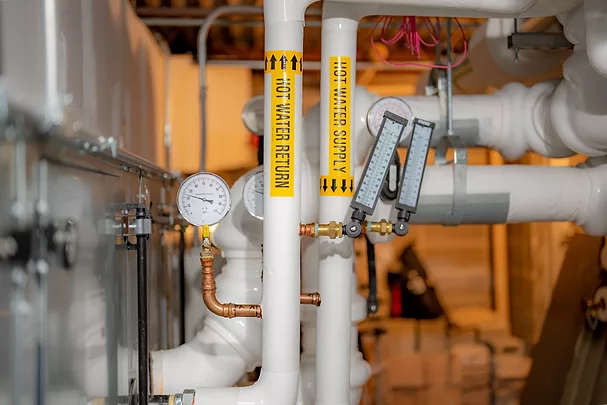
We continue this series with a discussion on verifying that temperature controls in a domestic hot water system are working properly. TMVs work well at stabilizing system temperatures. When used with point-of-use mixing valves, they provide safe temperatures for bathing and washing.
Colorado lodge installs a Sanicubic 1 grinder system to pump wastewater from the renovated basement to the sewer line on the primary floor.
When general manager Jason Weddingfeld of North Shore Lodge decided to finish a walk-out basement, he chose a pre-assembled simplex grinder pump system to move wastewater to the sewer line on the primary floor.
As we strive to conserve water resources, we contribute to the current population’s well-being and pave the way for a more sustainable future.
Understanding and implementing water conservation strategies —such as low-flow fixtures, hot water system design and leak detection, and greywater and rainwater systems — contributes to energy efficiency and the well-being of ecosystems, in addition to water savings.
Large-scale projects are often more complicated than smaller ones, and a renovation project can have many more challenges than new construction.
Renovating an iconic building such as Chicago’s Willis Tower (formerly the Sears Tower) required careful planning, study and inspection — critical to avoiding problems. However, no project is perfect, and the plumbing engineering team at Stantec resolved plumbing challenges as they occurred.
Active listening — not only hearing but listening — is a skill that helps us understand the needs of our clients, coworkers, family and friends. In a business relationship, that translates to using empathy to be aware of and sensitive to the thoughts and feelings of others.
BF Nagy describes his trip from Seattle to San Francisco in a Tesla and debunks some myths about electric vehicles and our electric grid. In addition, he explains how EVs use bidirectional charging and telematics to support grid reliability.
 RSS
RSS