As water scarcity and environmental concerns intensify, the need for water sustainability continues to grow. Various strategies can help conserve water, including focusing on best practices, using innovative technologies, harnessing progressive building codes, and obtaining certifications such as LEED (Leadership in Energy and Environmental Design).
Each approach addresses water conservation from a different angle — by capturing available water, diverting excess water that would be otherwise lost, and reducing water demand through planting and irrigation choices.
This article highlights the types of reclaim systems such as rainwater capture systems and greywater systems, and explains how some of these innovative irrigation controls have been implemented.
Greywater systems
Greywater is a conservation method that uses cleaned wastewater from sources like lavatory sinks and showers and repurposes it for non-potable uses, such as flushing toilets in buildings and irrigation. Greywater systems help minimize reliance on the domestic cold-water supply for items that do not necessarily require potable water; however, early collaboration studies are needed to confirm the availability of greywater and to determine allowances for both space planning and cost.
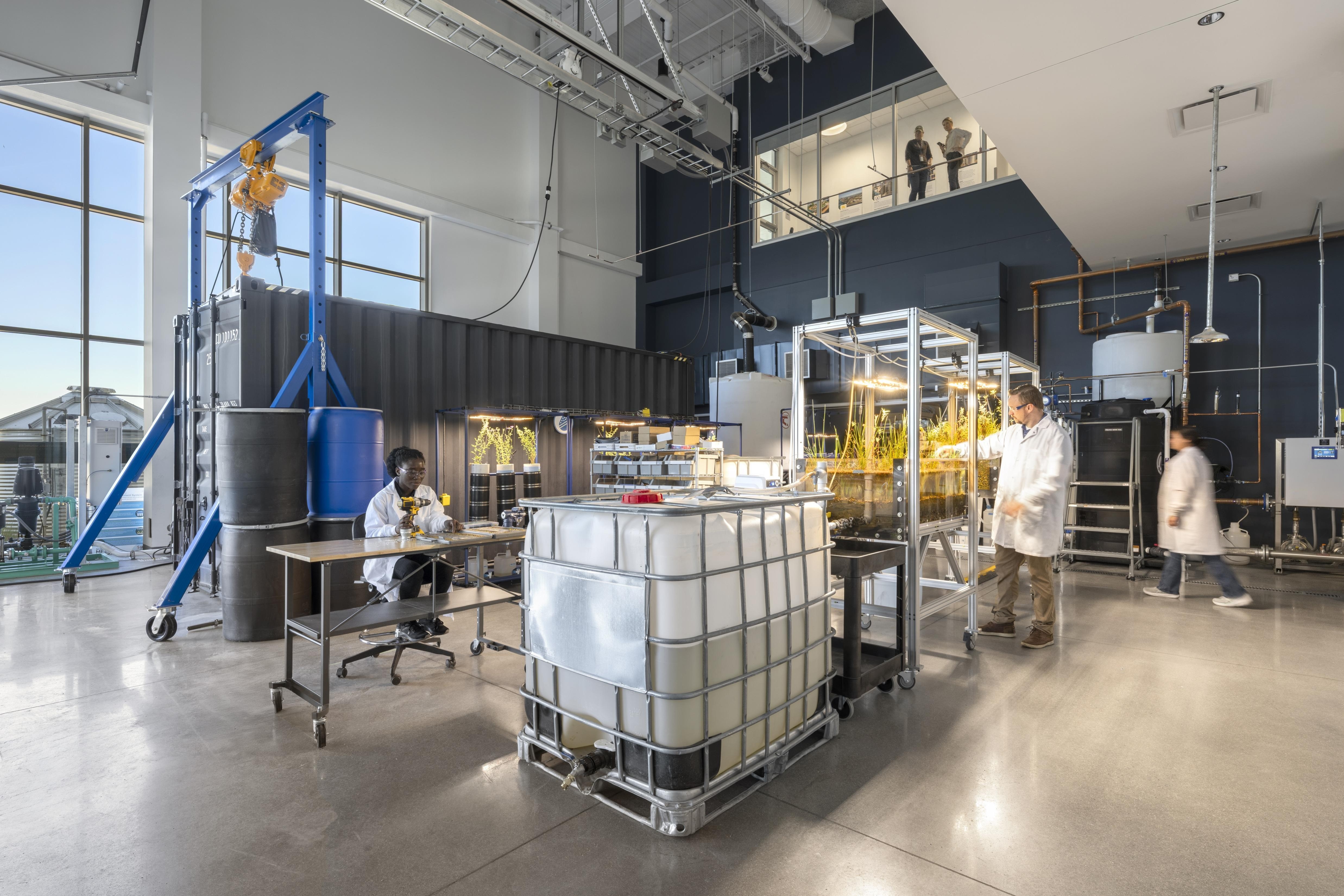
Many greywater systems are being studied for research. Colorado State University’s (CSU) Hydro Building has one of the few commercial greywater systems in the Denver area that follows Colorado’s Regulation 86 (https://bit.ly/4gxWIBz) for water reuse and NSF 350 certified water reuse systems equipment (https://bit.ly/4bX78rN). The design initially focused on serving the plumbing restroom fixtures; however, with careful planning and understanding of CSU’s mission, the greywater system turned in a teaching and research tool.
Copper rain chains and micro basins
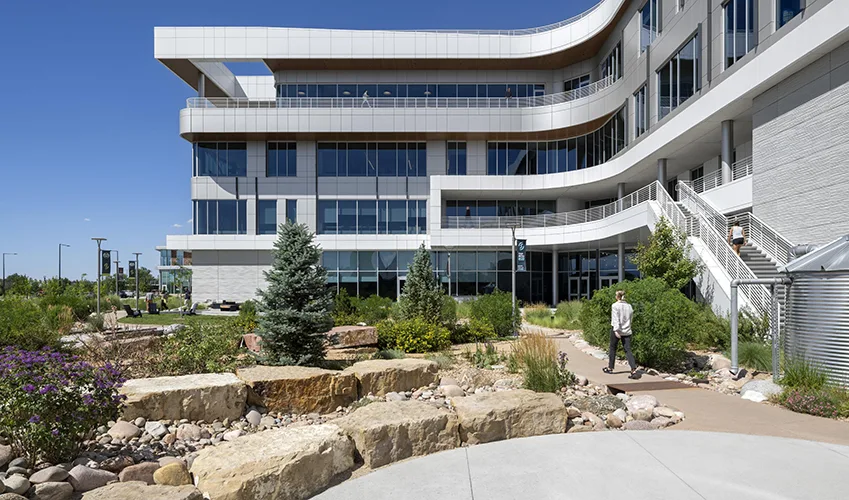
Copper rain chains collect runoff directly from the roof and carry it down to shallow waterways at grade, nourishing native plantings along the way. The entire system remains visible and accessible at the surface, maintaining a connection to the landscape while reducing the cost and maintenance demands that come with buried stormwater infrastructure.
The University of Northern Colorado’s College of Osteopathic Medicine reuses its stormwater across the entire site, turning the drainage infrastructure into a layered, living landscape system that serves the campus on multiple levels.
Runoff from the building and paved surfaces first flow into planted micro basins, shallow depressions that direct stormwater toward the root zones of native and low-water-use vegetation. Water that isn’t absorbed moves through a network of bioswales and surface-retention areas, continuing across the site rather than immediately disappearing below ground.
Central to this system was the removal of conventional grass turf, which required significant water and maintenance, and its replacement with native seed and plantings in bioswales. The native seed mixes developed deep root systems over time, improving soil structure, increasing infiltration and providing habitat for pollinators and local wildlife.
This system manages stormwater by slowing runoff, limiting surface erosion, supporting biodiversity and sustaining plants.

Rainwater capture systems
Rainwater harvesting is a transformative practice with profound implications for both sustainable water management and landscape architecture. One approach reduces potable water use for irrigation by capturing and reusing roof rainwater runoff. Like greywater systems, rainwater harvesting is a strategic effort to repurpose water.
Active rainwater-capture strategies collect runoff from rooftops through roof drains or scuppers. Depending on whether it is located above grade or below grade, the stormwater is then stored in tanks or cisterns and used for landscape irrigation.
When used alongside other water-conserving practices such as planting regionally adaptive and low-water use materials, group planting according to similar water needs, and implementing drip irrigation with flow-sensor technology, overall water demand is reduced.
Many passive rainwater harvesting strategies also direct water from impervious surfaces, like asphalt, to landscaped areas through curb cuts, bioswales or rain basins where plants can use the water immediately. This passive approach can also be achieved by capturing a building’s roof runoff and routing the storm drainage piping within the building so it discharges into the landscaped area.
Bioswales
The University of Arizona’s Paul and Alice Baker Center for Public Media offers a compelling example of what thoughtful, layered water conservation looks like on a single site. Rather than relying on a single technology or strategy, the project weaves together multiple approaches, with each addressing a different part of the water cycle.
Low-water-use planting is the foundation of sustainable practices, with species suited to the local climate significantly reducing the site’s long-term irrigation demand. Reclaimed water then meets the remaining irrigation needs by using a water resource that would otherwise go to waste. With proper coordination, even roof stormwater piping can be configured to properly discharge into the bioswale.
At the ground level, natural check dams manage how rainfall moves across the site. Modeled after centuries-old indigenous water harvesting techniques used throughout the arid southwest, check dams are low earthen or rock barriers placed across drainage channels that slow the movement of stormwater. By reducing water velocities, these check dams encourage runoff to spread out and soak into the soil instead of rushing off the site. This helps recharge local groundwater and supports nearby vegetation while reducing erosion.
Bioswales work alongside this check dam system, channeling runoff through planted, gently sloping corridors where water filters through soil and vegetation before it ever reaches a storm drain. Together, these features transform wasted rainfall into a resource that actively supports a healthy landscape.
This layered approach reduces water demand, leverages natural water sources, and with passive stormwater management, recovers all the water that reaches the site while reducing dependence on potable sources.
Irrigation smart controllers
Too often, sites continue receiving water at their first growth irrigation rate long after plants have matured because watering schedules were never revisited. Modern smart irrigation technology is changing what is possible.
Irrigation smart controllers allow managers to program phased watering schedules that respond to the landscape’s lifecycle. Higher watering levels support new root development during the first growing seasons, and as plants mature, the controllers automatically transition to reduce watering schedules, delivering only what the landscape needs over time.
These smart controller systems go a step further when paired with soil moisture sensors. After a rain event, instead of following the same watering schedule, the sensors detect when the soil already has sufficient moisture and skip that cycle to help prevent overwatering. The controllers can also adjust water output in real time based on actual site conditions, rather than sticking to a fixed calendar.
Remote management capabilities further allow watering schedules to be monitored and updated without a site visit, making it practical to keep irrigation finely tuned as the landscape evolves year after year.
The result is an irrigation system that grows smarter alongside the plantings it supports.
Some of the greatest long-term water savings come not from installing more technology, but from using available technology to let irrigation schedules optimize and mature with the landscape. A well-programmed smart controller continues to find efficiencies throughout the life of the project.
With water resources becoming increasingly scarce, the integration of sustainable practices for collecting, managing and leveraging water reuse is important. When combined with regionally adaptive, low-water-use plant selections and irrigation systems equipped with smart controllers and flow-sensor technology, overall water demand is further reduced while helping prevent overwatering that all too frequently occurs.
Resilient plumbing and landscaping designs leverage on-site and building water resources to address water scarcity and reduce waste by creating systems that conserve, capture and reuse water to the greatest extent possible.
Lhymwell Manalo is a plumbing engineer at SmithGroup’s Phoenix office. He is a member of ASPE and has 10 years of experience designing plumbing systems for various building types.
Emily Noelke is a landscape designer at SmithGroup’s Phoenix office. She is a member of ASLA and has over a year of experience designing in the desert and enjoys collaborating to find creative design solutions for regional issues.
Dustin Simmons is a landscape architect at SmithGroup’s Phoenix office. He has over 20 years of experience, is a member of ASLA and CLARB, and is passionate about water stewardship, native and adapted planting, and climate-responsive design.