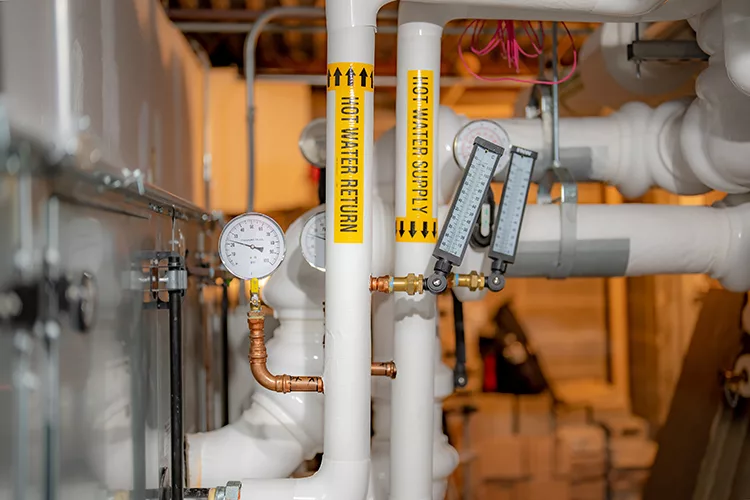
The two major model plumbing codes in the United States are the International Plumbing Code and the Uniform Plumbing Code. They provide minimum requirements for health, safety and sanitation for plumbing installations.
Scalding hazards
1. Temperature limits
According to many industry documents, including the Consumer Product Safety Commission (CPSC) Technical Bulletin No. 34, temperatures exceeding 120 F are a “foreseeable hazard.” It provides a table, setting forth the time-temperature relation of scald burn injuries, and states:
“Tap water scald injuries, particularly to young children (and the elderly and infirm), occur nationally with sufficient frequency and with such catastrophic results to be a foreseeable hazard of great concern.
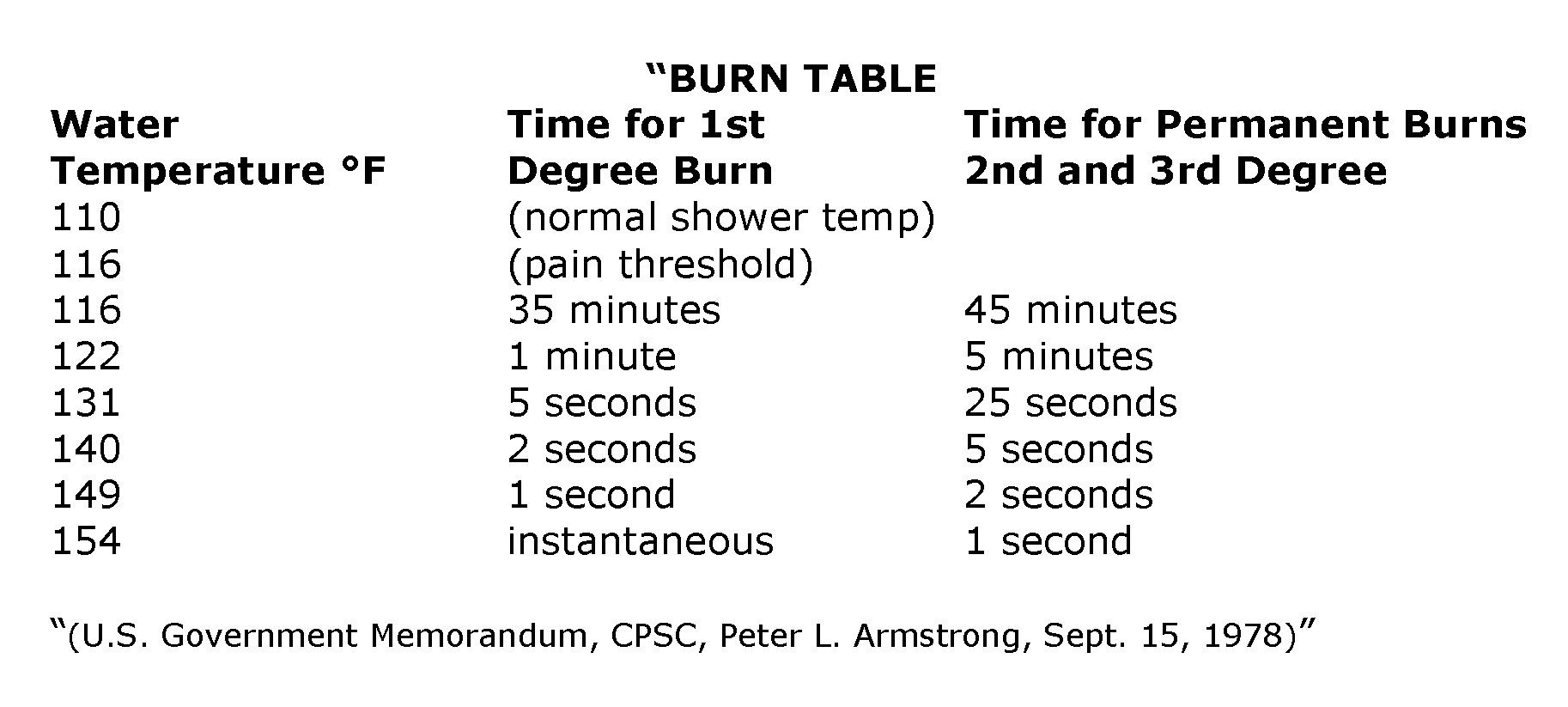
The codes settled on 120 F as the maximum temperature above which usage temperatures are hazardous. However, the codes require that temperature be controlled by installing point-of-use fixtures in the plumbing system to minimize the risk of scalding. By now, every home should have code-compliant, point-of-use tub/shower valves or other valves adjusted to limit the maximum (mixed) hot water temperature entering the bath to no more than 120 F.
2. Additions, alterations or repairs
Many people refer to “grandfather causes” when they claim they do not need to install code-compliant tub/shower valves when a new water heater can replace an old one. However, the code language also includes a particularly important proviso that prohibits what is hazardous.
In the model plumbing code section covering additions, alterations or repairs, it states (bold emphasis added):
“Additions, alterations, renovations or repairs to any plumbing system shall conform to that required for a new plumbing system without requiring the existing plumbing system to comply with all the requirements of this code. Additions, alterations or repairs shall not cause an existing system to become unsafe, insanitary or overloaded. Minor additions, alterations, renovations and repairs to existing plumbing systems shall meet the provisions for new construction, unless such work is done in the same manner and arrangement as was in the existing system, is not hazardous and is approved.”
3. Existing installations
In the model plumbing code section covering existing installations, it states (bold emphasis added):
“Plumbing systems lawfully in existence at the time of the adoption of this code shall be permitted to have their use and maintenance continued if the use, maintenance or repair is in accordance with the original design and no hazard to life, health or property is created by such plumbing system.”
4. Individual shower valves
In the model plumbing code section covering individual shower valves, it states:
“Individual shower and [tub/shower] combination valves shall be balanced-pressure, thermostatic or combination balanced-pressure/thermostatic valves that conform to the requirements of: ASSE 1016-2017/ASME A112.1016-2017/CSA B125.16-17 (R2021)[,] Performance Requirements for Automatic Compensating Valves for Individual Showers and Tub/Shower Combinations[,] and shall be installed at the point of use. Shower and [tub/shower] combination valves required by this section shall be equipped with a means to limit the maximum setting of the valve to 120°F (49°C), which shall be [field-adjusted] in accordance with the manufacturer’s instructions. In-line thermostatic valves shall not be [used] for compliance with this section.”
5. Bathtub and whirlpool bathtub valves
In the model plumbing code section covering bathtub and whirlpool bathtub valves, it states:
“The hot water supplied to bathtubs and whirlpool bathtubs shall be limited to a maximum temperature of 120 F (49 C) by a water-temperature limiting device that conforms to ASSE 1070 or CSA B125.3, except where such protection is otherwise provided by a combination tub/shower valve in accordance with the section on [tub/shower] valves.”
6. In-line temperature-limiting devices
In-line devices will not protect against “thermal shock” hazards. An automatic temperature or pressure-compensating-type shower valve conforming to ASSE 1016 must still be used at the shower or tub/shower fixture to protect against pressure imbalances between the hot and cold water systems; pressure imbalances can lead to thermal shock and scalding incidents.
Legionella bacteria and Legionnaires’ disease
Another plumbing hazard is warm water maintained at a temperature within the ideal growth range for bacteria (Legionella).
Legionnaires’ disease is a serious, often fatal form of pneumonia caused by Legionella bacteria. The bacteria are known to grow in man-made water systems where the water remains within an ideal temperature range for the bacteria to reach high levels. The disease is typically contracted by inhaling contaminated water vapor or mist into the lungs, where the bacteria find a warm, wet location to grow to high levels and cause an infection.
Symptoms include high fever, cough, shortness of breath, muscle aches and headache; symptoms usually appear two to 10 days after exposure. Legionnaires’ disease is treated with aggressive antibiotics and, generally, is not spread from person to person.
1. Aerosolization sources
Typical plumbing and mechanical sources of water vapor or mist include showers, neglected pools or hot tubs, cooling towers, evaporative cooling equipment, humidifiers and decorative fountains, where water vapor is aerosolized.
2. Warm temperatures
The warm temperature hazard is not specifically addressed by temperature limitations or requirements in the codes. This is because, until the last few decades, this was not a well-known danger. Now, most domestic hot water (DHW) usage temperatures are established in the Definitions chapter (Chapter 2) of the codes. The definitions of “hot water” and “tempered water” fall within the Legionella bacteria’s growth temperature range.
The overall Legionella bacteria growth temperature range is from a low of 68 F to the upper limit of 122 F. The ideal range — where bacteria double in number every few hours — is 95 F to 115 F (35 C to 46 C), which is close to human body temperature and to the typical bathing and showering temperature range.
Generally, the hot water temperatures that we typically use are in the ideal temperature range for rapid growth or proliferation of Legionella bacteria. At these typical hot water usage temperatures, the bacteria can double in number every few hours.
However, the time it takes for Legionella bacteria to double in number varies with water temperature, the minerals and nutrients in the water, any biofilm on the pipe walls, and stagnation or aging water (which affects the oxidation of water treatment chemical residuals from the water utility).
3. Chlorine levels to control Legionella bacteria growth
Generally, chlorine levels above 0.5 parts per million (ppm) control bacteria growth in utility water systems.
To control Legionella bacteria, free chlorine residuals in building water systems should be maintained at a minimum of 0.5 ppm, with 1 to 2 ppm often recommended as a safer target in building water systems to overcome demand.
Hot tubs require higher levels, ideally 3 to 10 ppm, due to high organic loads and warmer temperatures. Some local health departments limit chlorine levels in pools and spas to 8 ppm.
For swimming pools and spas, refer to the Model Aquatic Health Code (MAHC), which was developed by the Centers for Disease Control and Prevention (CDC). The MAHC is a voluntary, science-based guidance document created by the CDC to help local and state officials standardize regulations for public aquatic venues, including pools, hot tubs and splash pads.
Key recommendations for chlorine residuals
• Building water systems (potable water). Maintain a minimum of 0.5 to 1.0 ppm of free chlorine in all parts of the system, particularly at the point of entry and throughout the distribution plumbing.
• Cooling towers. Free chlorine residuals should be kept above 0.5 ppm.
• Hot tubs/spas. Maintain free chlorine from 3 to 10 ppm (or 4 to 8 ppm for bromine) to ensure adequate disinfection.
Other Legionella growth conditions to consider
The pH level for chlorine is most effective below 8.0, ideally between 7.2 and 7.8.
While chlorine helps with biofilm management, it does not easily kill Legionella protected within thick biofilms. Regular cleaning, scrubbing and system flushing are required to reduce, not only control, the bacteria.
A water heater can have flushing and deliming ports installed with isolation valves to allow a mild acid solution to be circulated. This will dissolve scale, which is typically the foundation for biofilm.
Water conservation contributes to water age and stagnation
With water-conserving, low-flow plumbing fixtures, flows have decreased and stagnation has increased, allowing water treatment chemicals to oxidize down to ineffective levels for controlling bacteria growth. Over time, the water treatment chemicals (generally chlorine) oxidize when they react with pipe materials, temperature and contaminants in the water.
This results in the chemical residual dropping to levels that can no longer control bacteria growth. The oxidized chlorine converts to trihalomethanes, considered a disinfectant by-product that is a contaminant in drinking water.
I served on my local water and sewer department utility board of directors, and one of the issues we wrestled with was the loss of water treatment chemical residuals at the end of long water mains. This issue became more prominent after the advent of the Energy Policy Act of 1992 and subsequent federal energy and water conservation programs in the 1990s.
Water utilities were facing low or no measurable water treatment chemical residuals near the ends of water utility distribution systems. Fixture flow rates were reduced, and water aged in the water mains. Some utilities tried switching to monochloramines, which oxidize at a slower rate but are not as aggressive at fighting bacteria. More monochloramine water treatment chemical is needed than chlorine, and it costs significantly more than chlorine.
Other issues with monochloramines include their by-products: nitrogen and toxic halo nitriles (cyanogen chloride), halo nitromethane (chloropicrin) and nitrosamines. Monochloramine decomposes back into ammonia and hypochlorous acid, which can then oxidize further or form trihalomethanes (THMs). While monochloramine produces fewer regulated THMs and halo acetic acids than free chlorine, its degradation or reaction with organic matter can form other harmful nitrogenous compounds.
Those compounds become food sources for nontuberculous mycobacteria (NTM), which can be worse than Legionella. NTM is typically associated with healthcare settings and can cause infections in open sores or wounds. It can also infect your lungs, skin, bones, lymph nodes and many other organs.
Hot water storage and distribution temperature
A properly designed DHW system would include a water heater set to 140 F, followed by a master thermostatic mixing valve set to ensure a return temperature of about 124 F.
The distribution temperature would leave the master temperature-actuated mixing valve between 140 F and 124 F. At each point of use, a temperature control device must be used to reduce the discharge temperature down to a safe level for that fixture in accordance with the maximum temperature listed for it in the Chapter 4 (Fixtures) section of the plumbing code.
The maximum temperature-limit stop on all shower and tub/shower valves should be set to no more than 120 F and, ideally, to the maximum setting of 110 F, making a scalding injury nearly impossible.
The ideal growth temperature for Legionella bacteria is 105 F. The ideal temperature for bathing, showering and washing is also close to 105 F. This means that typical DHW usage temperatures are always in the ideal Legionella growth temperature range.
For this reason, the American Society of Heating, Refrigerating and Air-Conditioning Engineers (ASHRAE) and many other engineering and standard committees dealing with hot water temperature controls understand that we must keep hot water stored and delivered above the Legionella bacteria growth temperature and then mix it with cold water using approved temperature-limiting control devices at or near the fixtures. This prevents bacteria growth in the water heater and the distribution piping and prevents scalding for users at the fixtures.
ASHRAE and many engineering and design guidelines recommend keeping hot water stored at or above 140 F (60 C) and circulating at 122 F (50 C) or higher to prevent Legionella from multiplying to high levels in a short time at typical usage temperatures. Good engineering practice is to keep the coolest point in the circulated hot water loop a couple of degrees above the Legionella bacteria’s upper growth temperature of 122 F.
The codes do not address storage or distribution temperatures, with one exception. For combined heating hot water and DHW systems, a mixing valve conforming to ASSE 1017 must be installed at the hot water source, and set to a maximum of 140 F.
A design professional should consider the heat loss in the circulated DHW supply and return circuit. A typical heat loss is about 10 to 20 degrees, depending on the size of the building and the length of the hot water distribution piping.
The hot water supply temperature should be maintained at a relatively stable temperature by a master temperature-actuated mixing valve or digital mixing valve conforming to ASSE 1017 or CSA B125.
The mixing valve’s outlet temperature should be adjusted, as needed, to hold a DHW distribution temperature at the coolest location in the circulated hot water loop (right before the hot water return line reaches the cold water inlet to the water heater, and the cold water inlet or hot water return port on the mixing valve) to a temperature that is a couple of degrees above the maximum Legionella bacteria growth temperature of 122 F during off-peak hours. This means that the hot water supplied to all fixtures will be between 124 F and 144 F, depending on where the branch take-off is in the hot water system.
In critical buildings — such as hospitals, nursing homes and other buildings housing high-risk, immunosuppressed people — hot water circulation should be constant. Some low-risk building types, with no bathing or showering facilities and no aerosolization, can have their hot water circulation systems shut off by a timer. This timer should be set to bring the system back up to temperature about an hour before normal occupancy hours and shut off after normal occupancy hours.
The code does not tell you how to control for both hazards simultaneously. This is because the plumbing code does not address hot water storage or distribution temperatures, with a few exceptions. The plumbing codes provide little guidance because they prefer to allow for flexibility in design, installation, maintenance and operation. However, doing so creates confusion.
Many areas of the codes can provide guidance, but to accommodate all hot water system types and design conditions, the code would need to be extraordinarily complex and specific in ways that would make the hot water systems’ requirements cumbersome and confusing. Therefore, I would like to see the industry adopt a standard for DHW system design, installation and operation to control the risk of scalding and bacterial growth in DHW systems.
Ensuring safe hot water delivery involves balancing the need for sanitary temperatures — high enough to prevent bacterial growth, such as Legionella, in the hot water storage and distribution system — with code-compliant temperature controls in the proper locations to limit the temperatures at fixture outlets and prevent scalding injuries.





