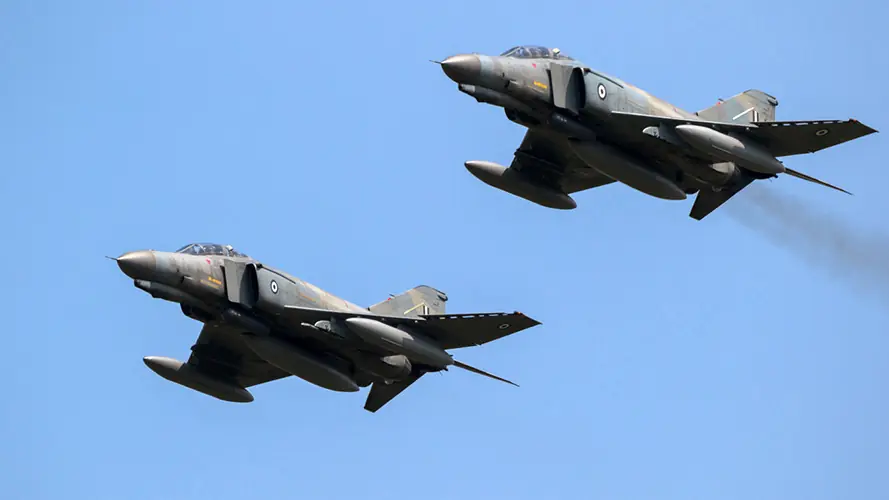
“Negative, Ghost Rider, the pattern is full.” You may recognize this famous line from “Top Gun,” starring Tom Cruise as Navy pilot Pete “Maverick” Mitchell. Why am I using it as the opening line for my column? Well, mostly because it is something I repeat often. However, it also happens to fit something I’ve been thinking about lately — patterns, wingmen and the people we trust enough to tell us no.
When you really think about it, “Top Gun” isn’t only about fighter jets, aviator sunglasses and volleyball. At its core, it’s about trust, teamwork and learning that even the most talented pilot can’t do it alone.
When Maverick hears, “negative, Ghost Rider, the pattern is full,” he’s being told there isn’t enough room for him to do things his own way. Throughout the film he learns a much bigger version of the same lesson: success isn’t only about being the most talented person. It comes from working as part of a team and learning to trust the person flying beside you.
Recognizing your patterns, challenging your thinking
Recently, I was listening to one of my preferred podcasts, “The Craig Groeschel Leadership Podcast.” In the episode “NBA Psychologist: The Secret to Thriving Under Pressure” with guest Dr. Wayne Chappelle, Craig talked about how Dr. Chappelle helped him develop a team of “wingmen”: people who could help him recognize his patterns, challenge his thinking and call attention to the things he might not be able to see himself.
For Craig, that team included his wife, members of his office team and a few close friends and other leaders.
I’ll admit, the whole wingman concept initially felt like a bit of a guy analogy, but it also made me curious.
Do I have wingmen in my court?
And yes, I realize that I mixed a fighter-jet analogy with a basketball analogy but stick with me a little bit longer.
I started to reflect; have I assembled a trusted group of people around me who know me well enough to recognize my patterns and challenge me when those patterns no longer serve me?
Most of us have people we turn to for advice: coworkers we trust, friends we vent to and family members who know us better than we sometimes know ourselves. However, having people around us isn’t necessarily the same thing as having wingmen.
A good wingman isn’t simply there to fly beside you. They watch your blind spots. They keep you out of trouble. They help you accomplish your mission. And sometimes (probably a lot of times) they tell you something you really don’t want to hear. They aren’t the first people to tell you that you’re right or the other person is the problem or whatever decision you’re about to make is brilliant.
Instead, they recognize your patterns. They notice that every time you get overwhelmed, you start taking control of things that really belong to someone else. They recognize that when you feel challenged, you become defensive. Or maybe they recognize that you tend to say yes to everything until you’re stretched too thin and frustrated with everyone around you. However, they probably also see the positive in you that you fail to see in yourself.
All these patterns can be incredibly difficult to see from the cockpit, which is what stuck with me about Craig’s idea.
Who helps you to fly better?
Leadership requires self-awareness, but self-awareness doesn’t have to be a solo activity. Sometimes we need someone flying beside us who has a different vantage point. Someone willing to say: “I’ve seen this before. This is what you do when you’re stressed.” Or my favorite line, “You might want to reconsider how you’re approaching this.” Or, as some have reminded me, “I think you’re playing it safe when you’re capable of more — be bold.”
When the pattern really is full, good wingmen don’t simply tell you no and leave you circling the tower. They help you find another way to accomplish the objective safely and successfully.
Having this kind of team on our side doesn’t happen naturally. We need to empower those individuals and give them permission to challenge us. More importantly, when they do, we cannot be defensive. It is easy to say we want honest feedback. It’s much harder when someone we trust points out the pattern that we’d rather not acknowledge is there.
I don’t think the question is simply, “Who are my wingmen?” I think the real question is, who have I given permission to tell me when my pattern is full?
Who knows me well enough to recognize when I’m falling into an old habit, pushing too hard, missing a blind spot or insisting on my own flight path simply because it’s the one I chose?
The best wingmen aren’t there to keep us from flying. They are there to help us fly better. They challenge us when we need to be challenged, steady us when things get turbulent, and remind us that changing course isn’t the same as abandoning the mission.
There will always be moments when the approach we planned isn’t available. The pattern will be full. The answer will be no. The conditions will change. In those moments, success may have less to do with how talented we are at the controls and more to do with whom we trust to fly beside us. Find your wingmen. Give them permission to call out your patterns. Be willing to hear them when they do.
Trust your wingmen, adjust your course and keep flying toward the mission.
Leadership was never meant to be a solo flight.