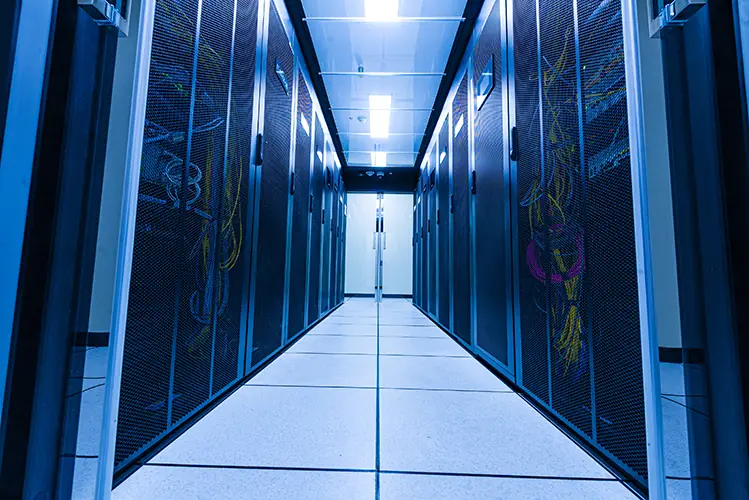
As generative AI drives greater demand for data center capacity, mechanical contractors are facing new challenges in designing, installing and maintaining the cooling infrastructure that supports these facilities.
Historically, data centers have relied on air-based cooling strategies. But as they accommodate higher usage and the more powerful chips needed for generative AI, they are producing more heat than traditional air-cooled technologies can efficiently dissipate. As a result, the industry is leveraging liquid cooling approaches for its new facilities rather than the previous air-chilled systems.
For mechanical contractors, this shift means data center cooling increasingly depends on the reliable movement, filtration, treatment and control of water or glycol-based fluids throughout the facility. Modern water treatment, filtration and monitoring technologies can help contractors and operators to better manage liquid cooling systems in these high-demand environments by moving from manual, schedule-based inspections to more proactive, condition-based maintenance.
Liquid cooling infrastructure
In many modern data center designs, cooling infrastructure consists of closed-loop chilled water systems that use air-cooled chillers to cool the water, which then passes through mechanical components before being circulated to equipment such as computer room air handlers or direct-to-chip systems. This means that fluid infrastructure plays a larger, more crucial role and may now require more precise conditions to meet demand.
Each of these challenges presented by this new infrastructure is also exacerbated by labor shortages, which make regular manual maintenance and long-term problem-solving more challenging for contractors.
Several factors contribute to system performance. Pumps, valves, strainers, filtration and connected devices all influence whether the cooling loop can maintain performance without creating unnecessary energy demand or maintenance challenges. This means product selection and system design can have a direct and significant effect on operating performance. Any unnecessary resistance to flow can make pumps work harder, while better control of flow and temperature can help the system operate closer to peak performance.
When it comes to product selection, domestic manufacturing capacity is becoming a factor, as contractors managing tight construction schedules benefit from suppliers that can accommodate custom specifications and delivery timelines without relying on overseas lead times. For contractors, sourcing components from a single provider that spans pumps, valves, strainers, filtration and water treatment can simplify installation and reduce the number of vendors involved in ongoing maintenance and troubleshooting.
Hidden challenges
One of the most prominent challenges for liquid cooling systems is filtration, as these systems often require finer filtration to protect downstream equipment. Some applications use extremely fine screens, including 20-micron screens, which filter particles around the size of a white blood cell.
However, the finer the screen, the more frequently it needs maintenance. This presents a challenge, as strainers are often under-maintained, creating performance and uptime risks. And in some cases, they are not maintained at all.
While often overlooked, strainer maintenance can affect overall operational efficiency and lead to issues such as reduced flow, clogged screens, damage to critical process equipment, and increased risk of downtime.
In closed-loop systems, whether technical, primary, chilled, hot or glycol-based, another primary issue is corrosion caused by dissolved oxygen. Dissolved oxygen attacks metal surfaces, which can lead to submicron metal particles, sediment and high-iron deposits in the water. Those particles can clog equipment, enter racks, plug micron filters within CDUs and create broader performance issues within the closed loop.
Some solutions attempt to combat this issue with chemical treatment, which can help prevent corrosion by forming a protective coating on steel or copper surfaces. However, these treatments ultimately do not remove dissolved oxygen from the closed loop. For this reason, contractors should look beyond traditional chemical treatment or basic filtration alone.
Modern solutions
Fine filtration is especially important because many of the particles found in closed loops are smaller than contractors may expect. Solutions that offer ultra-fine filtration can help to streamline maintenance and enhance efficiency. However, modern liquid cooling infrastructure specifically designed for data center applications can help address not only filtration but also the root causes of closed-loop water problems, including dissolved oxygen.
For example, the Series C System from EasyWater is a side-stream treatment system designed for hot, chilled and glycol closed loops. It removes dissolved oxygen, filters suspended solids to submicron levels and helps prevent and remove insulating deposits.
A side-stream system means that not all the water is treated at once, but rather operates alongside the main closed loop, using its own pump to continuously draw a portion of water from the loop, treat it and return it to circulation.
The side-stream approach helps remove dissolved oxygen, filter suspended solids to submicron levels and reduce the conditions that allow deposits to form. By helping prevent deposits from forming on heat transfer surfaces, closed-loop treatment can also support energy efficiency, since cleaner systems can operate with less resistance, thereby improving performance over time.
Rather than relying solely on manual inspections or fixed maintenance schedules, contractors and operators should also consider smart and connected solutions that monitor system conditions in real time and respond when maintenance is needed. The Series C system can connect with a building management system, allowing teams to monitor performance. Series C can also include a self-backwashing feature that reduces manual maintenance by automatically initiating a backwash based on differential pressure. The system uses municipal water rather than closed-loop water for backwashing, helping avoid unnecessary closed-loop water loss and keeping the loop closed.
Overall, contractors should take a comprehensive approach to a data center’s liquid infrastructure. To ensure that systems are working efficiently, contractors should go beyond filtration alone and also consider strainers, pumps, valves, water treatment and connected technologies.
Long-term reliability
As data centers face growing scrutiny over both water consumption and discharge quality, a system-level approach is required that accounts for the quality of water entering the facility and how effectively water is treated and reused on the way out. Mechanical contractors will play an increasingly important role in supporting the fluid infrastructure behind these facilities.
Selecting modern products and technologies designed for data center applications can support both installation and long-term maintenance. By leveraging modern technologies that support condition-based maintenance, contractors and operators can help reduce labor demands, improve system performance and minimize the risk of downtime. However, ongoing training and education for both engineers who specify systems and contractors who install and maintain them is also key to this transition. Ongoing training will help ensure installations are correct as new technologies are implemented, and can help shorten the learning curve as more data centers adopt condition-based maintenance approaches.
Ultimately, as liquid cooling becomes more common in data center environments, the most successful systems will be engineered not only for capacity but also for reliability, maintainability and flow at hyperscale. The most successful contractors will be those equipped with the proper training and modern products to tackle fluid infrastructure challenges.
Nolan Foran, director of sales – mega projects (Americas) at Watts Water Technologies, leads strategic growth across North America’s mission-critical infrastructure market, with a focus on hyperscale data centers, advanced manufacturing, and other large-scale industrial facilities.



