Across the plumbing and mechanical trades, contractors are increasingly looking beyond experience alone for ways to verify that every connection has been completed correctly.
According to Associated Builders and Contractors (ABC), the construction industry will need approximately 349,000 net new workers in 2026 to meet anticipated demand, with that number projected to rise to 456,000 in 2027 as construction spending accelerates.
While labor shortages are often discussed primarily in terms of hiring, the impact extends further. As experienced technicians are spread across more projects and newer workers take on greater responsibility in the field, contractors are increasingly rethinking how installation quality is achieved and verified.
"For decades, many installation processes relied heavily on experience and judgment," said Adam Horwitz, CEO of QuickFitting. "Those skills remain invaluable, but today's workforce realities are driving demand for processes that make completed work easier to verify."
The consequences of uncertainty often surface later in the form of callbacks, project delays and added labor costs. A single missed connection can pull technicians off billable work, disrupt schedules and reduce confidence among clients, inspectors and project stakeholders. As skilled labor becomes harder to replace and project timelines remain tight, preventing those issues before they occur has become increasingly important.
Rather than relying solely on downstream inspections or supervisory oversight, contractors are placing greater emphasis on verification at the point of installation, confirming work before walls close, another trade moves in, or the project advances.
"We're seeing growing demand for systems that create proof instead of relying on assumption," Horwitz said. "Contractors want confidence that a connection can be verified immediately, regardless of who performed the work or who inspects it later."
QuickFitting believes verification should be built into the installation process, not added afterward. That philosophy has guided the development of SurePress.
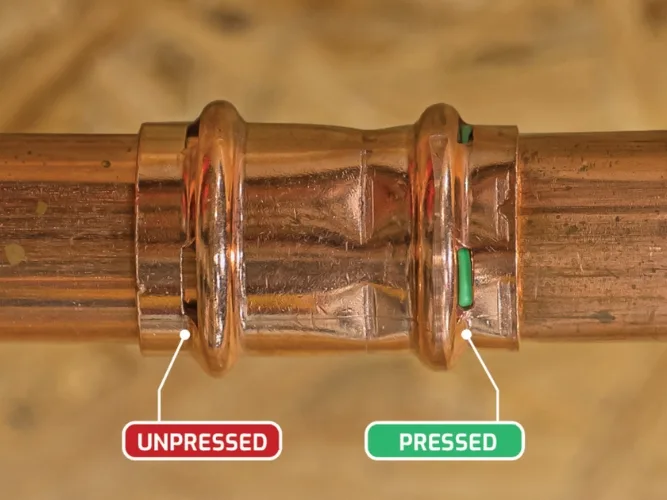
QuickFitting's SurePress copper press fittings incorporate patented visual indication technology that allows installers and inspectors to confirm a pressed connection at the point of installation. With no flame, solder or glue required, the system provides immediate visual confirmation that a connection has been properly pressed before the project moves to the next phase.
The shift from assumption-based installation to verification-based installation reflects a broader industry focus on accountability, consistency and risk reduction. Horwitz expects verification to become an increasingly important standard across the trades as workforce challenges persist.
"The industry isn't moving away from craftsmanship," Horwitz said. "It's supporting skilled tradespeople with processes that provide visible confirmation the work was completed correctly the first time."
For additional perspective on the workforce challenges driving this shift and the growing role of verification in installation, read QuickFitting’s Industry Insight, “The Shift From Assumption to Accountability.”
For additional perspective on the workforce challenges driving this shift and the growing role of verification in installation, read QuickFitting’s Industry Insight, “The Shift From Assumption to Accountability.”
For more information about QuickFitting’s SurePress copper press fittings and the company's patented visual indication technology, visit QuickFitting.com/SurePress.