Ninety years in, the Platsky Company story isn’t defined by a milestone. It’s defined by the people who built its reputation—one delivery, one handshake and one commitment at a time. The Long Island-based manufacturers’ representative agency has spent nine decades earning a reputation as one of the industry’s most respected partners by showing up, solving problems and doing whatever it takes to support customers and manufacturers.
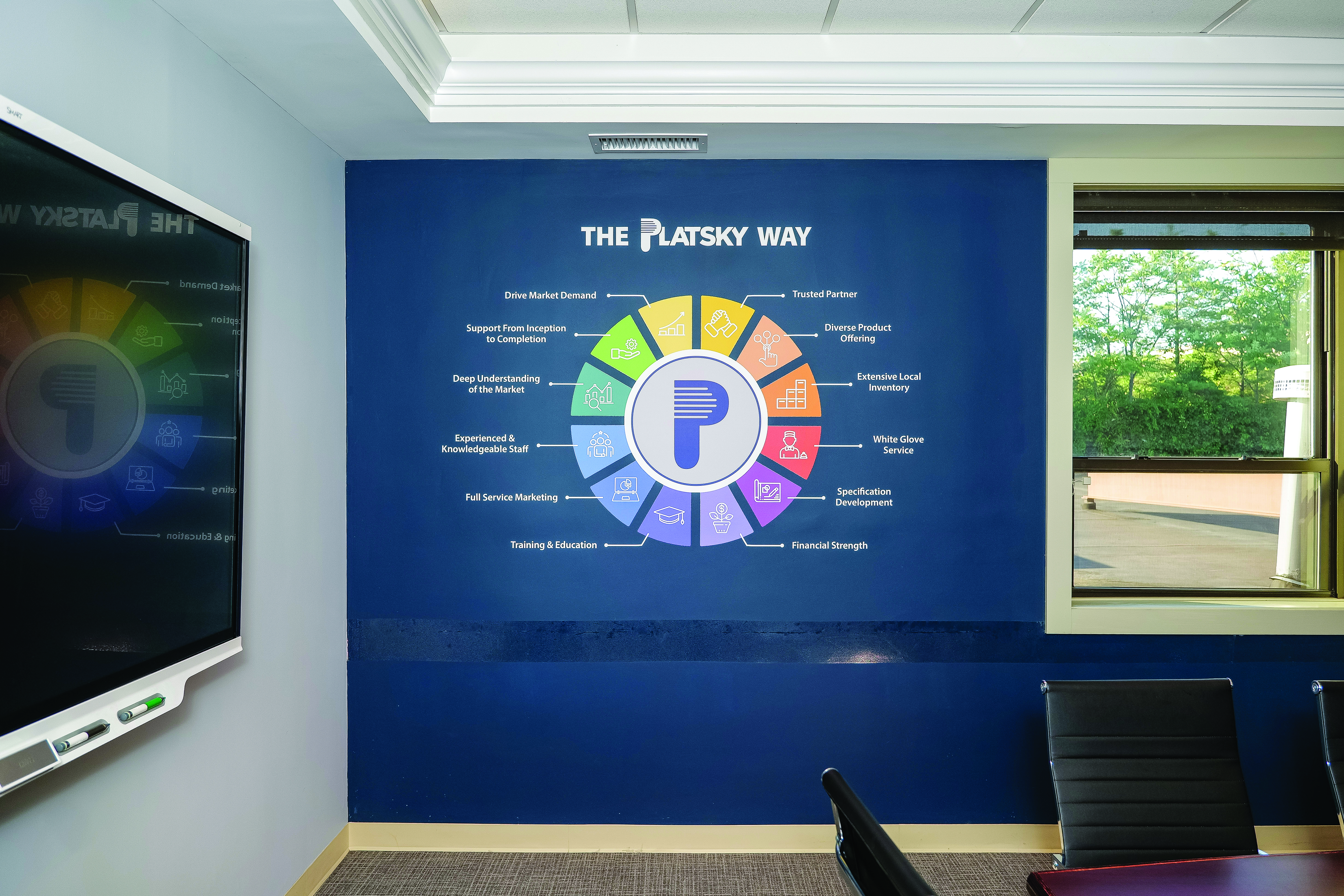
That philosophy, known simply throughout the company as “The Platsky Way,” has guided three generations of family leadership. It transformed a small New York manufacturers’ representative into a regional organization serving plumbing, mechanical, fire protection, HVAC, utility and specification markets.
Today, Platsky is recognized not simply for generating sales, but for creating demand throughout the construction ecosystem. Its teams work with wholesalers, contractors, engineers, architects and owners long before products reach a jobsite, providing manufacturers with technical expertise, market coverage and the confidence that their brands are represented with integrity.
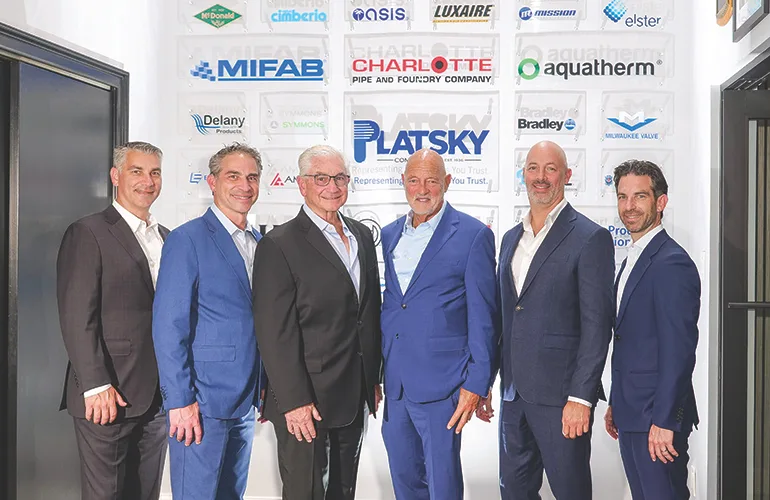
This year marks the company’s 90th anniversary, celebrating three generations of leadership: the vision of Irving “Soc” Platsky, the foundation built by sons-in-law Glen Stern and Jan Aranoff, and the commitment of their children to carry that legacy forward while continuing to evolve the business.
The leadership transition from Glen Stern and Jan Aranoff to their children was completed in 2017. Greg Aranoff and Jordan Stern serve as co-presidents, overseeing the company’s overall direction and sales strategy, while Neil Aranoff leads operations as vice president of operations and Jeff Aranoff leads the company’s relationships with the architectural and design community as vice president of design specification. Together, they continue to build on the culture, values and relationships established by Glen Stern and Jan Aranoff, each bringing complementary strengths that make the company stronger.
When discussing what to do for their 90th anniversary, Jeff Aranoff explains: “We wanted to take this opportunity to honor my dad and uncle, thank them, and express our love and gratitude for everything they have done for our family, our employees and the people who have been part of this journey.”
To understand “The Platsky Way,” you must begin long before the third generation took the reins.
Building the foundation
Platsky Company was established in 1936 by Irwin Platsky. After returning from World War II, his brother, Irving “Soc” Platsky, joined the business, representing BrassCraft and E.L. Mustee—two manufacturers still represented by Platsky today.
In 1973, Glen Stern joined the business straight out of law school at the urging of his father-in-law. Jan Aranoff followed a year later, leaving a sales career to join the family business. Neither man had any background in plumbing or manufacturers’ representation. “We had no clue,” Jan Aranoff says. What they shared instead was an extraordinary work ethic.
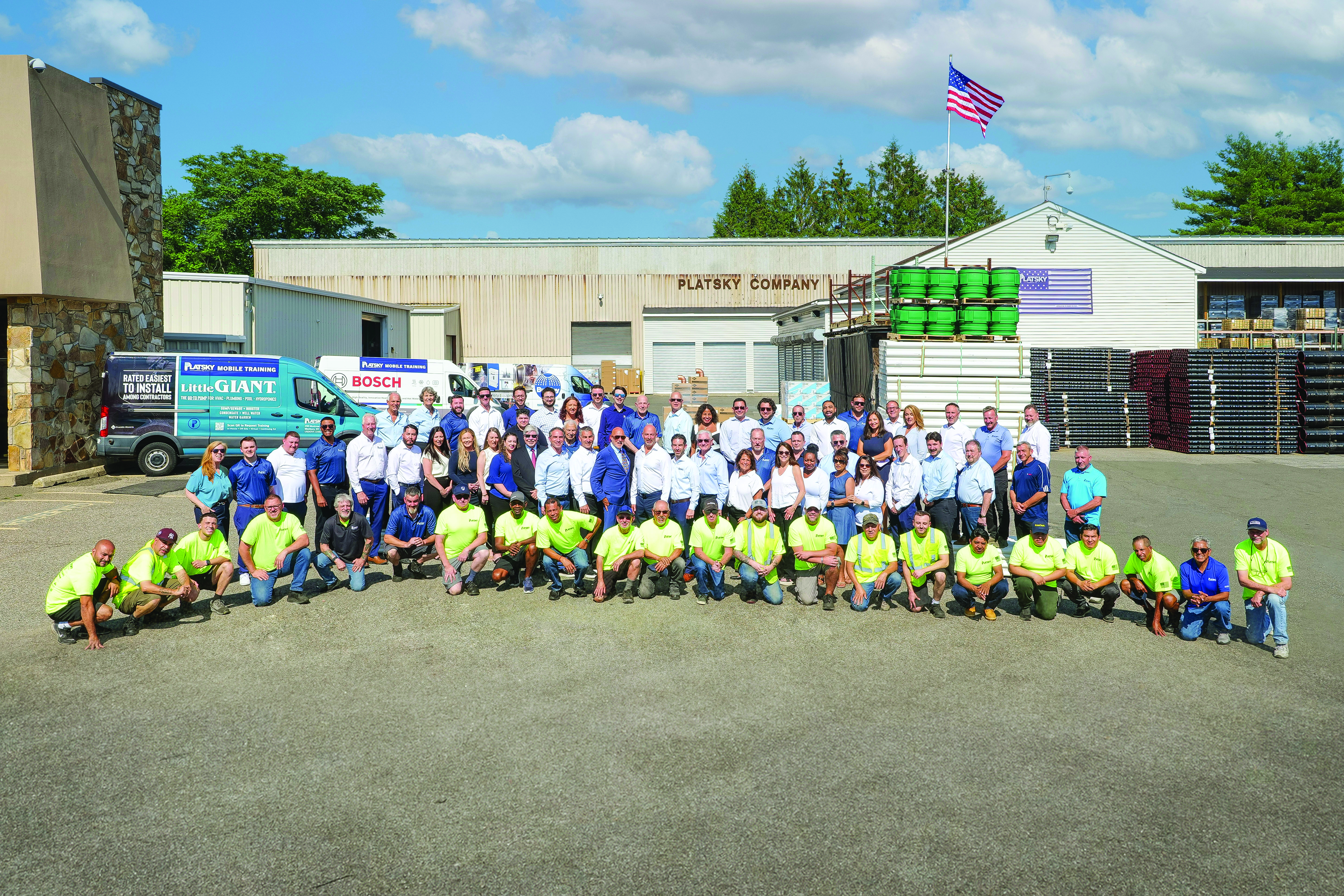
In 1975, Soc Platsky, along with Glen Stern and Jan Aranoff, bought out Irwin’s share of the business. After initially trying to run every aspect of the business together, they realized they needed to divide responsibilities if the company was going to grow. Jan Aranoff focused on operations, inventory and building the systems needed to support the business, while Glen Stern concentrated on customers, manufacturers and business development.
Together, they worked six days a week, loading station wagons by hand, making deliveries themselves and doing whatever it took to get the job done. “We were not going to be outworked,” Glen Stern says, adding, “We bet on ourselves and hit the road in our station wagons to create opportunities and connect with as many customers as we could.”
The road produced its share of hard work and laughter. One story the duo still tells with a smile captures the mindset that defined those early years. While Glen Stern and Jim Whitehurst, then vice president of sales at BrassCraft, were making sales calls throughout the Bronx, a passing truck caught the passenger door just as Whitehurst opened it, tearing it completely off the car.
Assuming the day was over, Whitehurst expected they would head home. To his surprise, Glen Stern said, “Put the door in the back seat, we’ve got more sales calls to make.” And they did.
Hard work alone, however, wasn’t enough. Glen Stern and Jan Aranoff also believed in investing ahead of the market whenever it meant serving customers better.
A pivotal moment in Platsky’s history came when Elkhart introduced its copper fittings line. Glen Stern and Jan Aranoff decided to take a chance, pioneering a buy-sell model. The strategy became the foundation for a business model the company would build on for decades, allowing Platsky to better support customers through local inventory, greater flexibility and stronger relationships. The decision quickly fueled the need for its first warehouse in Albertson, New York.
Moving day was memorable. There were no forklifts or moving crews. “We had muscles,” Jan Aranoff says. “That’s all we had,” Glen Stern adds with a smile, recalling how they overloaded a borrowed truck until they broke an axle.
As the business continued to grow, Jan Aranoff recognized that sustaining it required more than inventory and hard work. Platsky embraced computerized systems—particularly barcoding—well before it became mainstream. As a result, “We became more efficient, and the business took off,” says Jan Aranoff.
Growth continued with the addition of new manufacturers and customers, but sustaining it required another leap of faith. Glen Stern and Jan Aranoff decided to purchase their own building rather than continue renting warehouse space. Just weeks before closing, however, their lender withdrew from real estate financing.
With no financing in place, they liquidated personal assets to complete the purchase. “We had to turn ourselves upside down,” Glen Stern says. It proved to be one of the best decisions they ever made. Decades later, that building continues as Platsky’s Long Island headquarters.
Those early partnerships laid the foundation for the most transformational manufacturer relationship in the company’s history.
Partnership beyond the sale
No relationship shaped Platsky’s trajectory more than Charlotte Pipe and Foundry—the line Glen Stern still describes as changing everything.
Landing the line took persistence and patience. Glen Stern flew to Florida for an interview, then waited months without hearing anything while competing representatives claimed they had already secured the line. To Glen Stern’s surprise, he received a phone call from Charlotte Pipe’s regional manager at the time—Roddey Dowd Jr., now vice chairman—appointing Platsky as their representative for the New York metro area.
It marked the beginning of a partnership that has endured for nearly four decades. “We went from the one-two dollar poker game to the ten-twenty-dollar poker game,” Glen Stern says of what Charlotte meant to the company.
The relationship was tested almost immediately. In the late 1980s and early 1990s, a wave of wholesaler bankruptcies and acquisitions swept through the New York market. Glen Stern and Jan Aranoff say they lost 23 wholesale customers during that period, forcing them to remortgage their homes to keep the business moving forward.
One of Charlotte Pipe’s largest New York accounts failed, leaving both Charlotte Pipe and Platsky with significant unpaid balances. “We had no business being owed that much money,” Glen Stern says. Charlotte’s leadership made its expectations clear: they would absorb the loss once, but not a second time.
They never had to. “We didn’t lose a dime for Charlotte Pipe in over 30 years,” Glen Stern says. Today, the relationship remains one of Platsky’s cornerstone manufacturer partnerships.
Roddey Dowd Jr., vice chairman of Charlotte Pipe and Foundry, sums up what that partnership has meant from the manufacturer’s perspective. “The Platsky team members are smart, aggressive and hard workers. They treat their associates as family and their customers like gold. As a manufacturer, you know they will shoot you straight.”
He adds, “If someone needs just one fitting to complete a day’s work, Platsky will throw it in a car and drive it to the job site.”
That commitment to partnership became the standard by which manufacturers came to know Platsky.
Tom Gleason, retired vice president of marketing and sales at Ward Manufacturing, has known Glen Stern and Jan Aranoff for decades. “The New York metropolitan area is not for the faint of heart,” Gleason says. “Every day feels like an MMA cage match. How you not only survive this market, but thrive in it, is a testament to the skill, knowledge and professionalism of Glen Stern and Jan Aranoff.”
Every wholesaler, Gleason says, “Was treated with respect regardless of size, and price was never the conversation—fairness was.” Although Gleason retired from Ward Manufacturing several years ago, the friendship never did. “To this day I still get a phone call from Glen Stern every other month or so, asking how I’m doing and how the family is,” he says. “Glen Stern and Jan Aranoff are family to me, and family is the backbone of their success—and mine.”
Those same qualities continue to define Platsky’s partnership with Elkhart (EPC) today. Mike Blair, national sales manager for Elkhart Products, says the company’s impact has been impossible to miss. “Platsky has made EPC copper fittings part of the New York City skyline while becoming one of our most trusted business partners.”
Blair says what stands out most isn’t simply the success of the relationship, but the culture behind it. “They passed their professionalism, their respect for the word ‘partner,’ and the trust they built over decades to the next generation.”
For manufacturers, those relationships were never built on transactions alone. They were built on trust.
Opening doors
Early in his career, Glen Stern struggled for months to gain traction with one New York City wholesaler, unable to get past the front counter. One breakthrough came at an industry tennis tournament for wholesalers and manufacturers’ representatives that included spouses.
Names were drawn from a hat, and Glen Stern was paired with the wife of the wholesale executive whose account had closed him out for years. They won the tournament. Not long afterward, the account opened. It wasn’t simply talent on the tennis court. It was a relationship built outside the office that paved the way.
Golf opened doors in much the same way.
Early in Glen Stern’s career, he attended a UJA-Federation of New York charity dinner at the encouragement of a mentor, despite barely being able to afford the ticket. During the evening, donation pledges were called from the audience until suddenly his own name was announced.
With nowhere near enough money to fulfill the expected contribution, Glen Stern nervously made a pledge in honor of his newborn daughter. The evening’s chairman, Holocaust survivor Sam Mendel, recognized Glen Stern’s discomfort and quietly offered a solution that allowed him to honor the pledge over time. The moment became the beginning of a friendship.
Learning that Glen Stern was an accomplished golfer, Mendel began inviting him to rounds with wholesalers and manufacturers. “I had no business being involved with those people at the time,” Glen Stern says, “but it helped me get to know them personally.”
Years later, Platsky launched its own annual golf outing for wholesalers, contractors, engineers and manufacturers to nurture the idea of building relationships outside the office.
What began as a day on the course evolved into one of Platsky’s signature relationship-building events. “Now it’s become not only a golf outing, but it’s a trade show,” Glen Stern says. Manufacturers sponsor holes, showcase products throughout the course and look forward to returning each year. “Every year the manufacturers call to make sure they’re invited back,” Glen Stern says. “They tell us it’s one of their favorite events of the year.”
And the sports fun didn’t stop there.
In the early 1980s, after implementing a new computer system, Jan Aranoff had an idea. He had a single line appear at the bottom of every invoice leaving the office: Platsky Company challenges the industry to a softball game.
The response was immediate, and what began as a simple invitation grew into an informal league that brought together wholesalers, manufacturers and representatives from across the industry. Those games created friendships that lasted decades.
One afternoon Glen Stern noticed a player on a neighboring field who could hit, field and run. “What do you do for work?” he asked. The player wasn’t happy in his current job. “I told him, ‘I’ve got a job you might like, and if you work the way you play ball, you’re going to be perfect for us.’” More than 40 years later, he’s still with Platsky.
The games became fiercely competitive, but they accomplished exactly what Glen Stern and Jan Aranoff had hoped: they turned customers, manufacturers and coworkers into lifelong friends.
Jan Aranoff puts it simply: “Relationships have always mattered. Our business has always been about people first.”
Leading by example
The most important lessons at Platsky were never taught. They were lived.
Glen Stern’s son, Jordan Stern, says learning “The Platsky Way” began almost immediately. “My Uncle George (George Lestrange, vice president of sales) went out on the road with me for a few days at the very beginning and showed me the ropes and taught me how to sell,” he recalls. His uncle offered one simple piece of advice: “Make sure you’re prepared.”
Jordan Stern packed his notebook and pens — what he forgot were waterproof shoes. At each stop, they had to walk through deep, frozen slush that was difficult to see before getting back into the car. By the end of the day, Jordan Stern’s feet were frozen. He never mentioned it.
Only after the final sales call, as they began the drive home, Jordan Stern quietly asked Uncle George to turn up the heat — and he did, smiling, knowing Jordan Stern had learned the lesson without him ever saying a word.
Greg Aranoff, son of Jan Aranoff, says many of his biggest lessons came from the desk just outside Glen Stern’s office, listening to conversations with manufacturers, customers and employees and absorbing the judgment behind every decision.
“We are very different in how we operate,” Greg Aranoff says with a laugh, “but we almost always agree on the solution.”
During a major storm, Glen Stern recalls redirecting truckloads of pumps to wholesale customers rather than allowing them to go to big-box retailers. Jan Aranoff never viewed it as a business decision. “We have honored the commitments we have made to our customers our entire lives,” says Jan Aranoff.
Years later, Greg Aranoff found himself facing a similar decision during Hurricane Sandy. One longtime customer desperately needed material to restore essential services after the storm, but normal deliveries had become nearly impossible.
Rather than let the commitment go unmet, he loaded the material into his SUV and made the delivery himself. The customer never forgot it.
Greg Aranoff values the freedom his father gave them. “We came into the business as young twenty-year-olds with no knowledge,” he says. “He allowed us to fail. He allowed us to have our own voice. He allowed us to make decisions very early in our careers, even when he didn’t agree.”
Brothers Neil and Jeff Aranoff agree that their father rarely taught through lectures. Instead, he encouraged them to be individuals, make their own decisions and do what they believed was right. The Platsky Way is in the family DNA.
Another lesson carried forward was the importance of continually reinvesting in the organization.
“One of the biggest lessons we’ve learned from my father and uncle is to consistently reinvest in the organization,” Greg Aranoff says. “It is not about pulling money out of the business; it is about keeping money in the organization so that we are prepared for the expected and the unexpected.”
Those lessons faced one of their greatest tests during the COVID-19 pandemic, when business fell to a fraction of its normal volume for several months. Rather than furlough employees, the third generation chose to keep everyone working and paid.
Glen Stern says the decision traced directly back to one of the hardest periods in the company’s history. “We told them that in 1991 and ‘92, when all the wholesalers were going bankrupt, Jan Aranoff and I didn’t take a paycheck for almost a year and a half,” Glen Stern says. He adds, “We discussed it with the boys, and ultimately they made the decision. Everybody would get paid.”
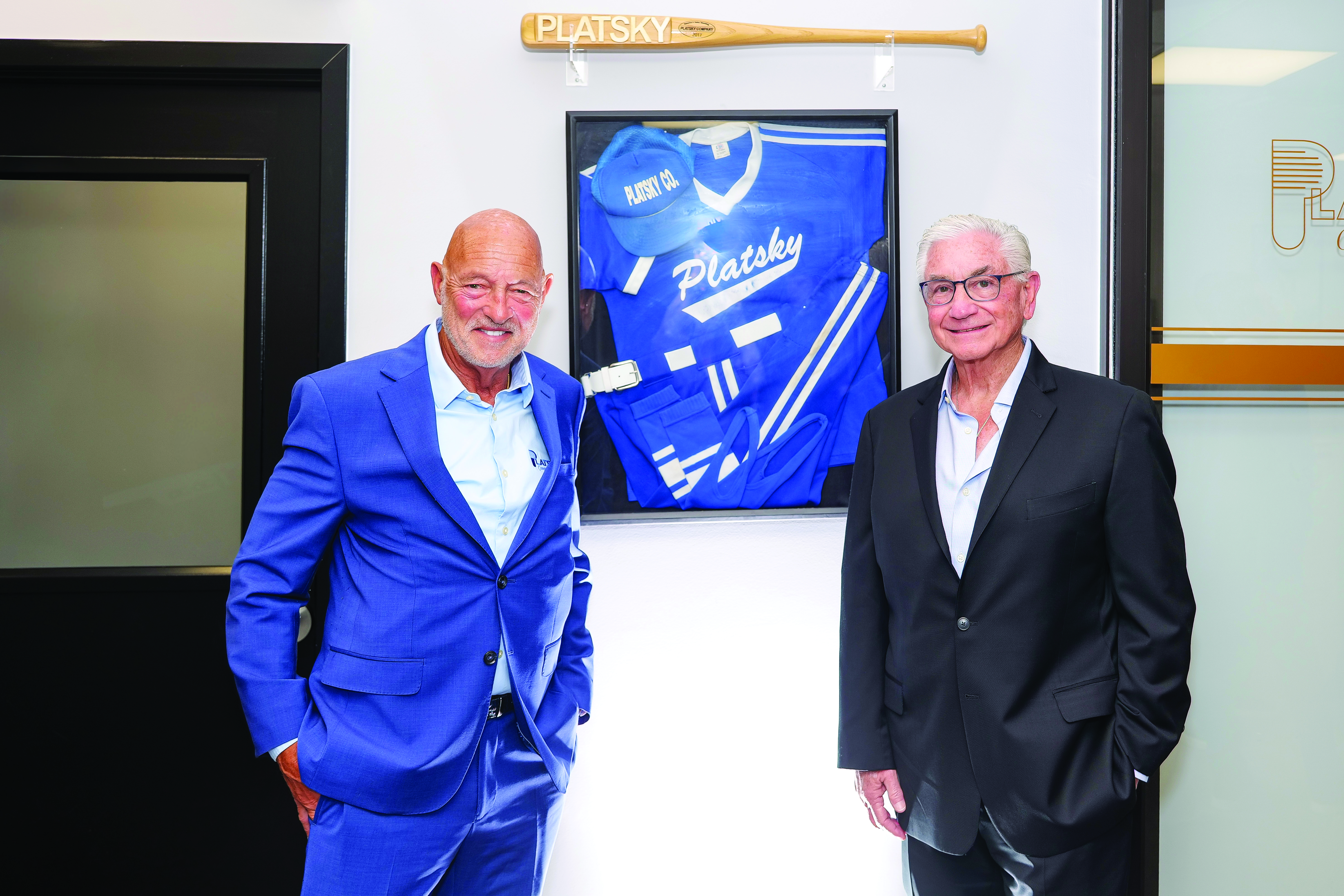
It’s always about the people
Ask Jan Aranoff what has made Platsky successful for 90 years, and his answer is simple: The people.
That philosophy is woven into the company culture, reflected in long employee tenures that aren’t the exception—they’re the expectation.
George Lestrange has been an integral part of Platsky’s success for more than three decades, bringing an enthusiasm that has become part of the company’s culture. “George’s philosophy is to put yourself in a position to get lucky,” Glen Stern says. “He’s the epitome of enthusiasm. He’s always, ‘Top of the morning to you,’ and ‘Great day.’”
The commitment to long-term employees is so deeply ingrained in the culture that inside the Platsky office hangs a wall recognizing employee anniversaries—a visible reminder of what the company values most.
Lestrange has watched that culture evolve from the inside. “Relationships and trust started at Platsky long before I got here,” he says. “Many customers told me they bought everything they could from Platsky because Soc Platsky helped them start their businesses.”
He credits Glen Stern and Jan Aranoff with creating an environment where people were challenged to succeed while knowing the company would always support them. “When Platsky did well, we all did well,” he says.
Asked what sets Platsky apart, Lestrange points to the people. Trusted manufacturers, long-standing relationships, continuity of employees and a team-first culture built over 90 years continue to distinguish the company.
Greg Aranoff says none of that happened by chance. “Treating employees with respect was always a huge priority for my dad and my uncle,” he says. “When people feel respected and cared about, they want to stay. Twenty, twenty-five and thirty years of employment is normal at Platsky.”
Jeff Aranoff believes preserving that culture has been just as important as growing the business. “They encouraged a culture where personal milestones and family events were respected because success at work should never come at the expense of life’s most important moments,” he says. “That trust, loyalty and mutual respect remain the cornerstone of our culture today.”
As the company has continued to grow, that philosophy has guided the next generation of employees as well.
“We’ve been very intentional about building a younger team with the right character and values to work alongside our experienced veterans,” Greg Aranoff says. “They’ve embraced our culture and become an important part of carrying it forward.”
Evolving the business
By the time the third generation assumed leadership in 2017, Platsky had already earned one of the industry’s strongest reputations. The challenge wasn’t preserving it. It was building on it. “Back then, we sold on relationships and reliability, and we still do,” Jordan Stern says. “The difference today is that we’re helping more customers in more ways while continuing to build those long-term relationships.”
Over the past decade, the company has evolved from a manufacturers’ representative focused primarily on commodity plumbing products into a diversified organization serving increasingly technical product categories with specialized expertise. “My father built the operational foundation of this company,” Neil Aranoff says. “I’ve tried to build on that foundation,” he adds.
That transformation required significant investment in technology. Neil Aranoff played a critical role in implementing Platsky’s ERP platform, CRM system, quoting tools and analytical capabilities, helping build an operational foundation that enables teams to share information, make better decisions and respond more efficiently. The company also invested in an in-house marketing team that develops product content, educational materials and marketing campaigns to strengthen their brands.
Dedicated teams now focus on specification, plumbing, commercial mechanical, residential HVAC, fire protection, utility and decorative plumbing.
The company was intentional about how it expanded its manufacturer portfolio in strategic growth areas. Bosch established Platsky’s presence in the HVAC market and became the cornerstone of a dedicated division. Bradley expanded the company’s presence within the architectural and design community, while ASC Engineered Solutions accelerated Platsky’s growth in the mechanical and fire protection markets and expanded opportunities across multiple product categories.
“Jan and Glen have had a remarkable impact on the industry through their unwavering passion for success, deep commitment to their customers, and the lasting relationships they have built over the years,” states Jonathan Larkin, director of sales, Northeast, ASC Engineered Solutions, adding, “Their legacy is reflected in the reputation of the company they helped build, and in the loyalty and trust they have earned from customers, manufacturers, and industry peers.”
Today, Platsky remains involved throughout every stage of the sales cycle—from architects designing projects and engineers writing specifications to contractors installing products—with collaborative technical and sales expertise every step of the way.
“Our customers trust our service and knowledge,” Jordan Stern says. “In turn, they support the brands we represent.”
The legacy lives on
For Neil Aranoff, the company’s greatest success has never been measured only by the numbers.
“The business has always been about more than just business. We’ve been fortunate to build a successful company, but the real bonus has been doing it alongside my family,” he says, adding, “I’ve had the opportunity to work every day with my brothers, Jeff and Greg, and that’s something not many people get to experience. Together with our cousin, Jordan, we try to honor what our fathers created every day. I think that’s something our grandfather, Soc Platsky, would be very proud of.”
That sense of family has always extended well beyond the office.
Jan Aranoff and Glen Stern, brothers-in-law who married sisters Sandy and Ilene Platsky, built more than a successful company. They built a partnership rooted in trust, respect and a shared commitment to one another.
Their families vacationed together for decades, celebrated life’s milestones together and created traditions that continue today—including a long-running Thanksgiving weekend paintball game that now includes their grandchildren.
Asked what advice they would give the generations that follow, the answer comes without hesitation. “Be honest, be reliable, and care about your employees,” Jan Aranoff says. “And care about your family,” Glen Stern adds.
Jan Aranoff looks at the company today with the same optimism that has guided him throughout his career. “We feel very grateful that we are on the third generation, and the third generation is moving right along,” he says. “They’re already doing it. We know that the best is yet to come.”
For 90 years, the company has lived by a simple philosophy: work hard, take care of people, and show up—for the account, for the manufacturer, for each other—no matter what the day requires. It was never really a slogan on the wall. It’s the heartbeat of the company, passed down from generation to generation, lived and breathed every day.
That’s the Platsky Way.