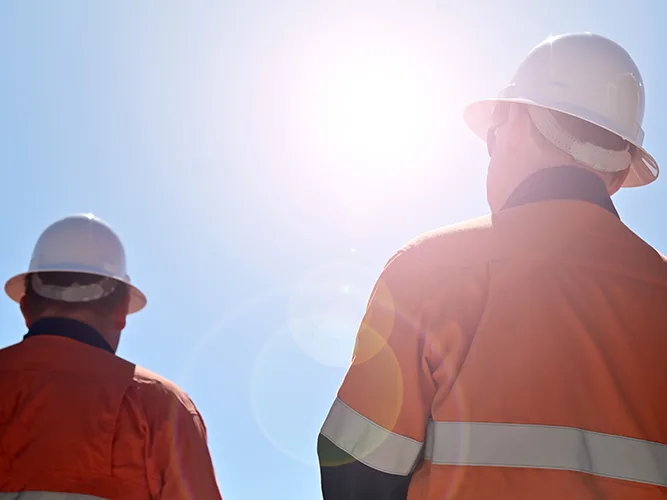
July is UV Safety and Skin Cancer Awareness Month, a time to learn how ultraviolet (UV) radiation affects your skin and what you can do to reduce your risk. Like many health conditions, skin cancer is easier to treat when it is found early. Understanding your personal risk factors and protecting your skin every day can make a meaningful difference.
Throughout the month, RUGGED Mind and Body will be sharing practical, evidence-based information to help trades professionals protect their health on and off the job. Many workers spend hours outdoors where UV exposure is unavoidable, making sun protection an important part of the workday.
What Is Skin Cancer?
Skin cancer occurs when abnormal skin cells grow uncontrollably. It is the most common type of cancer in the United States. The three main types are:
Basal cell carcinoma, which is the most common and usually grows slowly.
Squamous cell carcinoma, which can become more aggressive if left untreated.
Melanoma, the least common but most dangerous form because it can spread to other parts of the body if not detected early.*
Not every skin cancer behaves the same way, but early detection improves treatment outcomes for all types.
Know Your Risk Factors
Anyone can develop skin cancer, but some people have a higher risk than others. The Centers for Disease Control and Prevention (CDC) identifies several important risk factors, including:**
Fair skin that burns easily
Light-colored eyes or naturally blond or red hair
A history of frequent or severe sunburns
Increasing age
A personal or family history of melanoma
Knowing your risk factors can help you and your healthcare provider determine the level of protection and skin monitoring that is appropriate for you.
Sun Exposure Adds Up
Ultraviolet (UV) radiation from the sun is one of the leading causes of skin cell DNA damage. According to the World Health Organization (WHO), both long-term daily exposure and occasional intense exposure that results in sunburn can increase the risk of developing skin cancer.***
For trades professionals who work outdoors, UV exposure often accumulates over many years. Even cloudy days allow a significant amount of UV radiation to reach the skin, making daily protection important regardless of the weather. Some simple ways to reduce UV exposure include:
Wearing long sleeves and wide-brimmed hats when practical
Using broad-spectrum sunscreen with SPF 30 or higher
Wearing UV-blocking sunglasses
Seeking shade during breaks whenever possible
Reapplying sunscreen every two hours or after heavy sweating
Protecting your skin should become part of your daily work routine, just like wearing other personal protective equipment.
Interested in learning more? Connect in two ways to stay informed on trade-focused mental health and wellness content:
Subscribe to PHC News magazine for quarterly print and digital issues
Sign up for the monthly RUGGED Mind and Body e-newsletter
Sources
* American Cancer Society. Skin Cancer. https://www.cancer.org/cancer/types/skin-cancer.html
** Centers for Disease Control and Prevention. Skin Cancer Risk Factors. https://www.cdc.gov/skin-cancer/risk-factors/
*** World Health Organization. Ultraviolet Radiation Fact Sheet. https://www.who.int/news-room/fact-sheets/detail/ultraviolet-radiation