For independent wholesale distributors across North America, succession planning has become one of the industry’s most pressing conversations. Owners who spent decades building businesses rooted in relationships, trust and community involvement are facing difficult decisions about the future. Some are weighing strategic acquisitions, and others are considering private equity. Many are searching for a path that allows them to continue growing while protecting the culture, employees and customer relationships that helped build the business in the first place.
For Louisville, Kentucky-based Masters’ Supply, those conversations led to the creation of Rivermark.
Officially launched April 1, Rivermark serves as the newly formed holding company and foundation, bringing together Masters’ Supply and three other employee stock ownership plan (ESOP) companies under one organizational structure. The new structure was designed to support future growth while preserving employee ownership, brand identity and the relationships that helped build the business.
“Rivermark is our newly formed holding company that brings together Masters’ Supply, PC Clark, Dal-Rs, and Creative Kitchen & Bath,” explains Nathan Wachtel, president and CEO of Rivermark. “Masters’ Supply still remains a core part of our company, and it continues to operate under its established name and leadership. Rivermark provides the broader structure to support long-term growth, collaboration and alignment across all the businesses.”
Today, Rivermark has four companies operating across Kentucky, Indiana and Ohio, with more than 20 locations and approximately 210 employee owners. According to Wachtel, Masters’ Supply represents about 40% of the organization’s total employee base. Collectively, the companies span plumbing distribution, industrial supply, electrical distribution and showroom operations.
Why Rivermark was created
As Masters’ Supply expanded, leadership recognized that continuing to grow solely under the Masters’ Supply name could create limitations. The company has spent decades earning the respect and trust of its customers and community in the PHCP industry. Yet that strength also created challenges as the company explored opportunities beyond traditional plumbing distribution.
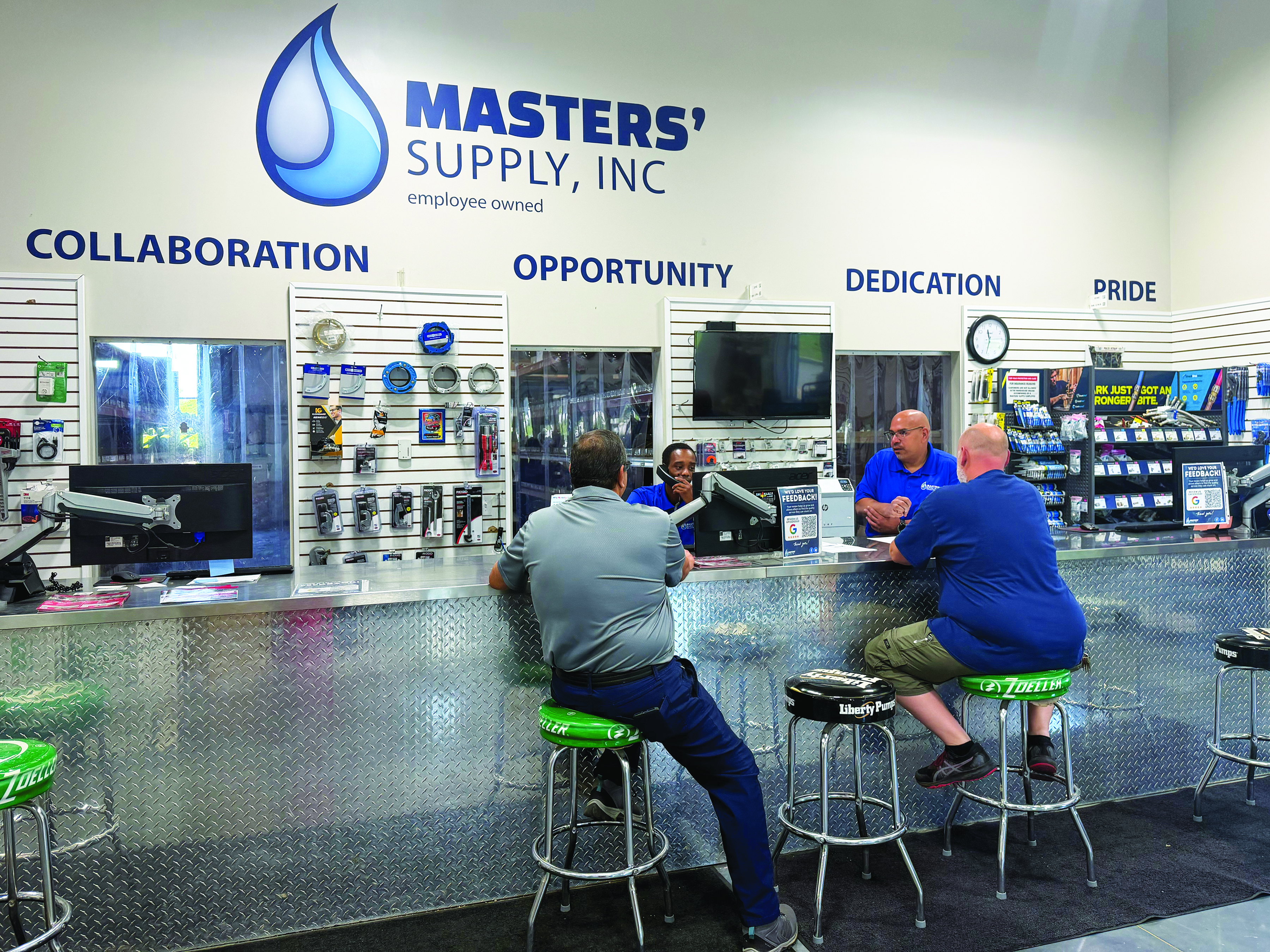
“Masters has built a strong reputation over 80-plus years but also positions the brand very specifically within the space,” Wachtel says. “Our logo has a water drop, so it positions us that way. As an operating company, that identity can make it more challenging to acquire and integrate businesses outside of plumbing — different businesses such as electrical, industrial or retail-oriented companies.”
For Wachtel, the challenge was not whether Masters’ Supply could continue growing, but whether its existing structure could support growth across multiple verticals. Something needed to change — hence the formation of the Rivermark as the foundation.
The organization had already acquired two additional brands in 2024 and saw continued opportunities ahead. Rather than forcing every business into the Masters’ Supply identity, leadership wanted a structure that would allow companies to maintain their own brands, expertise and customer relationships while benefiting from shared resources and support.
“We saw an opportunity to build a structure that could better support multiple companies while allowing each company to operate independently with its own customers, relationships, expertise and brand identity,” Wachtel explains. “It also positioned us to scale more intentionally, share resources and knowledge across the organization, and approach future acquisitions in a more strategic and organized way.”
He adds: “Rivermark gives us the flexibility now to grow beyond a single vertical, while preserving each brand and its identity. It gives us this structure to grow into different markets as we expand, sort of left and right instead of only north and south, deep into the verticals.”
Steven Leon, vice president of operations, says Rivermark grew directly from the culture Masters’ Supply spent decades building.
“For 87 years, Masters’ Supply has employed the best people who provide quality products and superior customer service,” Leon says. “The purpose of Rivermark is to promote wholesale innovative employee ownership across different brands and verticals.”
That philosophy remains central to the organization’s future.
“Each company has its own niche, but also share the same core foundations that we have at Masters, which are trust, collaboration, opportunity, dedication and pride,” Leon says. “The future success of our company is within the pride of our people.”
A foundation, not a parent company
One of the most intentional decisions surrounding Rivermark involved how leadership wanted the organization to function. Internally, executives consistently refer to Rivermark as a foundation rather than a traditional parent company.
“We built the brand around how the organization was intentionally designed to function,” explains Hannah Brantingham, director of marketing. “The restructuring brings us together as a growing family of companies on a stronger shared foundation. It’s not creating a traditional umbrella structure that overshadows any individual business. We’re looking at it more as something that’s in service of the brands.”
She adds: “We put a lot of work into creating Rivermark, and we’re very proud of it, but we’re still paying a lot of respect to the brand of Masters’ Supply and where we came from. Rivermark still pays tribute to that legacy.”
Leadership emphasizes that Rivermark does not replace Masters’ Supply. Instead, it provides a framework allowing the organization to continue growing while honoring the history and relationships built over generations.
Preserving brands while creating alignment
Under the Rivermark structure, each business continues to operate independently with the same leadership teams, customer relationships and vendor partnerships already established in the marketplace.
“The day-to-day experience for customers and employees remains very familiar and consistent,” Wachtel explains. “The only thing that changes is the structure behind it.”
“Our No. 1 thing is our relationships with our customers and suppliers, and with each other,” says Kevin Camper, general manager of Masters’ Supply. “We’ve had that for 87 years, and it will continue.”
At the same time, bringing the companies together under Rivermark has already created opportunities for collaboration across markets and product lines.
Liz Gueltzow, general manager of Creative Kitchen & Bath, says the structure creates a broader customer solution across multiple verticals.
“Rivermark is made up of four individual companies that span over 20 locations in three different states,” Gueltzow says. “We cover plumbing, industrial, electrical and showroom spaces. We’re all carrying our own torch, but we’re all working toward the same goal.”
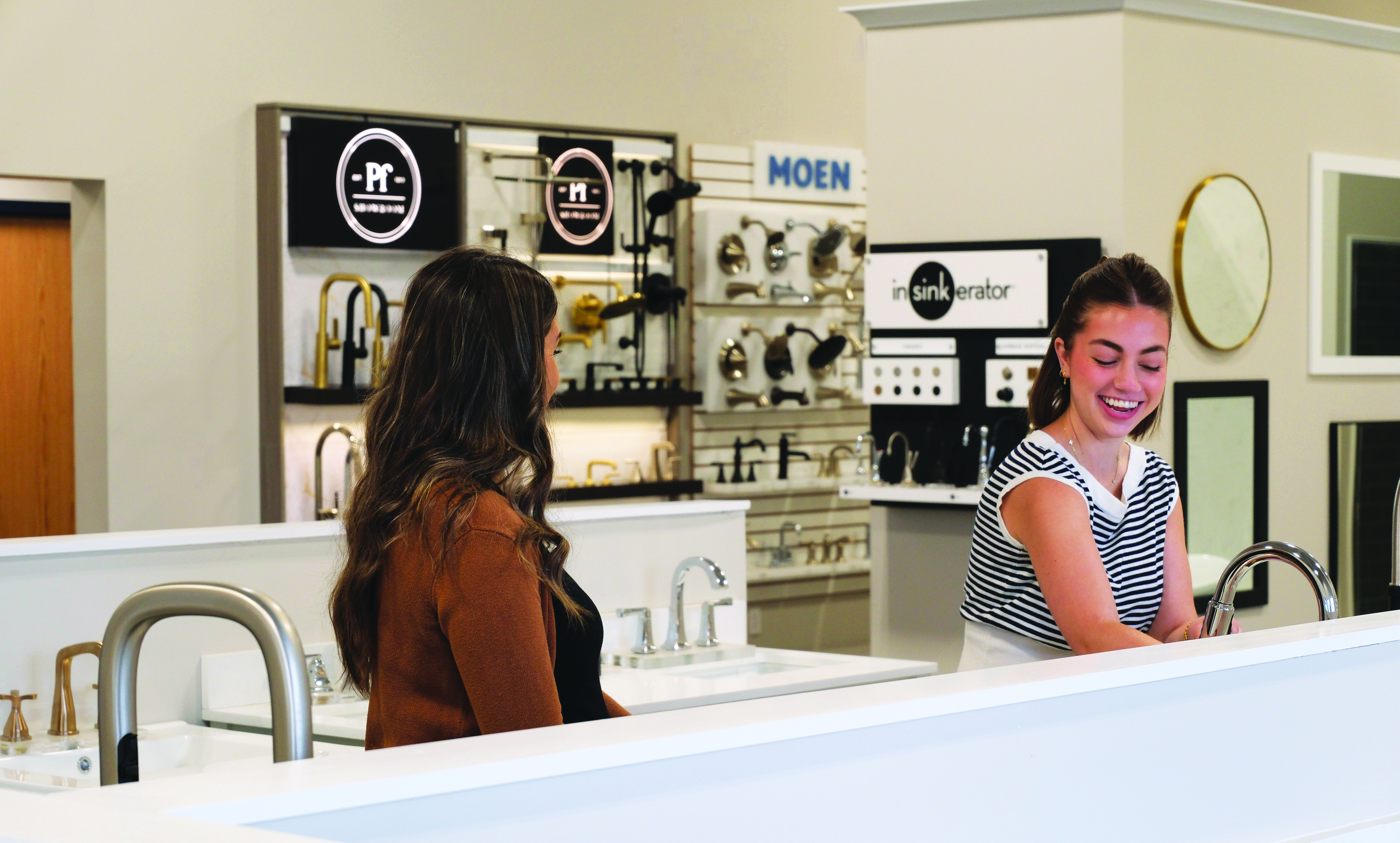
Creative Kitchen & Bath focuses heavily on homeowners, designers and builders, while Masters’ Supply remains the organization’s core plumbing distribution business. Dal-Rs expands the organization into industrial and electrical distribution, while PC Clark strengthens its regional presence through plumbing and electrical distribution.
Together, the businesses now support projects from start to finish. “We’re able to focus on our own segments, but at the end of the day, we help see projects from start to finish,” Gueltzow explains. She adds that the ability to serve customers across multiple segments creates a more complete customer experience. “We’re always going to give that full cycle approach,” she says.
The structure has also expanded product depth and expertise throughout the organization.
“Our SKUs have increased significantly with these acquisitions because we’re all on the same ERP system,” Wachtel notes. “Anytime you can add SKUs, that’s great, but it’s the expertise behind the SKU.”
Leon says collaboration between the companies is producing the results they wanted. “We’ve had customers at Masters’ Supply who need electrical parts,” he says. “Masters and Dal-Rs are able to communicate and transfer materials to customers across markets.”
It’s the ability to service customers across multiple verticals at the same time, with ease, which is the differentiator for Rivermark.
‘Everyone cares’
At the center of Rivermark’s structure sits one defining element: employee ownership. Each company supported by the foundation is 100% employee owned.
Masters’ Supply has operated as an employee-owned company since 1991, and Rivermark continues that commitment through a 100% employee-owned ESOP structure. Under the model, employees become fully vested after six years and own shares in Rivermark.
For the leadership team, employee ownership is not simply a retirement benefit. It is a business philosophy that influences decision-making, accountability and customer service.
“Being an ESOP means every employee has a real stake in the company’s success, accountability and long-term thinking,” Wachtel says. “Day to day, it shows up in how we serve our customers.”
Camper sees those benefits firsthand. “We met with a potential customer not too long ago, and the second we mentioned ESOP, he was sold,” he recalls. “He had dealt with an ESOP company years ago. He mentioned how an employee jumped off a tow motor (forklift) to pick up a piece of trash from the ground. That attention to detail separates us from everyone else. Everyone cares.”
The ownership mentality also contributes to employee retention.
Camper mentions the leadership interviewed for the feature. “We’ve all been together for a decade or more,” he says. “As I look down the hallway at Masters’, the whole sales team has been together for 15 to 25 years. It’s allowed us to stick together.” It’s this type of stability and knowledge that is a cornerstone of the company and its growth over the years.
Wachtel believes employee ownership is also helping attract the next generation of talent. “We’re hiring overqualified college graduates because of the employee ownership opportunity,” he says. “We have talented people looking to us to give them a path forward, train them appropriately and create opportunities for them to succeed.”
For employee owners, the benefits extend beyond daily operations.
“Great people shouldn’t be cheap,” Wachtel says. “They should be significant earners. Employees should be proud that they have a third retirement vehicle. You have a 401(k), hopefully Social Security, and then you have this ESOP bucket being built over time.”
Wachtel believes employee ownership creates opportunities that extend beyond retirement planning. “ESOPs are ultimate wealth equalizers,” he says.
Creating another path forward
Rivermark also provides another succession-planning option for independent distributors.
“As an owner, you have three options,” Wachtel explains. “You can go to a strategic supplier or competitor, you can go to a private equity firm or you can sell back to the employees.”
While careful not to broadly criticize private equity, Wachtel believes employee ownership offers a fundamentally different approach. “We believe the employee ownership model is rooted in preserving goodwill across all stakeholders — customers, employees and vendors,” he says.
“We value the independent network,” Wachtel says. “We value our independent channel, and we see this as our contributing effort to continue to protect, promote and build the future for independent wholesalers.”
One of the more unique aspects of Rivermark is its ability to offer an employee-ownership pathway to distributors that may not otherwise have the resources to create an ESOP on their own.
“There is a significant barrier to entry in forming an ESOP,” Wachtel explains. “You need expertise aligned on multiple levels. You need attorneys, insurance, valuation experts, third-party administrators and Department of Labor compliance.”
Having operated as an employee-owned company since 1991, Masters’ Supply already possesses that infrastructure and experience. “We’ve been doing this for almost four decades,” Wachtel says. “If we didn’t know what we were doing, we would not still be around.”
Jeremy Holland, vice president of strategy, says that experience can reassure prospective partners considering succession plans.
“Our ESOP status creates win-win scenarios,” Holland says. “There can be tax benefits for sellers, but beyond that, there’s a sense of security. Owners know their employees are taken care of, and their legacies are protected.”
For business owners evaluating their options, Wachtel believes the conversation ultimately comes down to stewardship. “When you give up control, you’re stepping into uncharted waters,” he says. “You want to make sure the person taking control understands they are a steward of that brand and of that community.”
“By choosing Rivermark to be a partner, you’re not only selling a business,” Wachtel says. “You’re fostering a collaborative ecosystem where everyone benefits.”
ESOPs: Getting the word out
The team at Rivermark described the organization as a “lifetime play” focused on sustainability, continuity and long-term growth. “This is the accelerant,” Wachtel says. “This is the lane where we see an opening to continue expanding employee ownership.”
At the same time, leadership says the structure itself creates value regardless of future acquisitions. “Even if we never bought another company again, this is still the path forward for protecting shareholder value and accelerating growth,” Wachtel says.
For Leon, the larger goal is to help strengthen the independent wholesale channel itself.
“For me personally, it’s about getting the word out that ESOPs are going viral in a sense,” he says. “We want to share the opportunity of employee ownership with other companies. In a world of private equity, it gives hope to wholesale distribution.”
As Rivermark begins its next chapter, leadership believes growth and employee ownership can coexist. And growth can continue — but only if the culture of the next business opportunity aligns with the ESOP standard.
“Our ESOP status creates win-win scenarios,” Holland notes. “From the tax benefits for a seller, the flexibility we have in getting a deal done, and the employee ownership statutes, it promotes a sense of confidence to business owners or founders. They know that every decision we make is for all our employee owners across all the companies of Rivermark. It gives a sense of security to know their employees are taken care of, and the company legacy is protected as well.”
“If it’s not a win-win, it’s a walk away from,” Wachtel says. And in this case, it’s a win-win.