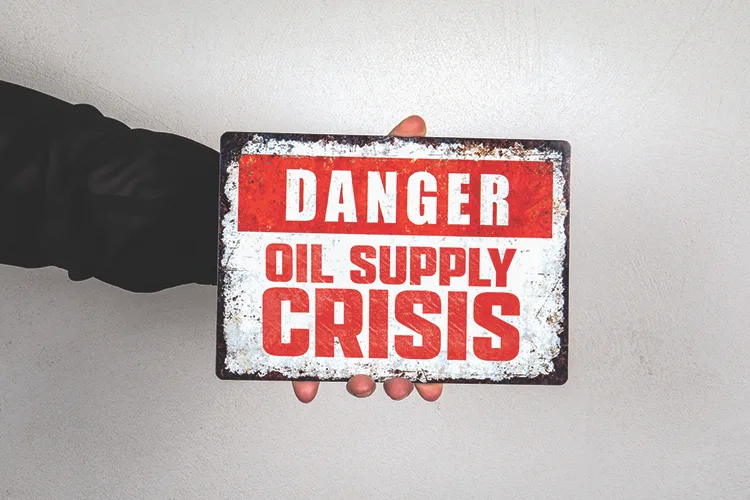
June marks the final month of the second quarter of 2026 amid continuing geopolitical instability and mounting pressure on global energy markets. At the time of this writing, the Strait of Hormuz blockade continues to disrupt global oil flows, driving crude prices sharply higher. West Texas Intermediate (WTI) crude is trading at $102.11/barrel, while Brent crude stands at $110.49/barrel.
The fragile ceasefire with Iran remains on the brink of collapse due to continued violations by Iranian forces: attacks on commercial vessels, strikes involving U.S. assets and the seizure of two tanker ships. Any further escalation could result in renewed U.S. combat operations if Iran continues hostile actions against neighboring countries, including the United Arab Emirates (UAE). As of this publication, however, the United States continues to honor the ceasefire agreement.
In another significant development, the UAE announced its permanent withdrawal from OPEC after more than 50 years of membership. The decision follows an extensive review of production policies, future capacity planning and geopolitical concerns affecting short-term oil supply, particularly those associated with the war in Iran.
UAE officials stated that the country will continue to act responsibly by gradually introducing additional production to the market in line with global demand and market conditions.
Meanwhile, OPEC announced on May 3, 2026, that Saudi Arabia, Russia, Iraq, Kuwait, Kazakhstan, Algeria and Oman agreed to increase oil production by approximately 190,000 barrels per day during the month. The alliance emphasized that it would continue monitoring market conditions closely through monthly meetings focused on stability, compliance and production compensation measures.
U.S. PVF demand reaches historic heights
Global demand for piping, valves and fittings (PVF) products continues to strengthen, driven by infrastructure development, refinery expansions, data center construction and rising energy consumption. Additional investments in water treatment facilities, chemical processing plants and industrial manufacturing are further accelerating growth across construction and process industries worldwide.
The 2026 carbon steel piping components market remains heavily supported by oil and gas projects, power generation, industrial processing and the rapid expansion of AI-driven data center infrastructure. Pipe, fittings and flanges continue to dominate the market due to their critical roles in fluid transportation systems, structural integrity and high-pressure applications.
Demand within the U.S. PVF market has surged to record levels not seen in more than four decades.
Offshore suppliers of seamless pipe are now extending delivery schedules well into 2027, with certain mills projecting lead times into 2028. Compounding the issue, some countries are being forced to reduce energy usage to approximately 40% of normal consumption levels, creating additional strain across the global supply chain.
Container shortages continue to worsen, while freight costs steadily increase. Offshore PVF material pricing is firming rapidly, and shortages are beginning to emerge in fittings, flanges and other critical PVF product categories.
Domestic manufacturers are also raising prices as steel pipe availability tightens and raw forging supply becomes increasingly constrained. Lead times for domestic fittings and flanges continue to lengthen as producers attempt to keep pace with unprecedented demand.
I have heard that almost all PVF manufacturers have now begun extending some deliveries into 2027.
In this environment, maintaining close communication with clients, project owners and suppliers is more critical than ever. Proper planning and scheduling of material requirements will be essential to completing projects on time and within budget.
Major pipeline investments signal continued infrastructure growth
• TC Energy Corp. approved a $1.5 billion expansion of its Columbia Gas Transmission pipeline system in the United States. The project represents another major North American infrastructure investment designed to support increasing power demand from data centers, utilities, industrial facilities and liquidified natural gas exports.
Known as the Appalachia Supply Project, the expansion will increase capacity on the Columbia Gas network by up to 0.8 billion cubic feet/day, with completion targeted for 2030.
• ONEOK also continues to aggressively expand its infrastructure footprint, forecasting between $2.7 billion and $3.2 billion in capital expenditures during 2026. Following strong earnings growth and rising demand across its West Texas operations extending to El Paso, the company is pursuing additional expansion opportunities.
Among these projects is a proposed 325-mile extension designed to transport liquefied petroleum gas from the Permian Basin to Mont Belvieu, near Houston. Initial throughput capacity is expected to reach 240,000 barrels/day, with potential for future expansion to 400,000 barrels/day.
ONEOK is also involved in several high-profile joint ventures with other pipeline operators, including the Eiger Express Pipeline. This 450-mile natural gas pipeline from the Permian Basin to Houston is designed to transport up to 2 billion cubic feet/day and will include three compressor stations to help alleviate transportation constraints in the region.
Workforce constraints intensify across construction sector
The construction labor market also continues to tighten. According to the Bureau of Labor Statistics Job Openings and Labor Turnover Survey, construction job openings increased by 23,000 in March compared to February, bringing total industry openings to 224,000 positions (https://bit.ly/48STggG).
Hiring activity rose by 14,000 during the same period, while total separations increased by 8,000 due to layoffs, resignations and other workforce changes.
Anirban Basu, chief economist for Associated Builders and Contractors, notes that contractors remain hesitant to reduce headcount. The layoff and discharge rate has fallen to its lowest level since early 2024 and remains below any level seen prior to 2022.
At the same time, the construction industry continues to struggle with a severe shortage of skilled labor. An aging workforce, declining numbers of younger workers entering the trades and massive industrial construction growth have combined to create unprecedented demand for skilled personnel. AI data center construction and related infrastructure projects are further intensifying labor shortages while creating tremendous opportunities for the next generation of skilled workers.
PVF Roundtable strengthens industry connections
The PVF Roundtable (PVFRT) continues to recognize the urgent need to develop a strong and sustainable skilled workforce for the future of the construction and PVF industries.
The PVFRT Charitable Foundation, a 501(c)(3) organization established by the PVF Roundtable, remains actively engaged in funding scholarships focused on PVF-oriented trade education. To date, it has awarded nearly $3 million in scholarships to help support the development of the next generation of skilled industry professionals.
Primary funding for the charitable foundation is generated through the PVF Roundtable’s Annual Golf Tournament and Annual TroutBlast events.
The Annual Golf Tournament, held May 11, 2026, was a complete sellout and achieved record participation levels. Major sponsors included Weldbend Corp., Ferguson Industrial and MRC Global.
The next PVF Roundtable Networking Meeting will take place August 11, 2026, beginning at 4:30 p.m., at Houston’s Bayou City Event Center, 281-501-6720.
This venue provides additional space and convenience for industry professionals to exchange information, strengthen relationships and develop new business opportunities.
The PVF Roundtable continues to serve as a vital hub for industry networking, education and advocacy. Recent and upcoming events reflect the sector’s ongoing commitment to collaboration, workforce development and innovation.
Today more than ever, networking meetings remain essential for manufacturers, suppliers, contractors, end users and clients to discuss market conditions, share industry insights, build lasting relationships and pursue new opportunities throughout the PVF sector.