We use cookies to provide you with a better experience. By continuing to browse the site you are agreeing to our use of cookies in accordance with our Cookie Policy.
Perspective, perceptiveness, pioneering and persistence help people and companies build strong relationships, notice important signals and opportunities, keep innovating and stay committed to continuous improvement over time.
If you have been following our reinvention-based series of columns here in The Wholesaler, I have surely been trying to drive home the point that the competitive landscape could not be more different than what it was only a short time ago.
In today’s era of constant, overlapping disruptions, organizations can no longer treat change as a one-time project; they must build reinvention and adaptability into their core operating systems to survive and thrive.
If you sometimes feel like me, that you’re facing nonstop disruption, you may not be imagining it. In particular, it’s a question that over the past few years I’ve asked myself as each year ended.
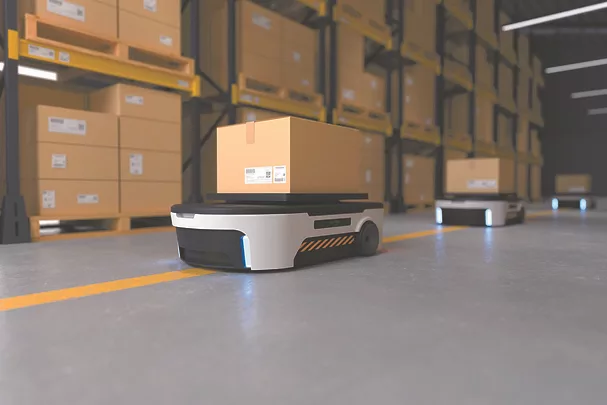
Labor costs dominate warehouse budgets, driving the need for technology adoption and operational reinvention to tackle disruption and seize opportunities.
Labor still eats up over half of warehouse costs — and companies that “didn’t keep up” are falling behind. It’s time to think beyond automation and embrace reinvention. Learn why continuous transformation, not just improvement, is now a leadership necessity.
This is a topic I think about at least twice a year, so this is not my first pass at it. What motivates me the most is the “speed of change” we find ourselves in and the need to adopt the most useful metrics.
Over the past few years, and especially during the COVID-19 era, we all heard so much about every “new normal,” terms such as “transformation,” “re-invention,” “rapid change,” “disruption,” “turbulence,” and the like. And, of course, the lack of new technology adoption by many companies.
This past summer, while visiting a wholesale distributor’s distribution center (DC), I watched receiving personnel spend an afternoon unloading boxes from a tractor-trailer in nearly 100 F heat.