We use cookies to provide you with a better experience. By continuing to browse the site you are agreeing to our use of cookies in accordance with our Cookie Policy.
Control sequences should evolve based on lessons learned, feedback from commissioning and operational realities. When well written, they reflect your team’s values: clarity, collaboration and continuous improvement.
Clear, well-written HVAC control sequences are the critical link between design intent and real-world system performance, ensuring DDC programming, commissioning, and long-term building operation succeed as intended.
The standard helps plumbing engineers design one of the most critical water systems in a hospital.
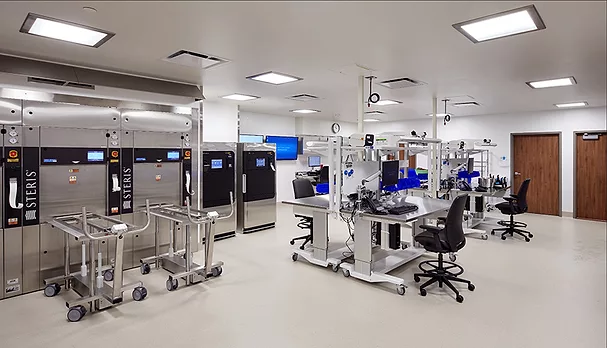
This article explains why ANSI/AAMI ST108:2023 has become a de facto enforceable standard and offers practical design guidance for plumbing engineers to ensure compliant water systems in hospital sterile processing departments.
The best results occur when we plan our activities with intentionality and do not take
shortcuts to a quick fix.
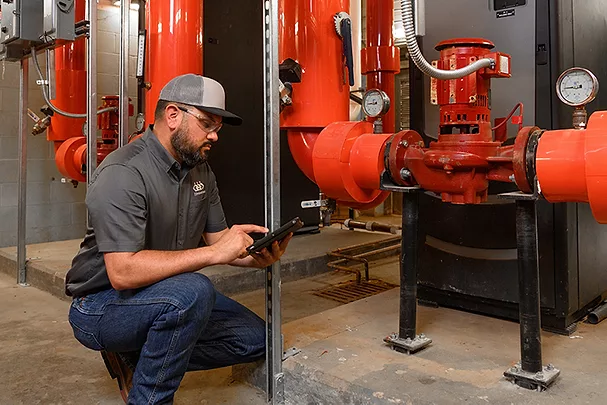
Plumbing engineer Justin Bowker says that for new plumbing and HVAC projects, it is crucial to approach problem-solving intentionally: understand design intent and conditions, use data loggers for intermittent issues, and differentiate between system and equipment problems with expert input.
Discover the critical role pressure-sustaining control valves play in maintaining stable pressure levels in water distribution and health-care systems. Learn key considerations and best practices for selecting, installing and maintaining these valves to optimize system performance.
Data-driven engineering helps building owners and managers achieve new levels of safety, efficiency and cost/space savings.
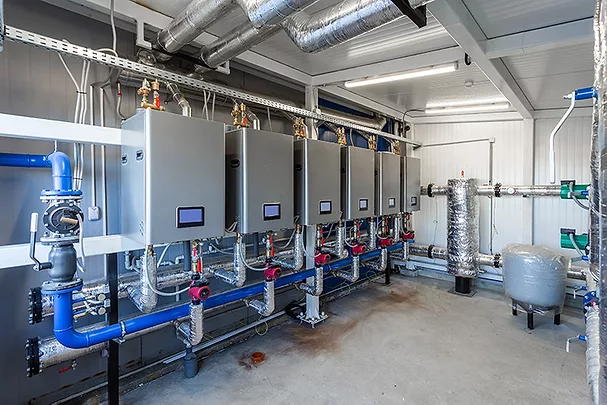
Previous sizing practices have routinely overestimated the required capacity of domestic water heating systems, relying on the Modified Hunter’s Curve to determine water systems sizing. Data-driven engineering, however, helps building owners and managers achieve new levels of safety, efficiency and cost/space savings for occupant needs.
Oversizing a domestic water system can lead to aging water and stagnation, the two biggest factors in waterborne pathogen growth. Yet modern plumbing codes still require or strongly recommend outdated sizing methods such as Hunter’s Curve, doing our building owners a disservice and putting the public at risk.
When designing a long-lasting antifreeze system for a customer’s hydronic system, you must consider that propylene glycol has a lower BTU carry capacity and is more viscous, than water. Also, regular maintenance is critical for optimal performance of the antifreeze.