At the time I am writing this, many of our contractors have been wrapping up their summer work, which focuses heavily on education facilities. Often the proposals are laden with indoor air quality requirements, knowing how important it is to provide our students with healthy buildings in which to learn.
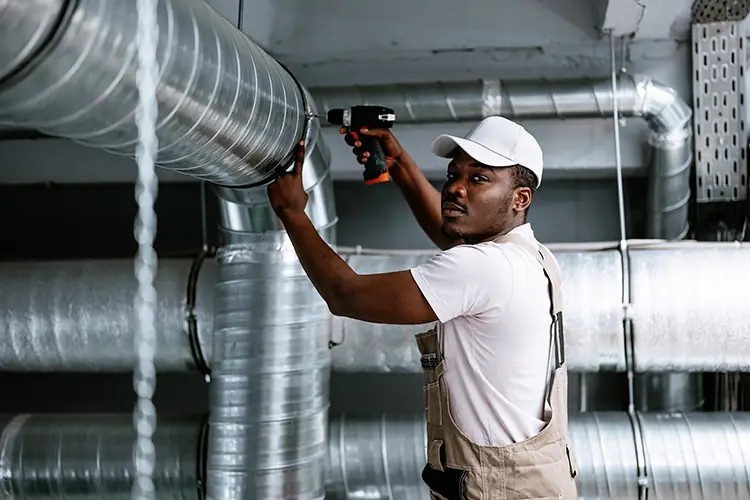
However, none of it means anything without the contractors and their skilled, trained tradespeople who actually build the systems that move and clean the air people in those buildings breathe every day. SMACNA contractors. And the importance of what they do to keep our buildings healthy can often get lost in the noise.
Think about what those education proposals actually ask for. Fresh air ventilation rates are tied to occupancy. Filtration upgrades. Balancing reports that prove every classroom gets the airflow it was designed for, not only the hallway or the office near the mechanical room.
Part of doing the job right
Owners and design teams are asking harder questions than they used to, and rightfully so. A classroom with poor air exchange affects attendance, focus, even test scores. That is not marketing language, those are well-documented outcomes. Our contractors are the ones turning those requirements into something real, not just something written in a spec book.
Well before IAQ became a marketing term or industry push, sheet metal and HVAC contractors were doing this work because it was simply part of doing the job right. Sizing ductwork correctly. Balancing systems so every room actually gets the clean air it needs. Basic blocking and tackling activities such as filtering, ventilating and commissioning. Nothing big and flashy, but it is all essential.
The pandemic put a spotlight on ventilation and filtration that the rest of the world is only now catching up to, but our members have been living in this world for years.
This is not new territory for SMACNA members. It’s the work we’ve always done.
I feel that is worth reflecting on for a moment. As design professionals and specifiers begin to understand the importance of a healthy building, scrambling to catch up with how to talk about the topic, our contractors are here and ready. We’ve been doing it for decades in schools, offices, hospitals, industrial facilities and homes nationwide.
And it all comes down to training. Our partners at SMART, ITI and NEMI train the workforce on how to build and maintain the systems needed, and SMACNA continues to build education to aid our contractors. IAQ is not something you learn once and move on from. Codes change, technology changes, expectations from building owners continue to rise due to volatile factors such as airborne disease, wildfire smoke and outdoor air quality.
We are all working together to invest in training and technical resources so our members can keep pace, whether it is guidance on ventilation during renovation of occupied buildings, updated approaches to filtration and commissioning, or simply making sure the next generation of technicians understands why balancing a system correctly is not optional.
These investments matter because IAQ is not a one-time deal. It is not a set it and forget it, install and bail. It requires people in the field who understand the why behind the work, not just the how. Our members show up for that responsibility every day, and I am proud to say I get to be a part of the team ensuring they have what they need to do well.
Hidden work, but crucial to people’s health
Real movement is happening on the policy side right now. Lawmakers are introducing bills aimed at protecting public health from poor indoor air and incentivizing IAQ assessments in schools and other buildings, including hospitals and office buildings. That is a good thing, and SMACNA has been active in shaping that conversation, so the policy reflects how buildings actually work, not only how they look on a briefing sheet.
Here is the part I want our members to hear clearly. Legislators are now writing bills about something you have understood instinctively for years. You do not need a new law to tell you that a poorly balanced system leaves people breathing bad air, or that ventilation during construction in an occupied building is not something you can cut corners on. You already know that. The rest of the country is catching up to what a good contractor has always known.
There is also a piece of this that happens quietly on active jobsites that almost nobody outside the trade ever thinks about. When a school or hospital is being renovated while people are still inside it, someone has to manage containment, airflow and pollutant control in real time so the people occupying that space are not breathing construction dust and debris.
This is not glamorous work. Nobody writes an article about the guy managing negative air pressure on a hospital wing renovation. Picture what that actually looks like on a Tuesday afternoon. Temporary barriers going up between an active nurses’ station and a demo zone. Negative air machines running around the clock to make sure dust and debris never migrate into occupied patient rooms. HEPA filtration checked and rechecked because the margin for error is a sick patient, not a punch list item.
Nobody walking those hallways knows that work is happening above the ceiling tiles or behind a plastic wall. That is the point. However, that work is protecting people’s health in the moment, not only after the ribbon cutting.
What you do matters
This is exactly the kind of thing our members handle without ever asking for recognition.
I think we undersell ourselves sometimes in this industry. We are used to being the people who make things work behind the walls and above the ceiling tiles, out of sight and rarely thanked. However, healthy buildings are not an abstract idea. They are the direct result of decisions made by contractors on jobsites, decisions about how a system is installed, tested and maintained.
When a building actually delivers clean, healthy air to the people inside it, it did not happen by accident. It happened because someone on our side of the industry did their job with care.
So, if you are reading this and have spent years doing this work without much fanfare, I want you to know it is seen and it matters more now than maybe ever before. The country is finally paying attention to something you never stopped caring about. Keep doing it. Keep training your people to do it right. Keep taking pride in work that most people will never see or think to thank you for.
Healthy buildings start with the people who build them. That is not a slogan. It is true and has been true the whole time you have been doing this work.
Travis Voss is the director of innovative technology and fabrication at the Sheet Metal and Air Conditioning Contractors National Association. In this role, he aids member contractors in identifying the critical technological trends within the industry and assists them in remaining at the forefront of these developments. Before joining SMACNA, Voss worked for Helm Mechanical as its leader of innovative technology. He serves his local community as a volunteer firefighter.