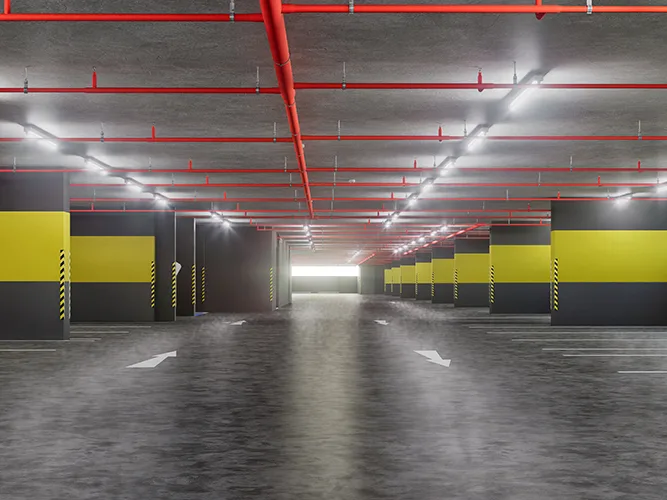
Did you know the U.S. Fire Administration (USFA) estimates approximately 650 parking garage fires occur annually in the United States, resulting in an estimated $8 million in property damage and 15 injuries each year? Over the past eight years, parking garage fires have increased in frequency, ranging from single-vehicle incidents to large-loss events.
While severe events remain uncommon, notable incidents include Liverpool, U.K. (2017), Stavanger Airport, Norway (2023) and Luton Airport, U.K. (2023). More recently, in the United States, Jacksonville International Airport in Florida experienced a partial structural collapse after a fire damaged approximately 50 vehicles.
This article summarizes recent industry developments driving increased parking-garage fire risk; how model codes, standards and insurers are responding; and practical design and technology considerations to improve fire protection performance in parking structures.
A new kind of garage fire
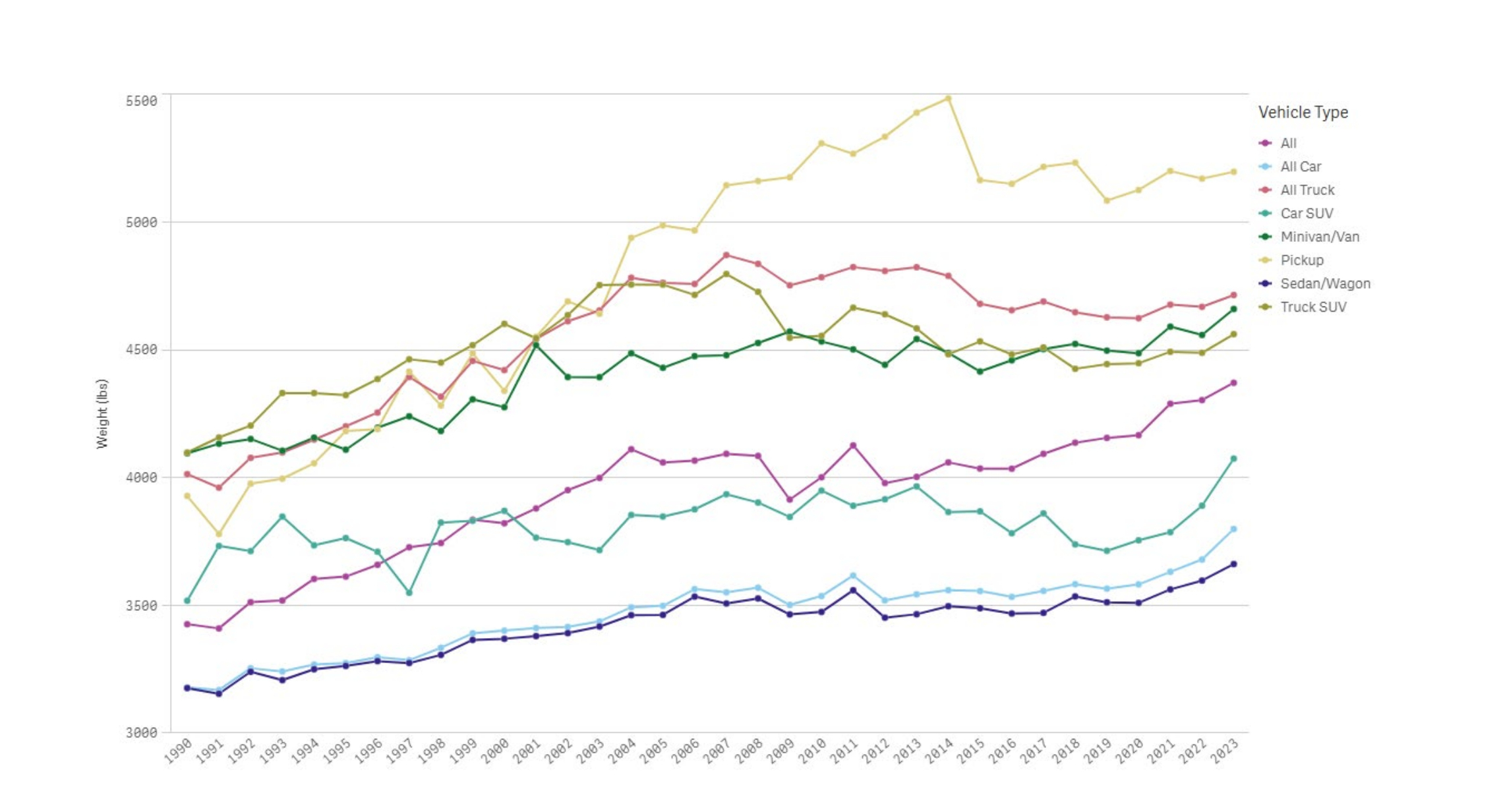
These higher standards reflect changes in both vehicle construction and vehicle fleet composition. Three drivers are particularly relevant:
Increased use of plastics and other combustible materials in modern vehicles,
Increased vehicle weight and size,
Limited incident and test data for emerging technologies.
A March 2024 report by the American Chemistry Council indicates that, over the 2012-2021 study period, plastics in automobiles increased by approximately 19% (https://bit.ly/4uH4HR2). The report, titled “Chemistry and Automobiles,” also notes that plastics comprise nearly 10% of average vehicle weight and approximately 50% of vehicle volume.
Increased combustible loading, combined with higher vehicle weights, can increase fire severity and impose greater demand on structural systems during fire events.
Larger vehicles can increase combustible loading and reduce separation between parked vehicles as stall widths remain constrained. Reduced separation distances can accelerate fire spread, particularly where space is optimized to maximize parking count and control building area.
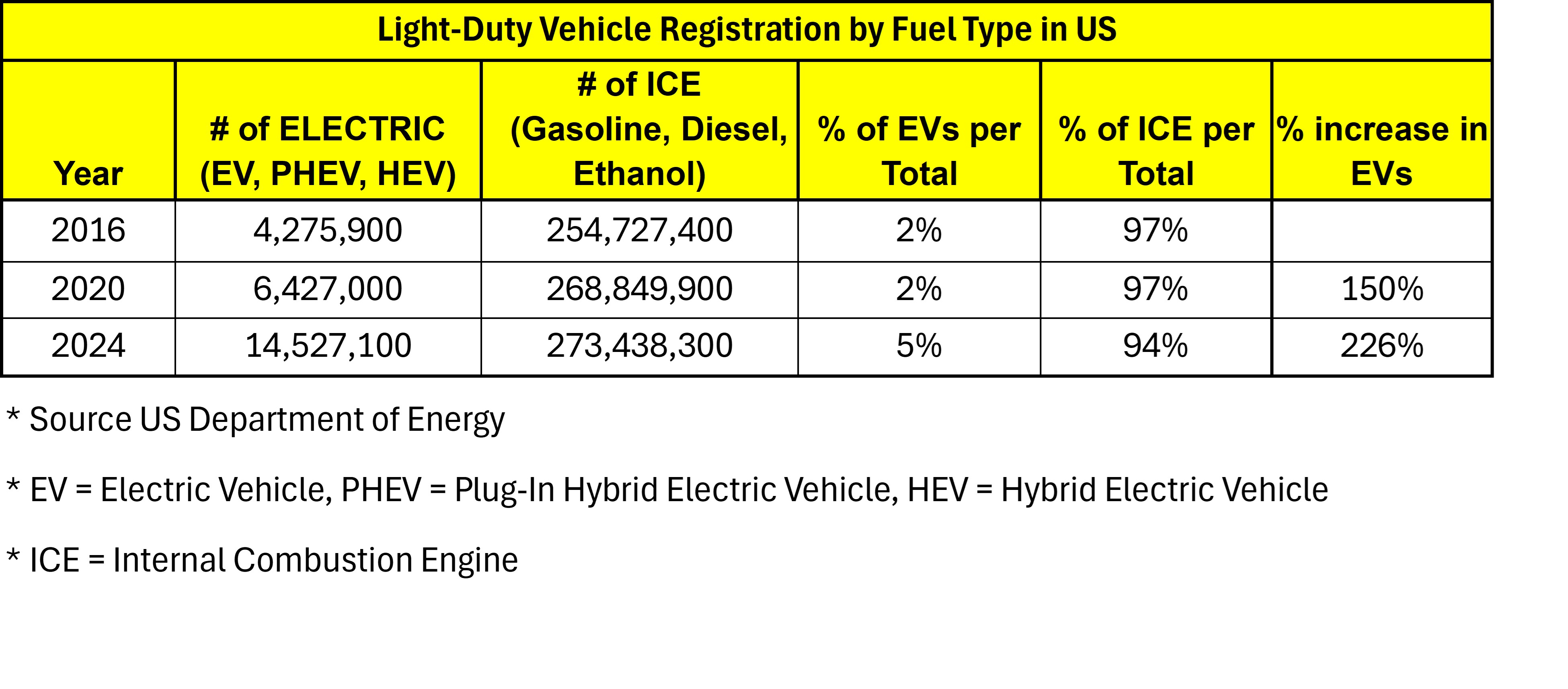
In addition, the number of vehicles powered by lithium-ion batteries has increased materially relative to internal combustion engine (ICE) vehicles. Lithium-ion battery fires can present a different hazard profile than ICE vehicle fires, including the potential for thermal runaway following damage. Thermal runaway can cause rapid temperature escalation (on the order of tens of seconds) and enable faster fire growth and spread to adjacent vehicles.
Figure 2 summarizes U.S. Department of Energy data showing growth in the electric vehicle (EV) fleet since 2016. Increased EV adoption implies a greater presence of EVs in parking structures, with or without charging stations.
Finally, what we are missing as an industry is data. New technologies are emerging so quickly that our code development struggles to keep up and provide a recommended approach. Data is needed in real time so new approaches can be validated.
So, how do we go about doing this? The USFA has made updates to gather more real-time data using its network of fire departments to report events. As of February 1, 2026, the USFA’s fire event data-gathering platform of more than 50 years, called NFRIS (National Fire Incident Reporting System), has been phased out for a newer, cloud-based, more easily trackable and real-time program called NERIS (National Emergency Response Information System).
The hopes and intent to change this platform will help the USFA gather more real-time data on fire events and potential causes, and assist in efforts to collect data so new approaches can be evaluated. The UL’s Fire Safety Research Institute (www.fsri.org) has been developing a three-phase research project to help, issuing phases 1 and 2 of its reports (in July 2020 and July 2024, respectively).
If you haven’t read these two reports, it’s worth the read to evaluate where we are as an industry and which avenues are being explored for fire protection.
The rules are catching up
Focusing on the modern developments impacting parking garages, vehicles and fire protection systems has also compelled updates to the codes, standards and insurer requirements that govern the design of these facilities.
A new standard, NFPA 800, Battery Safety Code, is under development to address critical storage, battery manufacturing and charging locations due to increased fire risks. Please refer to the National Fire Protection Association website (www.nfpa.org) for any updates to the draft review process.
The International Building Code 2022 (IBC) expanded automatic sprinkler protection for S-2 occupancies to include open parking garages more than 48,000 feet² (IBC 903.2.10). The IBC also maintained sprinkler requirements for enclosed parking garages more than 12,000 feet² and located beneath other occupancies (except R-3).
NFPA 13 (2022), Standard for the Installation of Sprinkler Systems, reclassified parking structures from Ordinary Hazard Group 1 (2019) to Ordinary Hazard Group 2. NFPA 88A, Standard for Parking Structures, was updated in 2023 to require all parking structures to be protected by an automatic sprinkler system (Section 6.4). NFPA 1, Fire Code, references NFPA 88A, effectively extending this requirement where NFPA 1 is adopted.
For projects insured by or designed to FM Global requirements, Data Sheet 7-15, Garages, has been updated to require automatic sprinkler protection for Hazard Category 3 (HC-3) in accordance with Data Sheet 3-26, Sprinkler Protection of Non-Storage Properties. Historically, parking structures were commonly treated as HC-2.
For example, the design density for an HC-2 dry system with a maximum ceiling height of 30 feet increased from 0.20/2,500 to 0.30/3,500 [(gallons/minute/feet²)/feet²] under HC-3. The hose stream allowance also increased from 250 gpm (HC-2) to 500 gpm (HC-3). These changes can significantly affect system sizing and water supply requirements.
Operational guidance for suppressing EV fires in constrained environments remains an active area of research and product development. Recent demonstrations and emerging water-based suppression agents indicate potential pathways to reduce fire duration and limit spread. However, performance is highly scenario-dependent and should be evaluated in coordination with the authority having jurisdiction (AHJ), the owner and the design team.
Designing for the next fire
As design practice evolves, two questions are central:
How do parking geometry and EV charging layout influence fire protection performance?
What suppression and notification technologies are emerging to address identified gaps?
One critical design variable is the location of EV charging stations, particularly where they are required to meet LEED, green-building or municipal requirements. Charging locations should be evaluated for proximity to egress routes, firefighter access, ability to isolate the hazard area and the potential for heat exposure to the structure above.
Placement on a surface lot can reduce structural risk but is often constrained by site limitations. Rooftop placement can improve heat dissipation but may introduce operational challenges related to firefighter access and post-incident vehicle removal. Designers should also consider stacking or concentrating on charging areas vertically, where a fire event could affect multiple levels.
In parallel, parking stall width, vehicle spacing and reduced floor-to-floor heights can influence fire spread and sprinkler system routing.
Where ceiling clearances are limited, coordination of sprinkler piping slopes, structural depth and drainage becomes increasingly important.
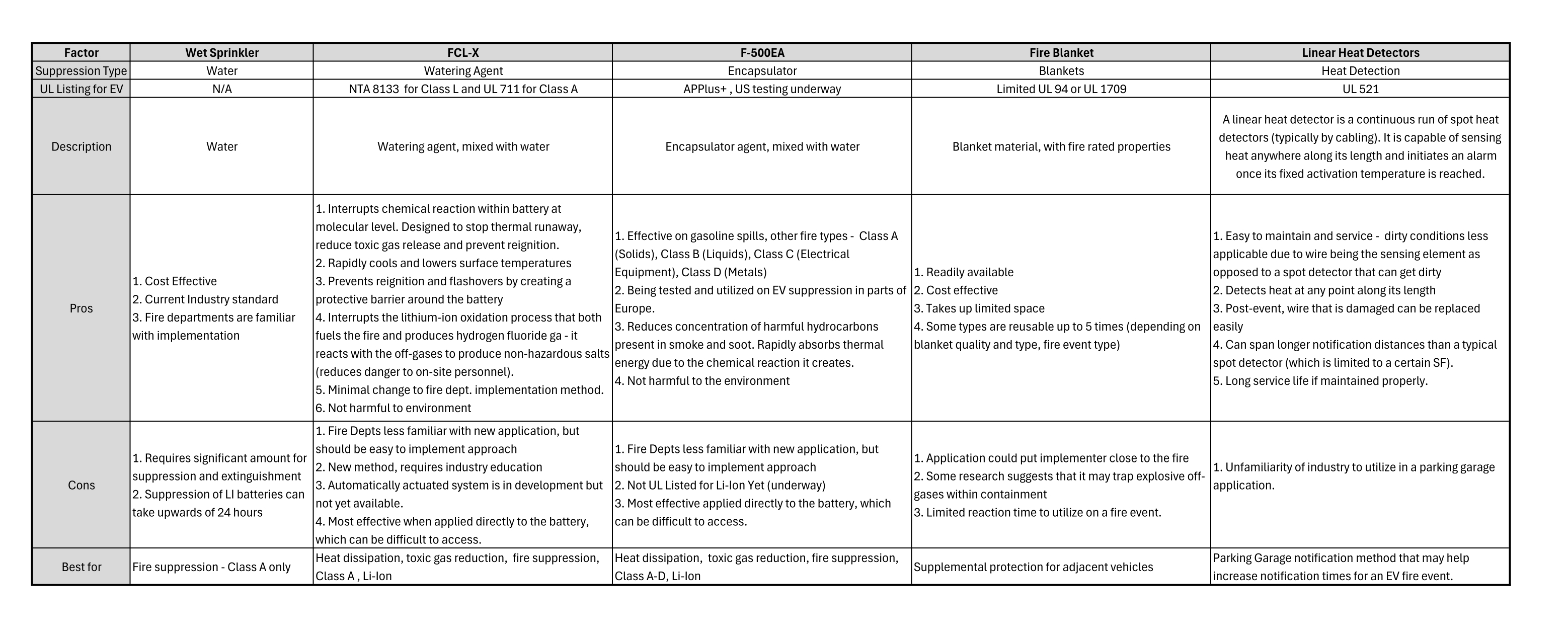
To address the gap between evolving hazards and prescriptive requirements, several suppression and detection approaches are being evaluated for parking structures. The five technologies in Figure 3 represent examples currently gaining attention. For each, consider applicability, limitations and owner/AHJ acceptance before incorporating into a design basis.
Parking structure fire protection is being re-evaluated as vehicle fuel loads, vehicle spacing and EV fire behavior change the expected fire demand. In response, model codes, standards and insurer criteria are increasing sprinkler protection expectations and, in some cases, expanding the scope of where sprinklers are required.
For design teams, the near-term priority is to align early with the governing standard set (IBC/NFPA/FM Global), coordinate EV charging layouts and operational access with the owner and AHJ, and confirm that the water supply, system configuration and clearances can support the required hazard classification. Continued incident reporting and research (including NERIS and UL efforts) will be essential to validate emerging technologies and refine guidance for future code cycles.
Matt Clark, PE, is a principal and technical discipline leader for Smith Seckman Reid. He is a licensed professional engineer with 30 years of experience in plumbing and fire protection systems design.
Melanie Willhite, PE, is a plumbing and fire protection engineer for Smith Seckman Reid, based in Dallas. She is a licensed professional engineer with 10 years of experience in fire protection systems design.