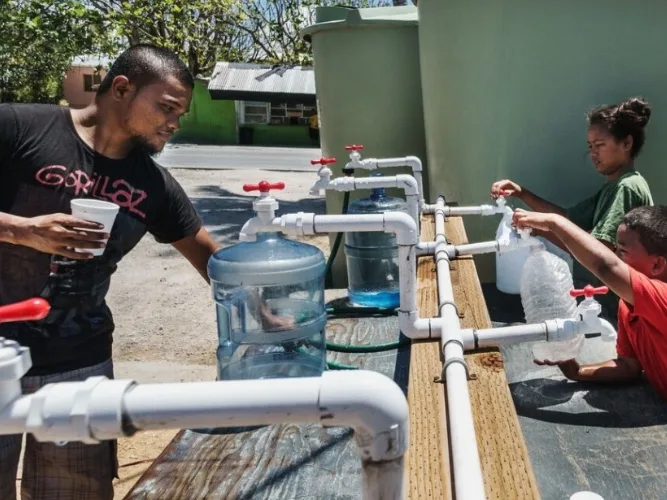
The World Health Organization (WHO) has released its updated guidelines for drinking-water quality, providing the latest global guidance to support countries in protecting public health through safe drinking-water. Yet despite progress, the challenge remains stark: 2.1 billion people still lack safely managed drinking-water, including 106 million who drink directly from rivers, lakes or other surface water sources. The new Guidelines help countries close the safety gap, providing the authoritative basis for strengthening of drinking-water quality regulations and standards, surveillance programs and risk management practices.
The updated edition reflects new evidence, implementation experience and practical lessons from countries applying risk-based approaches to drinking-water safety. It includes strengthened guidance on proactive water supply risk management, small water supplies, microbial risks and selected chemical hazards.
Framework for safe drinking-water
Updated guidance on proactive risk management
Water safety plans remain central to WHO’s recommended approach for managing drinking-water risks. The updated Guidelines draw on extensive additional experience in applying water safety plans across different settings and system types. It also clarifies how sanitary inspections can support water safety planning, including in the identification of hazards and monitoring and maintenance activities, particularly for small water supplies.
New and updated information on microbial risks
Updated guidance on selected chemicals
Looking ahead