We use cookies to provide you with a better experience. By continuing to browse the site you are agreeing to our use of cookies in accordance with our Cookie Policy.
Many provisions of the 2021 Uniform Solar, Hydronics and Geothermal Code concerning radiant heating and cooling have not appeared in model codes before.
In Part 2 of a three-part series, learn how the Uniform Solar, Hydronics and Geothermal Code provides standards for radiant heating and cooling, including snow- and ice-melting systems.
Engineering supports real-world learning at Virginia Commonwealth University’s College of Health Professions.
May 1, 2023
The Virginia Commonwealth University opened its eight-story, 154,000-gross-square-foot College of Health Professions building in 2019. Read on to learn how Mueller Associates provided MEP and fire protection system engineering services for the health-care building’s design.
If you have an express contract with a construction firm, make sure you follow the terms carefully in order to get paid. Read on to see the differences between express contracts and implied contracts.
Thermal energy networks, wastewater energy transfer and phase change materials are three technologies that can further our decarbonization and electrification work. Read on to see how they work together.
After 20 years, this simple system is serving us well: permitting fire protection professionals to properly identify and install fire sprinklers.
May 1, 2023
More than two decades ago, NFPA 13 required alpha-numeric markings on all fire sprinklers. Read on to learn the history of these markings, called sprinkler identification numbers, and how they are used today.
Toxic and corrosive chlorine levels are used to decontaminate water piping in buildings; the industry has no standard specifically for dealing with this subject.
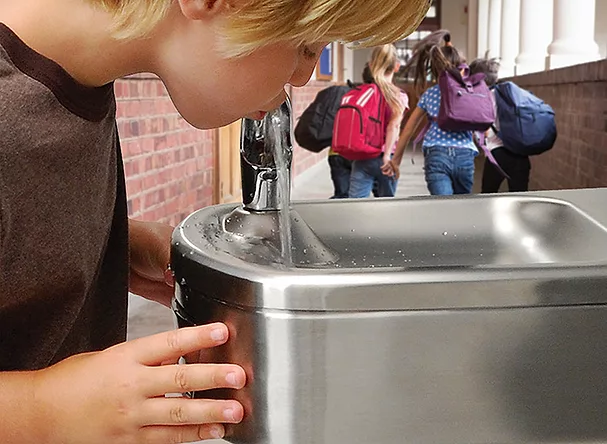
The International Plumbing Code and the Uniform Plumbing Code contain sections addressing flushing and chlorine disinfection of potable water distribution systems. However, no industry standards tell plumbing professionals how to do it.
By combining SHARC Energy’s innovative WET technology with Subterra’s geothermal exchange systems, the partnership aims to bring unparalleled solutions to the market, capturing a greater share for both companies.