When considering water use, most of us initially consumption. For example many gallons a fixture is using or what could be to limit leak. While these questions matter, they only consider part of the story. Because water can also serve the additional purpose of moving, storing and recovering building energy, sustainable water management is becoming increasingly important in both plumbing and hydronic systems.
A truly sustainable system depends on how water flows through a building, how efficiently it is used and how well the system maintains its performance over time. Adopting a thoughtful, systems-level approach to sustainable water management can significantly enhance building efficiency, a necessary and enabling step toward the next-level subject of decarbonization.
By delivering the exact amount of water needed to the appropriate location and at the appropriate temperature, we can substantially reduce both water and energy resource waste. Furthermore, considering the potential for sustainable impacts throughout the lifecycle of a building — from design to material and product selection to operations system performance — maximizes our opportunities in sustainable water management.
Considering conservation
It is important to understand that even fixtures designed to conserve water can still contribute to significant waste elsewhere in the system. If water flows through an inefficient network or if the system is improperly sized, the savings achieved at the fixture level may only hint at the potential for greater improvements in overall water performance.
To achieve truly effective sustainable water management, we have to be curious about the water’s journey through a building, recognizing how each step impacts long-term system performance.
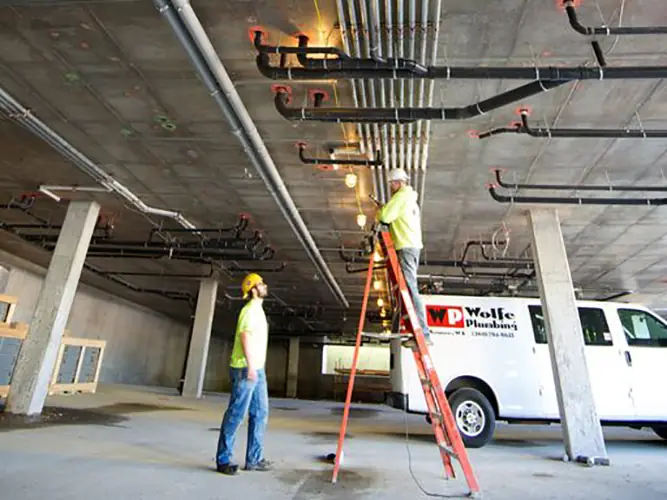
Contractors play an especially important role as they translate the intention of design into actual building performance. The decisions made during product selection and installation can influence how efficiently the system uses water and energy over time, particularly regarding sizing, balancing, and controls.
This is why proper commissioning should be standard practice, as it helps ensure the system operates as intended. This gives contractors direct influence over long-term performance, system reliability, and reduced risk of callbacks.
Once a project transitions from jobsite to operational structure, the sustainability story is far from over. Sustainability considerations extend beyond construction completion, as a building’s long-term performance depends on its operation once it is occupied.
This is where contractors can play a unique role of trainer, educator and advocate by assisting owners in understanding the necessary maintenance for the system and how operational decisions may influence water usage and overall performance.
Maximizing efficiency
Hydronic systems add another dimension to the water conversation, because water is serving a different purpose. In domestic plumbing, water is ultimately consumed. In a hydronic heating or cooling system, water serves as the medium that transports thermal energy for radiating or absorbing heat throughout a building.
In a hydronic application, the larger question is how effectively the water within that system can support heating and cooling while maintaining efficient operation. A well-designed and installed hydronic system can continue providing consistent service over a long period while consuming relatively little water.
Valuing the installation of designs that maximizes water’s potential to distribute thermal energy through hydronic systems can change how we consider the roles of contractor and engineer in decarbonizing our built environment.
This link between water and energy is not a theoretical one. Every gallon requires energy throughout its journey — from extraction and treatment through distribution and use. Once water enters a building, additional energy may be required to heat and circulate it before it reaches the occupant. After use, energy is involved again when that water is collected and treated.
This relationship is commonly described as the water-energy nexus, which places plumbing decisions directly within the broader conversation about building energy use (again, systems-level thinking). Reducing unnecessary water use can lower the energy associated with that water. At the same time, improving hot-water delivery can influence building energy demand even more directly.
Hydronics extends this relationship by making water itself a carrier of thermal energy. Water requires energy as it moves through its lifecycle, while hydronic systems use water to move energy through a building. Understanding this relationship allows contractors to consider water and energy performance as interconnected parts of building operation.
Systems-thinking integration
Many of a building’s future water characteristics are established during design, long before the first faucet is turned on. System sizing and demand assumptions influence how efficiently water moves through the building, while the hot-water strategy affects how much energy the system consumes during operation.
Buildings may remain in service for decades, while local infrastructure and environmental conditions can change considerably during that time. Designing with future adaptability in mind gives owners greater flexibility to respond without making major changes to the entire system.
This is where materials consideration comes into play. The materials installed in a building carry embodied carbon (the total amount of greenhouse gas emissions released during the extraction, manufacturing, transport, construction, maintenance, and disposal of building materials), and premature replacement can add to that impact over time. A component that does not perform well under actual site conditions may have to be replaced earlier than expected, reducing the value of the original material decision.
Longevity, therefore, becomes a key component of sustainable water management and overall lifetime cost savings. When materials are selected with the expected operating environment and service life in mind vs, simply first cost, the system is more likely to maintain its performance without unnecessary replacement.
In addition to material decisions, system monitoring is also important. This enables owners and contractors to determine whether systems are performing as intended.
Historically, water management has often been reactive. A visible leak develops, someone notices it, and maintenance responds. But a monitored system can provide information much earlier by establishing what normal water use looks like and identifying when consumption begins to move outside that range.
This gives building teams greater visibility into where water is being consumed and where losses may be occurring. This approach can be especially valuable in existing buildings where a full system replacement may be unnecessary or impractical.
Drivers of change
Building owners and sustainability leaders are increasingly thinking about how systems will perform years into the future, particularly as expectations around water use and energy performance evolve. This creates greater emphasis on whether a system can meet an intended performance target and whether that performance can be demonstrated once the building is operating.
Resilience is likely to make that conversation even more important. Changes in water availability, water quality, and infrastructure reliability will affect how buildings are designed and operated. Buildings are also becoming easier to monitor as greater access to metering and controls gives building teams more insight into actual system performance.
That information creates opportunities to adjust operating practices over time and make more informed decisions about future improvements.
As water and energy become more closely connected, that experience will become more valuable. For plumbing and hydronic contractors, sustainable water management will become an increasingly important part of delivering systems that perform efficiently and consistently.
Instead of simply installing pipe, contractors will influence a lifetime of water and energy systems performance through daily decisions and jobsite interactions. The next generation of sustainable buildings won’t be achieved by making individual systems incrementally more efficient. It will come from understanding and optimizing how those systems interact, and everyone has a role to play in this.
Chrissie Walsh is the regional head of environmental sustainability at GF Building Flow Solutions Americas. She can be reached at [email protected].