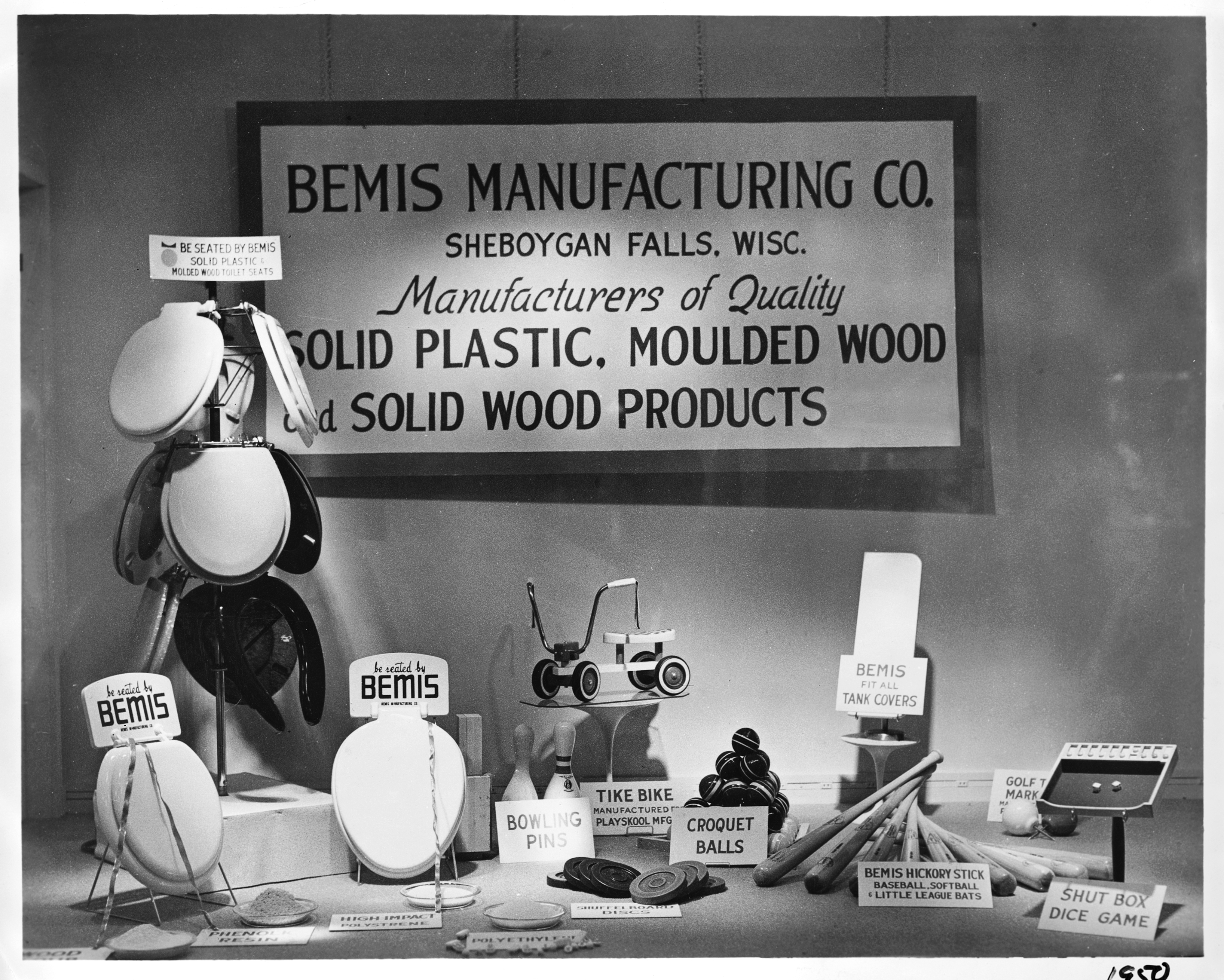
For the past 125 years, a family-owned company has turned the humble toilet seat into a showcase of American manufacturing ingenuity, solving the consumer’s and contractor’s most persistent problems while maintaining a commitment to quality that has made it a top brand in the plumbing industry.
“It’s a very interesting category when you’re in it,” says TJ Stiefvater, vice president of marketing at BEMIS Manufacturing Co., headquartered in Sheboygan Falls, Wisconsin. “Honestly, toilet seats are something you use every day. And if we are doing our job, we hope no one notices them too much.”
That’s the paradox at the heart of the company’s long-time success: Invest millions of dollars and energy decade after decade innovating toilets seats contractors, specifiers, wholesalers and customers never have to think about.
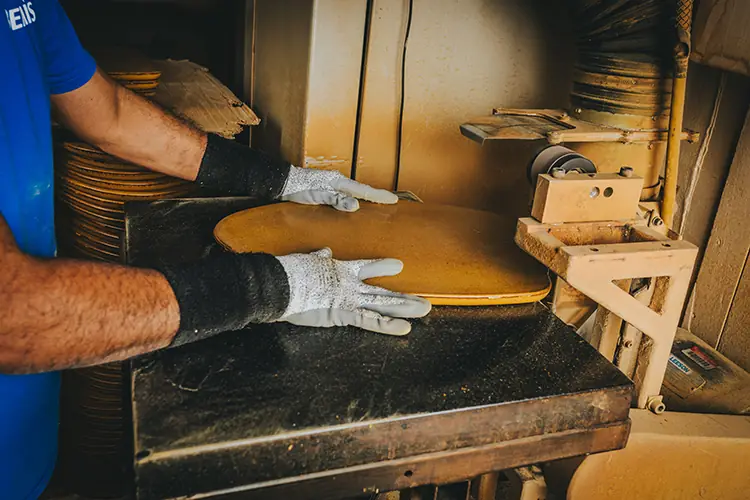
“Many of our core processes, such as compression molding, precision plastic injection molding and automated finishing, have been in place for decades because they consistently deliver quality and repeatability,” Stiefvater adds. “What has changed are the processes around them. We’ve layered in advanced tooling, automation, digital process controls, better material handling systems and more data-driven quality monitoring. These enhancements allow traditional processes to maintain the craftsmanship they’re known for while improving consistency, throughput and traceability.”
This focus has kept BEMIS relevant across four generations of family ownership, even as it remains North America’s only manufacturer of wood toilet seats while simultaneously pushing into bidets and smart bathroom technology. Founded in 1901, the company can trace its origins to one of the simplest products imaginable: a child’s wooden coaster wagon. From that modest beginning, the company has grown into a national and global supplier of toilets seats, while remaining deeply connected to the trade professionals who install, specify and stock its products.
We spent an hour last December talking with Stiefvater and Lori Zeier, director of sales for wholesale and OEM, to better understand how BEMIS has figured out, for example, the precise torque that prevents loosening seats, the adjustability that accommodates bowl variations and the scratch-resistant finishes that endure decades of use.

The Stay·Tite difference
The first feature the two brought up eliminates the biggest problem associated with toilet seats.
“The number one issue consumers and the trade have is with loose seats,” Stiefvater explains. “Contractors get callbacks, homeowners get frustrated and everyone notices.”
Traditional toilet seats rely on standard nuts and bolts that can gradually work themselves loose as people sit down, stand up and shift their weight. On the other hand, the company’s patented Stay·Tite Seat Fastening System uses a unique fastening mechanism that locks the toilet seat bolts in place, preventing them from loosening even with regular use.
The Stay·Tite system’s special nut design resists this loosening action, keeping the seat firmly anchored to the toilet bowl. A unique finned bushing eliminates the gap in the mounting hole, preventing hinge movement. During installation, the nut is designed to snap off when proper tightness has been reached, ensuring that the toilet seat cannot be over- or under-tightened.
“We’ve taken the guesswork out of installation,” Zeier explains. “It doesn’t matter who’s installing the toilet seat, if they break this nut off, it’s never going to loosen. We say ‘never’ in our literature because we’ve tested it over and over.”
To that end, the company tests seats through 150,000 cycles of side-to-side movement, simulating years of real-world use.
Zeier added that BEMIS initially introduced Stay·Tite on the commercial side where seats get heavy use.
“This eliminates that every-week maintenance of going back and tightening toilet seats,” Zeier explains. “This is particularly valuable in commercial settings, such as airports and hotels, but also busy households where seats get heavy use.”
As an added bonus on jobs big and small alike, Zeier says Stay·Tite seats install 33% faster than traditional models and requires just a simple wrench for installation.
“We say easier, faster and more secure,” Zeier notes. “It really solves that problem of loose toilet seats.”
The R&D to develop the systems started with BEMIS listening to both installers and end users, identifying a problem and then working to perfect a solution using the company’s deep knowledge of materials, molding and hardware engineering.
“By pairing that market insight with our material science, molding expertise, and hinge/hardware engineering, we developed a fastening system that installs easily and stays secure,” Stiefvater explains. “It’s a great example of how we work ‘market-back’ by identifying a problem that matters to both the trade and consumers, then using our materials and process know-how to deliver a solution that feels simple but performs exceptionally well.”
Universal solution
Toilet bowl manufacturers occasionally make subtle changes to their product dimensions, which can affect how replacement seats fit. A seat that looked perfect on one model year might overhang or expose the rim on the next.
“All of a sudden our seat that’s been on a popular name-brand bowl for many years doesn’t fit correctly, therefore we challenged our team to come up with a solution to allow front to back adjustability,” Zeier explains.
The solution, which the company calls Precision-Fit, is an adjustability plate system that allows installers to fine-tune positioning so the seat aligns perfectly with a bowl’s changing profile.
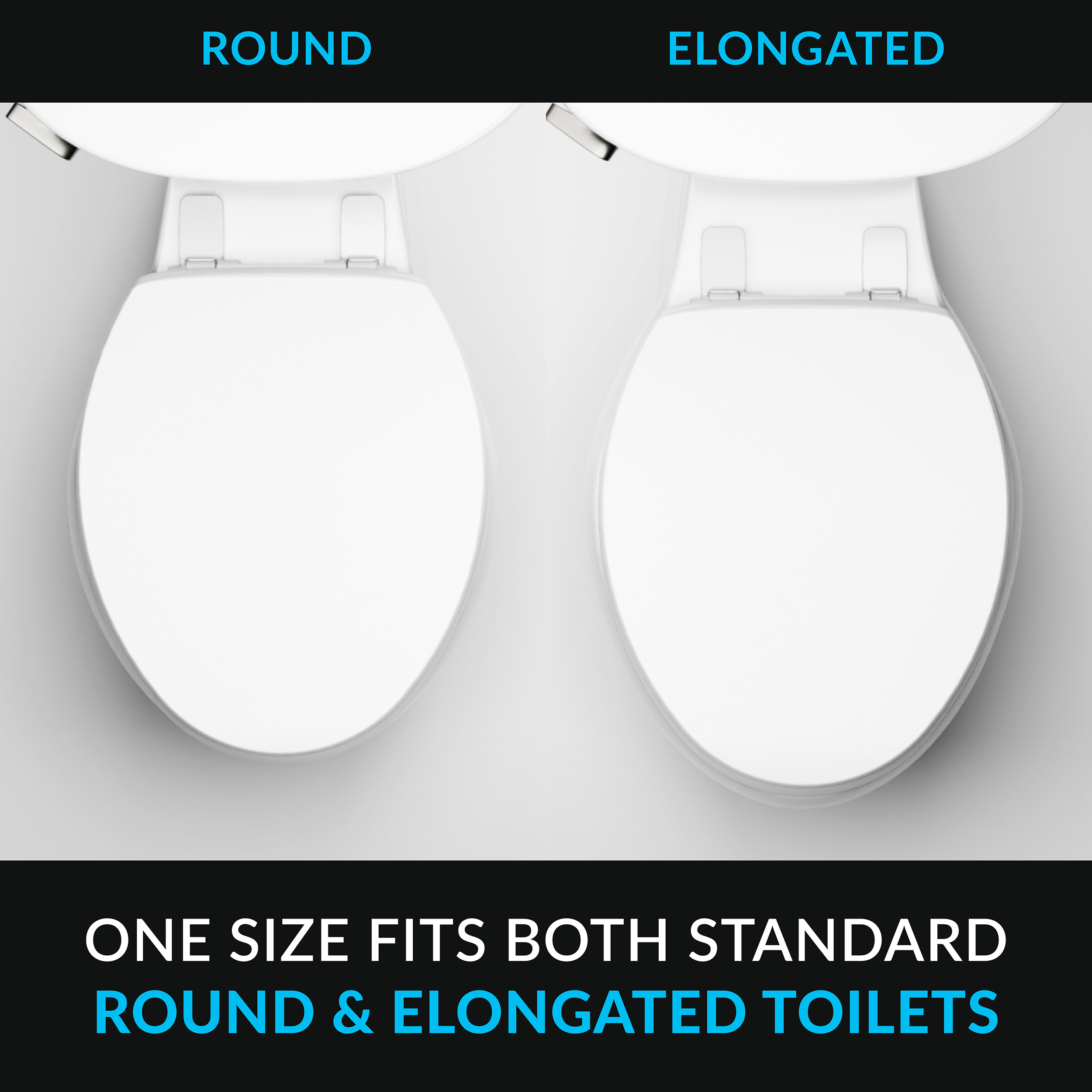
Taking the concept further, BEMIS recently introduced its Universal Fit seat, specifically designed for service plumbers who need to tackle any job throughout their day.
“The seat itself fits both round and elongated toilets,” Stiefvater says. “It’s meant for that service plumber scenario where they’re going out on jobs, servicing households, and suddenly realize a customer needs a toilet seat. They have one that’s going to fit and work just fine regardless of bowl size. It saves them a trip back to the shop. For contractors working in multifamily housing or managing maintenance calls, having a single solution that addresses multiple scenarios is invaluable.”
The bidet evolution
In 2020, BEMIS acquired Bio Bidet, headquartered in Crystal Lake, Illinois, positioning the company in a growing market just as the pandemic created unprecedented interest in bidets. While household penetration in the U.S. remains at around 4-5%, BEMIS sees enormous growth potential. Research also indicates that 30% of Americans don’t even know what a bidet is, while many others associate the term with the standalone plumbing fixture commonly found in European bathrooms.
“Customer feedback has reinforced that U.S. adoption is growing steadily, especially as consumers discover how approachable bidet seats have become,” Stiefvater says. “People want simplicity, reliability and intuitive controls not overly complex technology. The more we make these products easy to install and easy to use, the more momentum we see in the category.”
With the expansion of the bidet category, BEMIS has been able to develop a dedicated line for the wholesale channel focused on a good, better, best selection offering features and pricing to fit every budget.
A pioneer in bidet technology and design, Bio Bidet had spent the previous decade prior to the BEMIS deal exploring and harnessing the significant environmental, hygienic and practical benefits bidet toilet seats provide to U.S. households.
“Bringing Bio Bidet into the BEMIS family expanded our R&D priorities by adding a whole new layer of electronics, ergonomics and user-experience design to our core capabilities,” Stiefvater explains. “One area that’s completely new for us is water flow management — ensuring precise, comfortable and reliable performance across different installation environments. It’s a technical challenge we’ve embraced alongside comfort, personalization and hygiene features.”
The company’s latest innovation, the Empower bidet seat, targets the aging-in-place and accessibility markets. It features self-cleaning technology with cleanser spray, wash patterns, topical spray, and a high-performance dryer — all controlled via remote. Initially launched in facilities and VA hospitals, the product addresses dignity and independence for users with mobility challenges or incontinence issues.
“When you get into products like this you can make a difference in people’s lives,” Stiefvater adds.
Supporting the trade channel
“We want to be the one-stop-shop for all things toilet seats,” Zeier says, “offering opening-price products for multifamily to high-end bidet products for luxury bathrooms.”
To support wholesale distribution, BEMIS maintains fill rates in the upper 90s and has the capacity and flexibility to respond quickly to demand spikes.
“We focus on ensuring distributor partners and contractors can always access the products they need, whether traditional seats or the growing bidet category,” Zeier explains. “By keeping production and distribution tightly aligned with real-world usage, we maintain reliable availability so contractors can plan jobs with confidence.”
The company recently launched Bemisseats.com, a website specifically for trade professionals, offering easy access to specification sheets, installation videos and training content. The site includes filtering for Buy America compliance, an increasingly important consideration for contractors working on public projects.
The company’s latest investment in digital tools strengthen customer experience and build long-term trust. The new website arrives on the heels of BEMIS’ partnership with ATS Software, a leading provider of solutions for the construction industry, making its products available for specification through ATS SpecTool.
Education is also key: BEMIS offers training through a variety of education portals and platforms, counter days and lunch-and-learns.
“We trained more than 3,000 contractors when Stay·Tite was first introduced,” Zeier recalls.
That commitment to education continues through active membership in industry organizations including ASA, ASPE and NKBA.
The long view
“Contractors can expect continued evolution across multiple areas,” Stiefvater says of the company’s future direction. “We’ll keep advancing fastening systems and hinges to make installation faster and more reliable, and bidet technology will continue to grow with new features that enhance performance, comfort and usability.”
For Zeier, who works daily with wholesale partners and contractors, the company’s longevity speaks to its values.
“We are a legacy brand for contractors, and they appreciate the reliability we offer in terms of product performance, quality and availability,” she adds. “Contractors know that when they go to a wholesale counter, they can get a BEMIS seat and that it will install with ease and work with any bowl they are using.”
In a market where toilet seats can easily be just another commodity item, BEMIS has built a 125-year legacy on the principle that every detail matters — from the precision-torque breakaway nut to the recycled wood dust captured from factory air. It’s American manufacturing at its best: solving problems, supporting trade professionals, and proving that even the most humble products deserve thoughtful engineering.
After all, when something works perfectly, you never have to think about it. And that’s exactly the point.