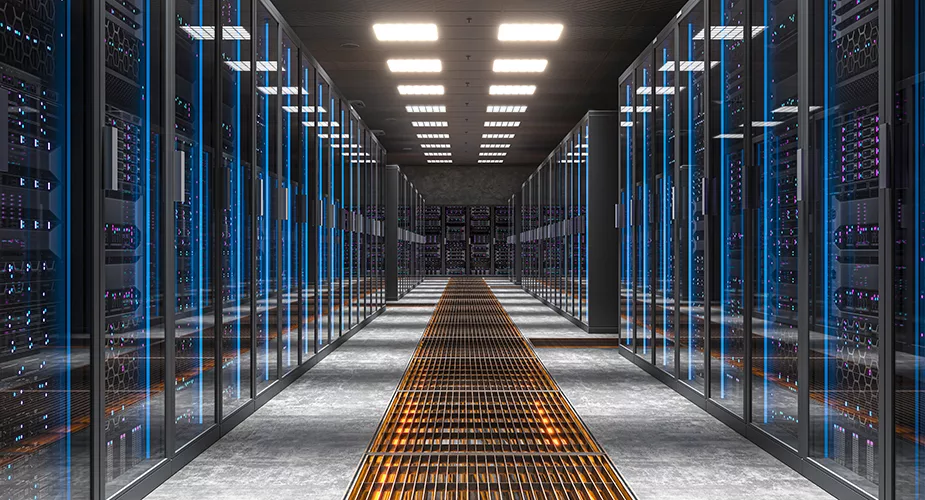
As AI workloads accelerate and data centers solidify their role as the backbone of the digital economy, water use has become one of the industry’s defining challenges. As the number of data centers is projected to triple by 2030, regulators and residents are calling on technology companies to address the strain these facilities place on local infrastructure (https://bit.ly/40Hprv5). Meeting future demand will require clear regulation, responsible siting and water‑efficient technologies that protect both data center operations and the communities they are built in.
To ensure operational resiliency, advance sustainability commitments, maintain transparency and meet evolving regulatory requirements, technology providers must elevate water stewardship as a strategic priority. This is essential not only for responsible growth, but also for preserving the long‑term viability of AI‑driven digital infrastructure.
The water footprint of modern data centers
Although energy consumption often dominates public discourse, water is equally essential to data center performance as direct water usage, primarily through building and equipment cooling, accounts for approximately 25% of a data center’s total water footprint and indirect water usage through electricity generation accounts for the other 75%.
For cooling purposes, there is no such thing as a one-size-fits-all approach as factors like data center size, location and workload demand must be considered when choosing an approach. The most common method for cooling data centers and equipment is using a traditional direct expansion refrigerant air conditioning system. However, this approach uses a significant amount of electricity. As a result, the following liquid cooling methods have become more common:
- Evaporative Cooling: Uses water evaporation, by way of a chilled water system with a cooling tower(s), to remove heat from equipment and components. The issue with this method is that approximately 80% of the water used evaporates with the remaining being discharged to the local wastewater treatment facility.
- Immersion Cooling: Equipment and components are submerged in dielectric fluids to absorb heat. One of the biggest advantages of this method is the ability to use ultra-high-density equipment in low- or medium-density facilities. A key drawback to this method is the high upfront implementation costs and types of fluids used that could have an adverse impact on the environment.
- Free Cooling: Uses cooler outside air or water that is delivered by mechanical means such as economizers. This method is dependent on the location of the data center and is extremely sensitive to local weather conditions.
- Direct-to-Chip Cooling: Chilled water, glycol or dielectric liquid is circulated directly to high-heat components to absorb heat. While effective for high-density workloads, it might leak, and like immersion cooling, carries high upfront implementation costs.
- Hybrid Cooling: Utilizes a combination of water and air-based technologies to keep equipment and components from overheating. The benefits of this method are the operational flexibility it offers and being very energy efficient. However, it too requires high initial costs.
Today, data centers cooled by chilled water systems use anywhere from 300,000 to 5 million gallons of water per day to keep the data center conditioned and the equipment from overheating (https://bit.ly/4bQgjKS).
Regarding electricity generation, most power plants rely on enormous amounts of water to produce steam that is used by turbines to generate electricity. According to the “2024 United States Data Center Energy Usage Report,” roughly 211 billion gallons of water were used in 2023 to generate electricity for data centers (https://bit.ly/40GTLpD).
Emerging pressures and risks
Several data centers are in regions where population growth and extreme weather events are already straining water supplies, such as Northern Virginia, which has the highest concentration of data centers in the world, with Texas on track to be the new leader by 2030. According to Bloomberg News, about two-thirds of data centers built since 2022 in the United States are in high-water stress areas, which can endanger local ecosystems and intensify water shortages (https://bit.ly/4rIJ40T).
To put further strain on water supplies, some are projecting that direct water usage in data centers in the U.S., primarily for building and equipment cooling purposes, could double or even quadruple by 2028 from 2023 levels (https://bit.ly/4sMxkew).
Couple the projected increase in water usage with the fact that several technology companies do not disclose the amount of water usage in their data centers due to no federal reporting requirements or proprietary concerns, it should come as no surprise why the public is pushing back on the construction of new data centers (https://bit.ly/4bS0bZg). Public concern over high water usage and potential negative impacts on the environment has resulted in approximately $64 billion of data center projects being blocked or delayed in the United States (https://bit.ly/3PvcSAy).
Besides the quantity of water used by data centers for operational purposes, the quality of the water used must be considered to ensure that equipment operates as intended, along with safeguarding public health and the environment.
Optimizing water use in data centers
Data center water quality requirements must focus on preventing corrosion, scaling and microbial growth in cooling systems. As a result, water parameters such as pH, hardness and conductivity must be at levels to prevent corrosion and scaling. In addition, necessary filtration to prevent particles from damaging equipment and mitigation measures to prevent microbial growth must be in place, especially when cooling towers are utilized.
Chemicals used for achieving required water parameters, or fluids besides water that are used for cooling purposes, must be environmentally safe to reduce pollution risks when wastewater is sent to a local treatment facility or where leakage occurs in the system.
To efficiently use water in data centers, tech companies should consider:
- Assessing local water stress levels before building to avoid areas with high water risk or consider using air cooling methods in those regions.
- Using non-potable water sources, such as treated wastewater or harvested rainwater for cooling purposes.
- Implementing advanced cooling technologies such as immersion, direct-to-chip or hybrid to significantly reduce water evaporation.
- Utilizing air cooling for most of the year and water-based cooling methods during peak heat periods to balance energy and water efficiency.
- Tracking and reporting water usage to demonstrate stewardship and build trust with local communities to align with regional expectations.
- Using AI to manage cooling systems to ensure that only the necessary amount of water is used.
- Performing regular audits of water usage and implementing robust contingency plans for drought conditions.
- Installing leak detection equipment to address system leaks to mitigate water loss and avoid damage to the facility and equipment.
- Generating electricity through on-site solar/wind technologies versus off-site to reduce indirect water usage.
- Using cogeneration-related solutions that can generate electricity and/or capture waste heat for cooling purposes.
The codes, standards and regulations
Adhering to updated codes and industry standards is required and can address many of the above considerations.
U.S. codes and standards, including the International Building Code (IBC), International Fire Code (IFC), International Plumbing Code (IPC), International Mechanical Code (IMC), NFPA 75, Standard for the Fire Protection of Information Technology Equipment, and ASHRAE 90.4: Energy Standard for Data Centers, that provide the foundation for designing and constructing safe data centers, along with general requirements for mechanical, electrical and plumbing systems.
Given the unique operational, structural, fire and life safety, interior environment and water-related needs of data centers, additional guidance can help practitioners. That is why the International Code Council is developing a new industry guideline, the Data Center Guideline — G12, to address these requirements and provide recommended best practices to industry stakeholders (https://bit.ly/4sTY2SH).
The G12 will be informed by public comment and by a committee of regulators, designers, operators and other stakeholders. Topics are expected to include physical security and site control, occupancy classification, allowable height and area, passive and active fire protection, interior environmental conditions, structural design considerations, electrical systems and environmental impacts.
To learn more about ICC’s Data Center Guideline and apply to be on the G12 committee visit https://bit.ly/4rLizrI.
Matt Sigler is the PMG (plumbing, mechanical and fuel gas) executive director for the International Code Council.
Image credit: istockphoto.com/tiero



