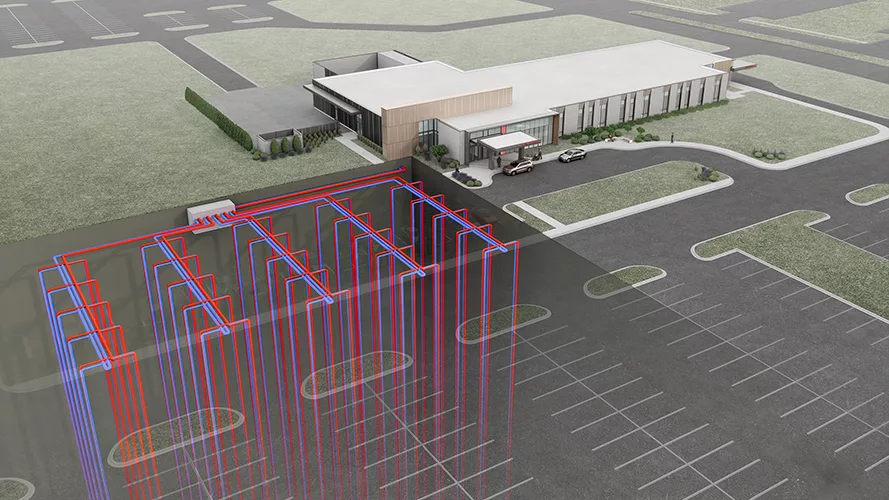
Construction of ThedaCare Medical Center-Fond du Lac was completed in April 2025, and the facility began full-scale operation of its closed-loop vertical geothermal (also called geothermal-exchange or ground-source) energy system. In these systems, piping is installed vertically into the ground to harness the earth’s (often untapped) thermal energy, usually to depths of 200 to 800 feet, where the ground is a relatively constant temperature.
A nontoxic heat transfer fluid (25% propylene glycol) is circulated through the closed-loop piping distribution to transfer heating and cooling energy between the ground and the building. On the building side, heat pump equipment uses the ambient temperature of the ground as a source to generate hot water for heating, chilled water and domestic hot water.
Geothermal delivers the same heating and cooling needs to the building as a conventional mechanical system, but provides many benefits, including significantly better energy efficiency and life-cycle cost savings.
Design advocacy
When a project is a great fit for a new, atypical or unfamiliar design strategy, it is crucial for engineers and designers to advocate for the desired strategy early and often. This is especially true with a geothermal system, given the early decisions that need to be made. On this project, HGA served as the architect and the engineer of record for all mechanical, electrical, plumbing, technology and geothermal systems, allowing for quick coordination, strong decision-making and, ultimately, influential advocacy for the geothermal system.
Decisions such as mechanical room sizes, budget allocations and bore field locations all played into the overall building design and were made early to keep the project on schedule. It was a great benefit for this project that Froedtert ThedaCare strives to be an environmental leader that creates positive community engagement, which helped to orient the design discussions in that lens.
With geothermal heating and cooling systems generally resulting in the most highly performing buildings in the upper Midwest climate, geothermal was a natural fit for this Wisconsin project. Ground-source heat pumps typically use about 20% to 40% less energy for heating and cooling buildings compared to equivalent conventional systems.
Additionally, the resulting electrical load profile can be paired well with on-site renewable energy generation, such as solar energy, to further improve building energy use and reduce reliance on fossil fuels. Without the early advocacy for this system from the entire project team, these benefits would have gone untapped over the building’s life, as is sadly the case with all the projects that never even have the concept of geothermal energy brought to the table.
Even when starting from a framed mindset that sees the value of geothermal life-cycle benefits, immediate obstacles such as increased mechanical room square footage and higher upfront costs are often difficult pills to swallow for building owners. That is why, in addition to the life-cycle savings from reduced energy use, it is important that the design team identify further incentives to help reduce a project’s first costs. Many states, including Wisconsin, offer utility rebates and/or state-level incentives when certain requirements are met.
Additionally, geothermal is defined as a qualifying energy property under the Inflation Reduction Act Investment Tax Credit (Section 48). At the time of construction for this project, this legislation allowed many commercial, nonprofit and government projects to receive a base incentive of 6% and a maximum incentive of up to 50% of the total improvement costs when certain requirements were met.
Most projects qualify for at least 30%; this is collected either through a tax credit (for taxable entities) or through direct pay (for tax-exempt entities). Building owners can work with their tax professionals to learn how this incentive applies to their specific situations. Another great benefit of geothermal for this project is it eliminated the need for installing a natural gas service.
Geothermal design
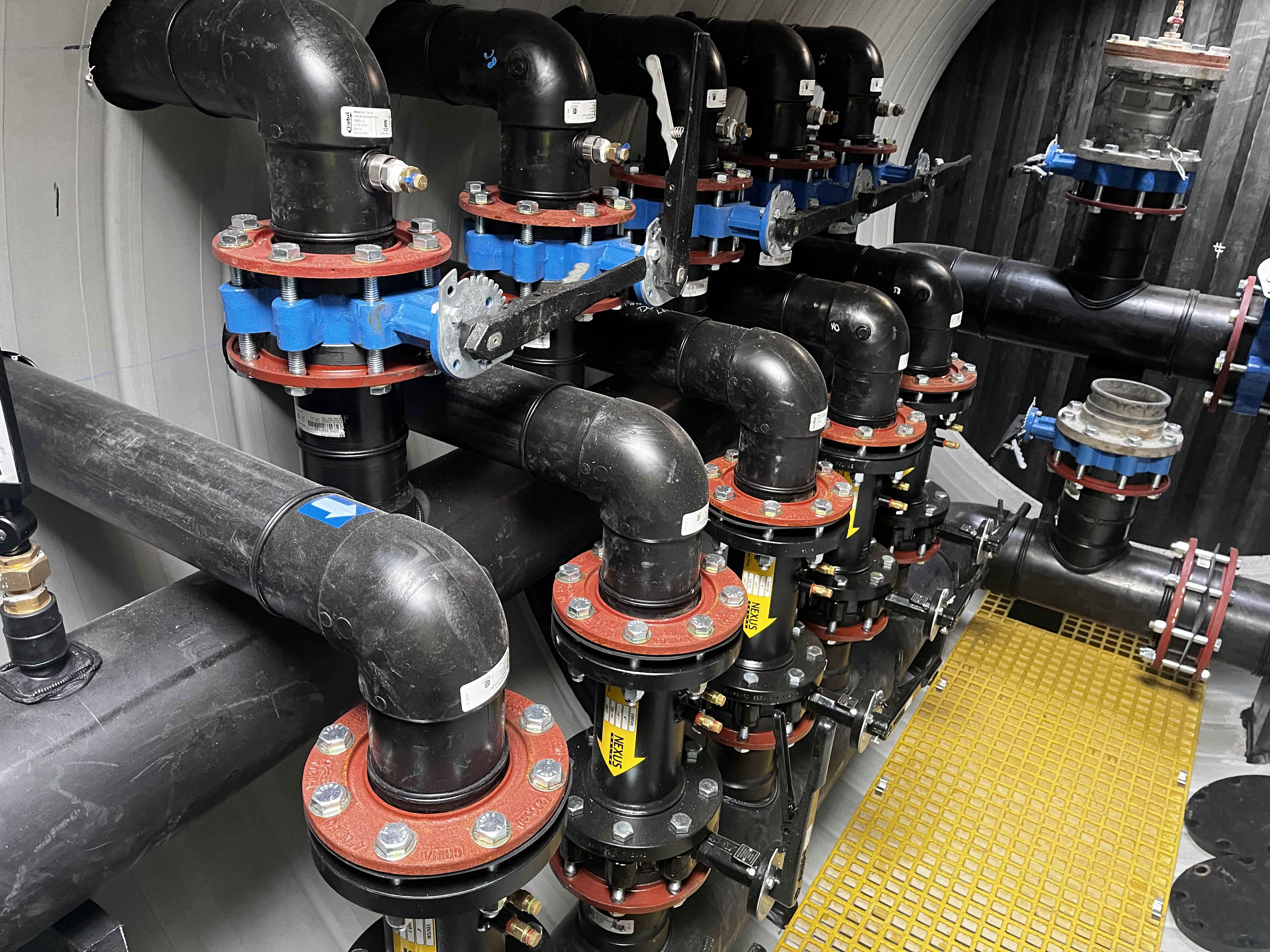
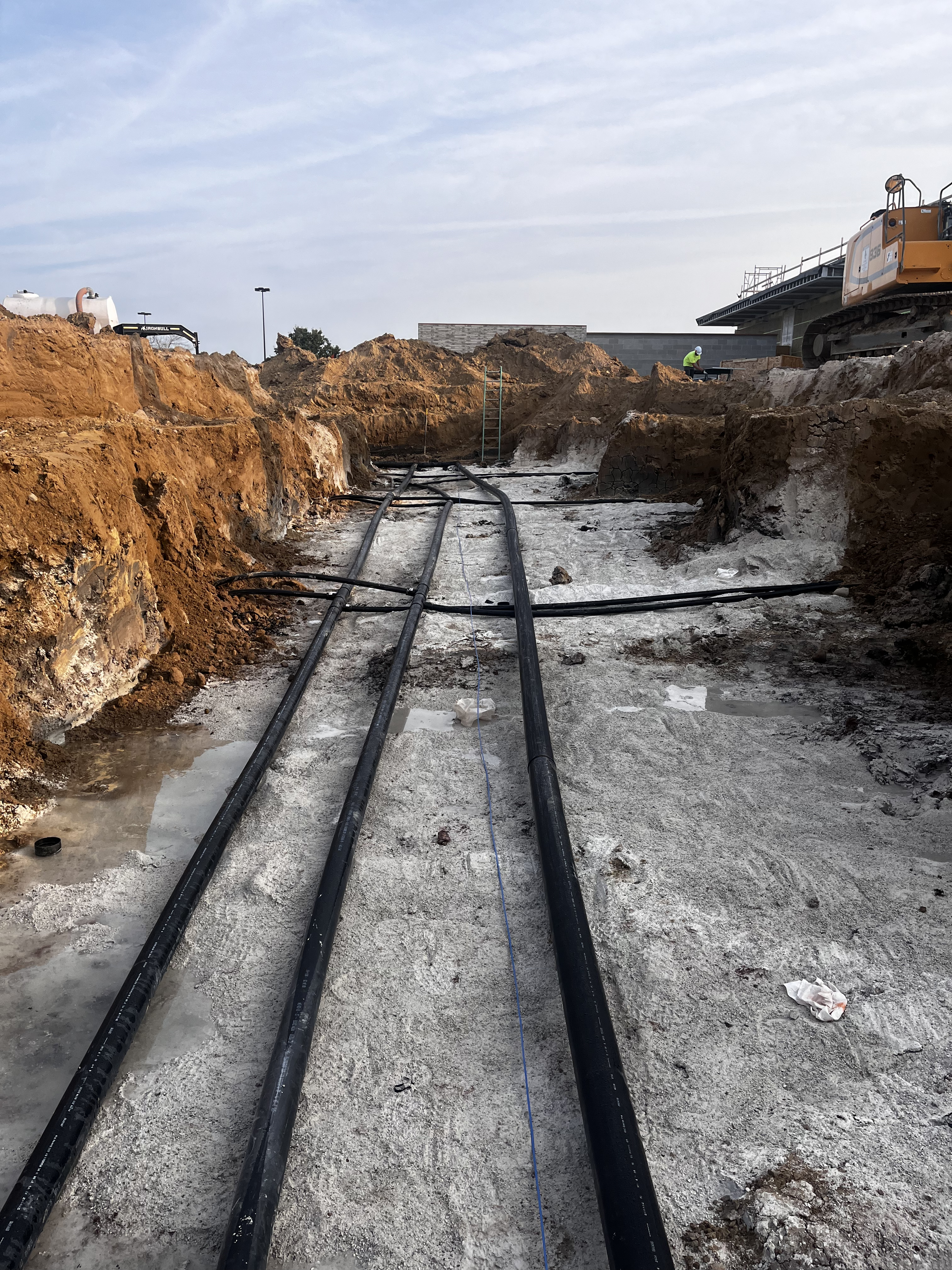
At ThedaCare Medical Center-Fond du Lac, 50 vertical geothermal bores at a depth of 500 feet serve as a source for the mechanical and plumbing equipment, which carry peak combined loads of 1.2 million BTU/hour in heating and 600,000 BTU/hour in cooling. In total, more than 10 miles of piping was installed.
A closed-loop vertical system was chosen over other geothermal systems due to its simplicity, reliability and high energy performance. These systems have the fewest moving parts (pumps, valves, etc.), lowest maintenance and highest expected lifetime (more than 50 years for underground piping), compared to other geothermal system options.
Because the piping is closed loop and the borehole construction is completely sealed, it offers the greatest protection of public groundwater resources and has no effect on groundwater level or quality.
To determine the thermal performance of the ground and verify drilling conditions at the target depth, an on-site test bore was drilled to 500 feet before beginning design.
This test bore was used to perform a thermal conductivity test as recommended by the American Society of Heating, Refrigeration, and Air-Conditioning Engineers and the International Ground Source Heat Pump Association. It allows for right-sizing the borefield, results in better certainty for construction and can be reused as a functional part of the project in most cases.
The ground performance data was paired with an hourly building load model output to comprehensively calculate geothermal performance over the course of a full year. Domestic hot water loads were evaluated on an hourly basis and added to the building heating requirements.
While geothermal systems can technically be applied in virtually any climate type and region, the upper Midwest is particularly suitable for geothermal as there is a significant heating and cooling season. Balancing the thermal energy extracted (heating) versus rejected (cooling) results in the most reliable performance over the long term, while moderate ground temperatures (50 F) and the presence of groundwater contribute to optimal performance.
The geothermal bore field was sited under the visitor parking lot. This area of the site is less likely to be used for future building expansion and presented an opportunity to bring the geothermal supply and return pipe into the building so it could be routed to the mechanical room.
HVAC design
The building HVAC system interacts with the geothermal groundwater loop via three 70-ton heat recovery chiller modules. These modules serve as heat exchangers between the groundwater source loop and the hot/chilled water loops within the building. While operating in cooling mode, the heat recovery chillers produce 42 F chilled water serving the air-handling unit (AHU) cooling coil and cooling-only fan coils in electrical spaces.
In heating mode, the heat recovery chiller produces 130 F hot water serving the AHU heating coil and terminal devices. Additionally, the heat recovery chillers are capable of simultaneous heating and cooling performance.
The hydronic system is supported via a total of six pumps. Two pumps are dedicated to the groundwater source loop. Two variable primary pumps support each heating and cooling system loop.
Plumbing design
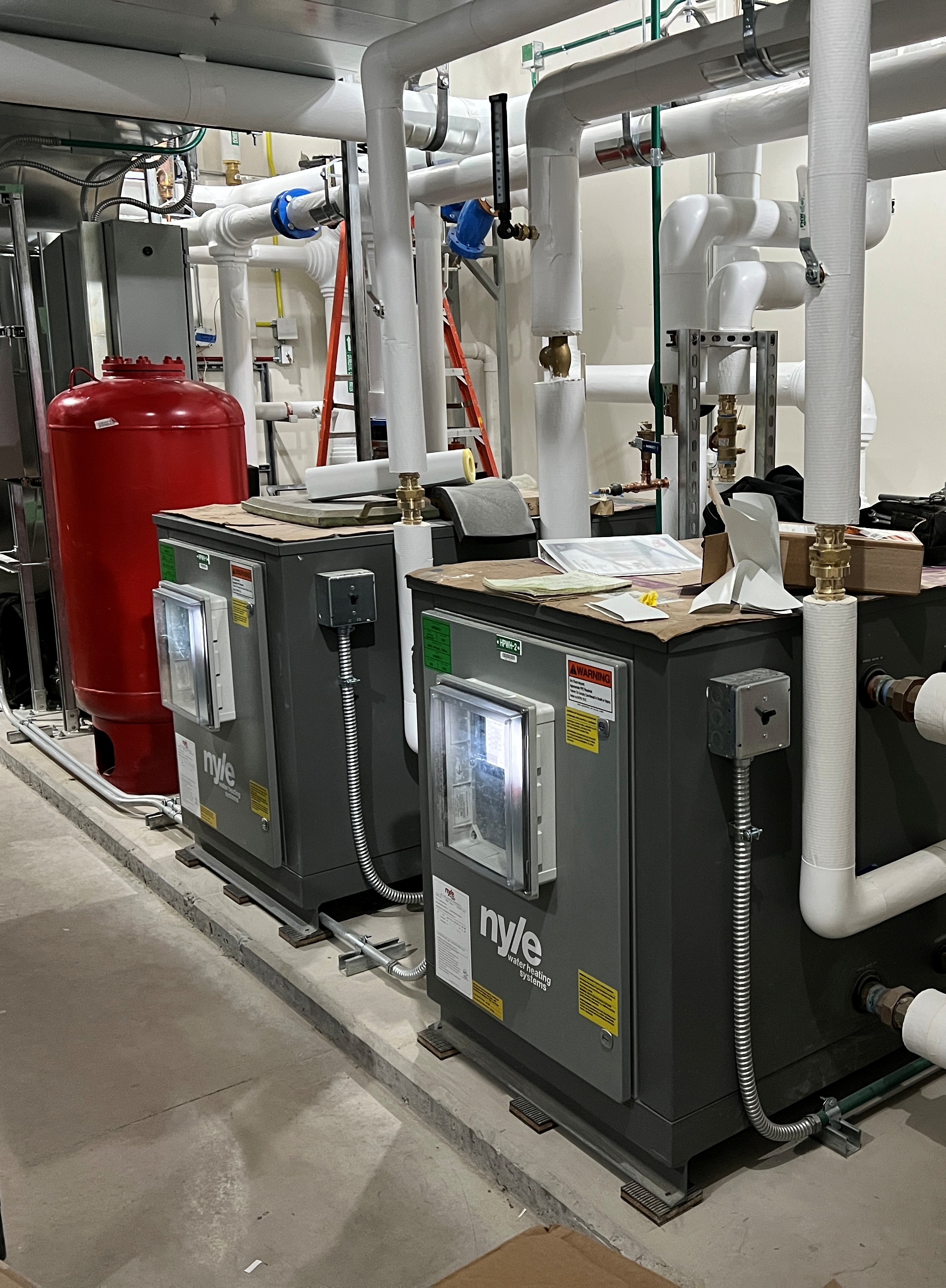
The geothermal loop also acts as the heat source for the building’s domestic hot water by using two water-source commercial heat pump water heaters piped in a single-pass configuration with a vertical storage tank. While there is still an electrical load to transfer the thermal energy from the geothermal loop to the domestic hot water, it is significantly lower than an all-electric water heater, while also being more reliable.
The design also included allocated space for a third future heat pump water heater and future valve connections, allowing a seamless transition to a greater future demand.
In most cases, single-pass systems are also paired with a swing tank to manage the recirculation loop losses. Unlike typical storage water heaters or multipass heat pump water heaters, which can handle the warmer recirculated water, single-pass systems handle recirculation demand separately due to the efficiency benefits of the heat pump water heaters, which only see cold incoming water.
By not recirculating domestic hot water through heat pump water heaters, the heat pumps have the highest temperature differential, resulting in the highest heat transfer efficiency. For this project, instead of a swing tank, a separate instantaneous electric water heater was used to manage the consistent recirculation loop demand.
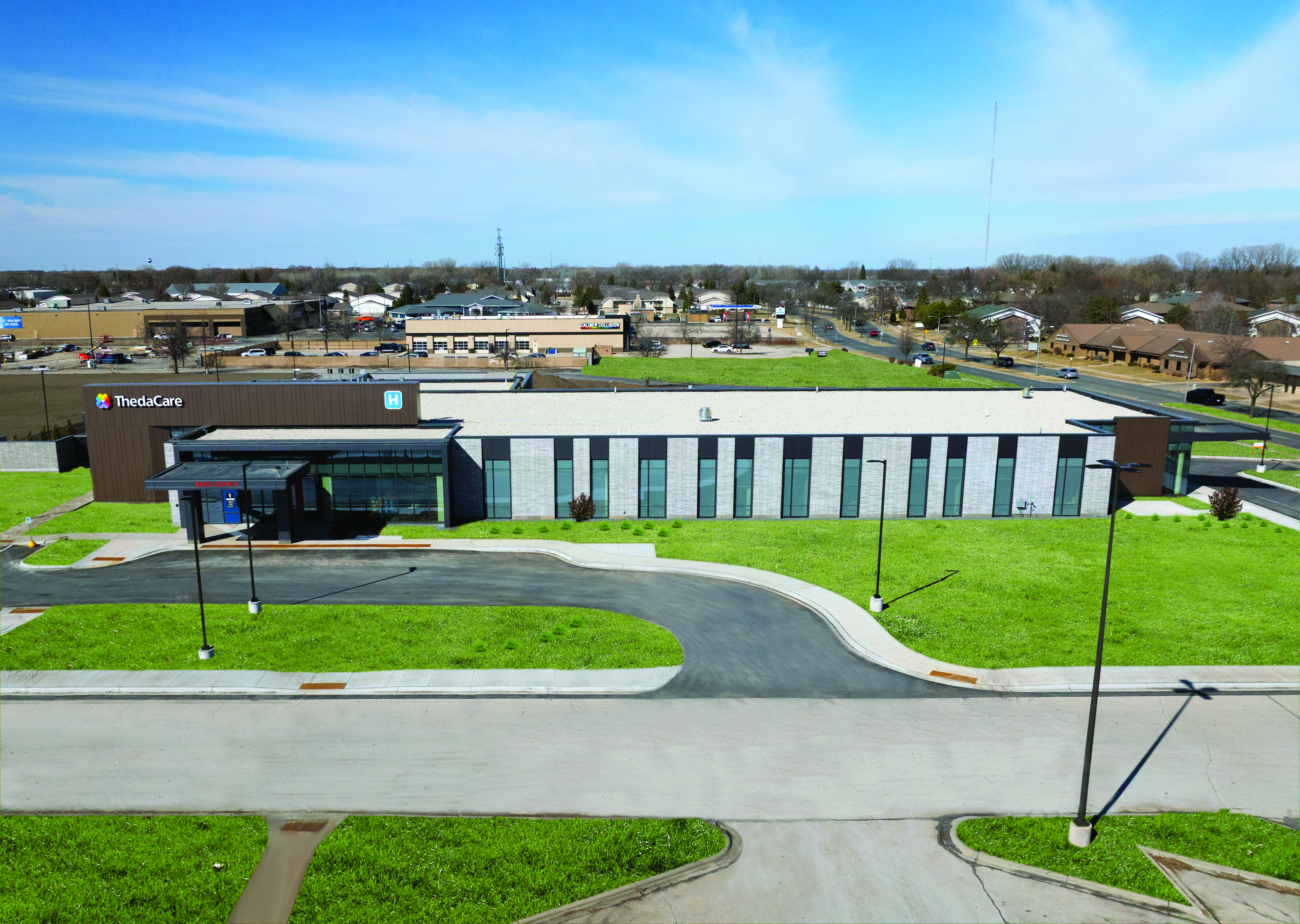
It is evident that there are many benefits to the geothermal energy system at ThedaCare Medical Center-Fond du Lac, which could not have come to fruition without introducing the concept in early design discussions. By properly coordinating the geothermal, HVAC and plumbing designs, the system’s benefits were maximized to their fullest potential.
 |
 |
The project serves as a strong example of when project teams consistently and confidently advocate for geothermal energy during design in new construction projects. It is often found to be a great solution to mitigate costly energy usage by tapping into the abundant energy that would otherwise go completely unnoticed.
Logan Stone, PE, is a plumbing engineer in the Milwaukee office at HGA Architects and Engineers. He specializes in designing plumbing infrastructure for healthcare campuses, as well as other market sectors across the country. Stone is an active member of the American Society of Plumbing Engineers and an adjunct professor at the Milwaukee School of Engineering, where he teaches plumbing design to students majoring in architectural engineering.
Andy DeRocher, PE, is a senior project manager in the Madison, Wisconsin, office at HGA Architects and Engineers. He specializes in the design and coordination of geothermal systems, net-zero energy buildings and other building performance-related services.