We use cookies to provide you with a better experience. By continuing to browse the site you are agreeing to our use of cookies in accordance with our Cookie Policy.
Direct digital control (DDC) is essential for today’s advanced HVAC systems, yet many small and mid-sized buildings struggle with costly, inefficient implementations.
In Part Two of his deep dive into geothermal design, Albert Wallace explores a modular, patented ground heat exchanger (GHEX) system architecture that balances cost, reliability, and energy efficiency.
Achieving an optimal GHEX design requires a collaborative, integrated team engaged in an iterative design process that balances geothermal field loads by refining key system parameters.
Outdated ground heat exchanger (GHEX) design methods are driving up costs and complexity in ground-source heat pump (GSHP) systems. In part one of this two-part series, Albert Wallace introduces modern, modular best practices that optimize system efficiency, cut expenses, and improve long-term reliability.
The last part of this series focuses on improving heat pump efficiencies with optimized pumping configurations and source process heat exchangers. The article includes a review of the overall net zero energy architecture encompassing the technologies discussed in this series.
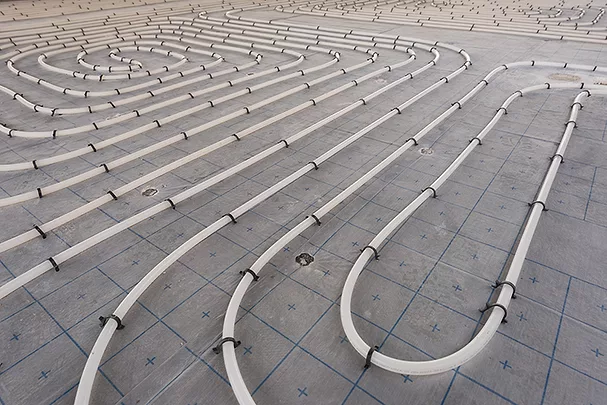
The second part of this series discusses ventilation options, zoning with thermally activated building systems and high-mass radiant floor cooling, the relationship of heat transfer to radiant cooling, and thermal storage with geothermal heat pumps.
The building industry has seen an increase in the development of zero net energy or net zero energy structures over the last decade. Behind these designs are building science and thermodynamic principles that allow such structures to consume the same amount of energy they produce in a year.