In part 1 of this series, I examined San Francisco’s first district-scale blackwater treatment system in the Mission Rock neighborhood, which applied water treatment criteria based on the quantitative microbial risk assessment (QMRA) (https://bit.ly/4b81VNR). In part 2, I examine the Fifteen-Fifty building in San Francisco, which uses a graywater treatment system.
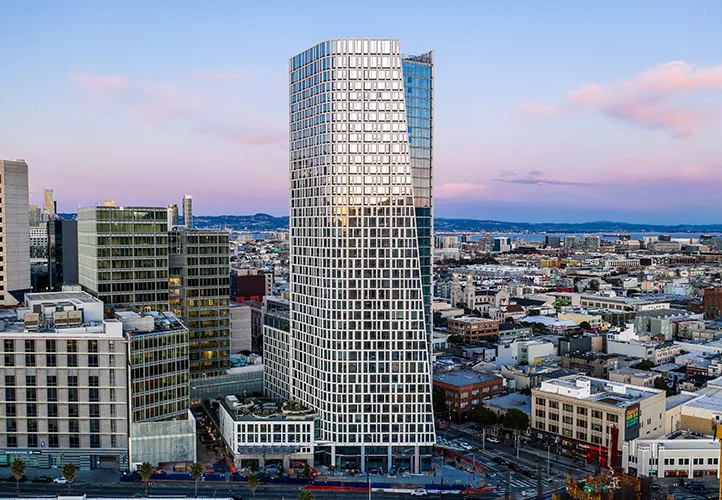
First opened to the public in September 2020, Fifteen-Fifty is a high-rise residential building with 40 floors and 550 apartment units (Figure 1). The residential tower also includes 40,000 square feet of retail space and a 12,000 square foot park.
To adhere to San Francisco’s Non-Potable Water Ordinance, the project includes a turnkey graywater treatment system that captures, treats and reuses graywater prior to being pumped throughout the building for non-potable use in toilet flushing and urinals.
The system consists of initial storage tanks that capture graywater from the building and rainwater from the roof, a membrane biological reactor (MBR) system, and a water quality monitoring system to ensure proper treatment and protection of human health and the environment. The graywater is collected from showers, bathtubs and washing machines. Rainwater is collected from the building roof, prefiltered and directed to a separate concrete collection tank.
Rainwater is then pumped to the graywater collection tank where the two sources are combined to begin treatment. Potable makeup water is supplied to the treated water tank with an air gap to ensure continuous service to the building.
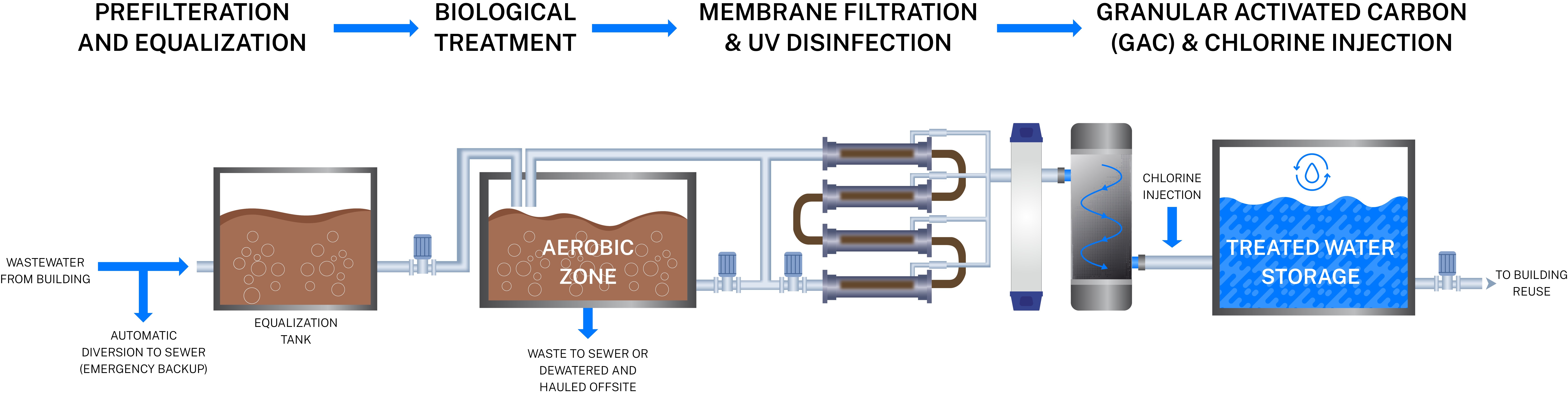
As shown in Figure 2, the treatment train in this graywater system comprises biological treatment and membrane filtration, ultraviolet disinfection and chlorine disinfection. The treatment train describes the multibarrier process that removes pathogens (bacteria, virus and protozoa) to achieve log reduction targets (LRTs).
LRTs are defined by quantitative microbial assessment that benchmarks the health risk either by the risk of disability adjusted life years (10-6 per person per year) or by the risk of infection (10-4 per person per year). Fifteen-Fifty’s graywater system had to achieve the LRTs based on the risk of infection benchmark.
Prior to the treatment train, rainwater is collected in a 9,081-gallon storage tank after leaf and solids are removed through a 710-micron leaf filtration device. Graywater is collected in a separate 5,000-gallon storage tank.
When available, rainwater is pumped into the graywater tank to supplement total available treatment flow. Tank levels and flow transfer are monitored by a logic controller, and excess inflows are routed to the combined sewer system.
The blended graywater storage tank acts as an equalization tank at the initial stage to buffer against fluctuating influent conditions. It is then pumped through a 1 mm mechanical prescreen to remove initial solids in the graywater prior to being introduced to the oxic graywater circulation tank.
The biological treatment system is a membrane biological reactor consisting of an oxic recirculating tank and membrane ultrafiltration. The oxic graywater circulation tank has a 2,250-gallon capacity and serves as the aerobic zone, where coarse bubble aeration is provided through diffusers to partially oxidize some organics and maintain oxic conditions and continuous mixing as it circulates across the ultrafiltration membrane (see Figure 2). The tank capacity allows for approximately six hours of processing time.
The Critical Control Points
Several critical control points require continuous monitoring to verify compliance with treatment parameters.
1. Ultrafiltration system. The aerated graywater from the oxic tank is circulated and filtered through tubular ultrafiltration modules that remove pathogens and suspended solids (see Table 1 for design criteria). Waste activated sludge from the MBR is discharged to the gravity sewer. The approximate filtration rate is 7,537 gallons per day (GPD).
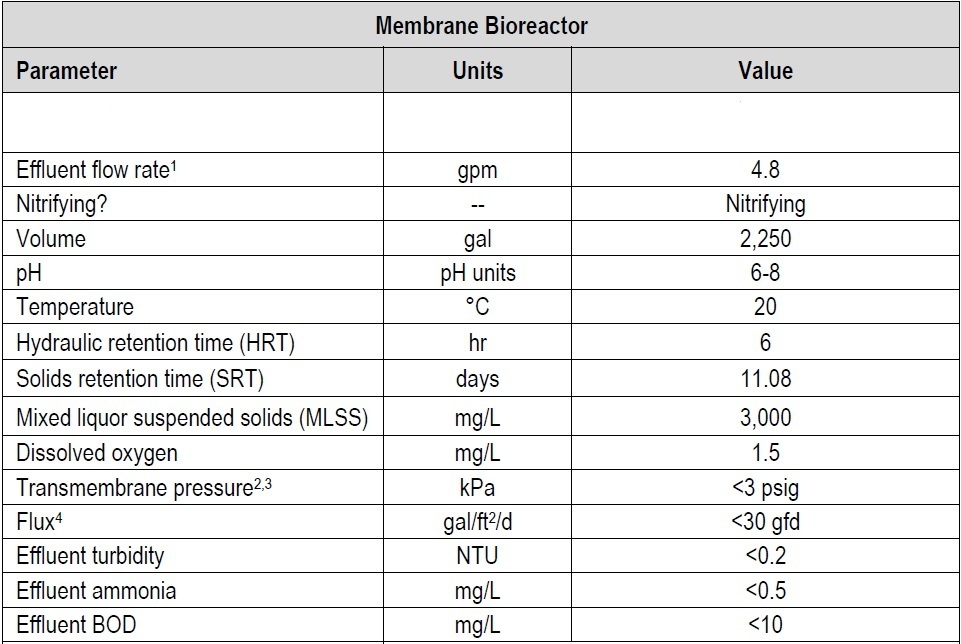
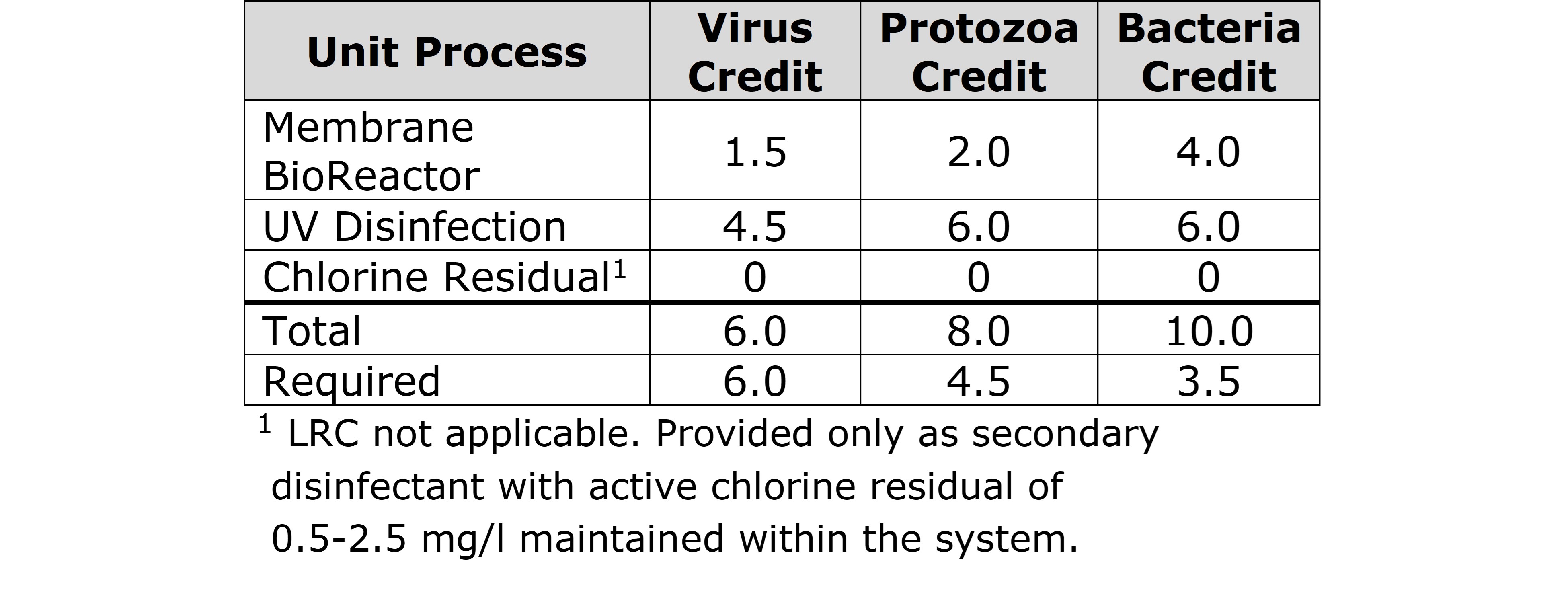
The effluent turbidity is continuously monitored. Transmembrane pressure is monitored weekly for pressure decay. Grab samples are taken monthly at the treated storage tank for biochemical oxygen demand and total suspended solids, and daily for total coliform. Alarms are provided to alert high effluent turbidity, when the reuse pH is out of range, and will shut down the system when membrane integrity fails. The log reduction credits for the membrane were provided through a validation protocol (see Table 2).
2. Ultraviolet (UV) disinfection. The disinfection process after the membrane ultrafiltration is accomplished using ultraviolet light and chlorine dosing. Two UV reactors are used with a total net UV dose of 110 millijoules per square centimeter (mJ/cm2) to meet the LRTs. Ultraviolet transmission (UVT) and the level of UV radiation (UVI) are continuously monitored. A UV and UVI system alarm will activate when the UV dose is out of range and will shut down the system when the UVT is too low.
3. Chlorine dosing. A granular activated carbon filtration precedes chlorine injection. This will remove organic contaminants from the effluent. Chlorine is used as a secondary disinfectant and is continuously circulated through the treated storage tank.
Chlorine dosing is a liquid solution of 10-12.5% with a hydraulic residence time of 25 hours. An in-line chlorine analyzer continuously monitors the active chlorine concentration within the tank to maintain a chlorine residual of 0.5 to 2.5 mg/l. System alarms for both low and high chlorine will activate system shut down. As a secondary disinfectant, log reduction credits are not applicable.
The LRTs required for the graywater system are 6.0 for enteric viruses, 4.5 for parasitic protozoa, and 3.5 for enteric bacteria. The credits achieved for the graywater treatment train are shown in Table 2. The chlorine disinfectant was not credited but was included as a secondary disinfectant maintained within the system.
The treated water enters an 8,000-gallon reuse storage tank until distributed for non-potable use for toilet and urinal flushing (see Figure 3).
Approximately 7,500 GPD of graywater is treated, supplying approximately 6,500 GPD for onsite non-potable purposes. This achieves approximately a 27% reduction in potable water demand, resulting in 2.5 million gallons of onsite nonpotable water reused annually.
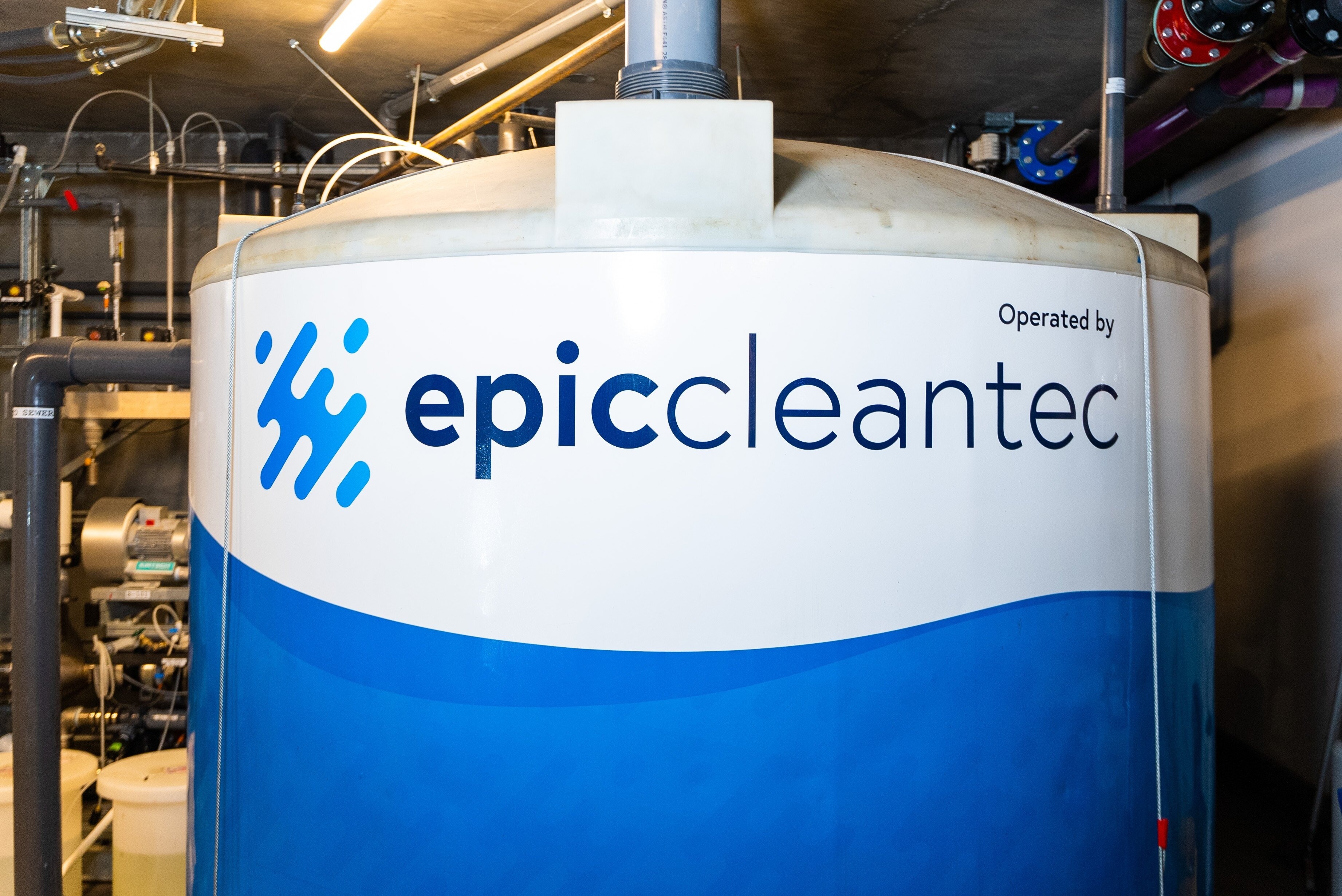
When this project was approved, San Francisco’s Non-Potable Water Ordinance required new developments with over 250,000 square feet of gross floor area to install onsite non-potable reuse of wastewater to enable a more circular water economy for the Bay Area. By installing a water reuse system, the developer achieved their sustainability goals, saving money, water and providing residents with an opportunity to play a role in the next generation of water infrastructure. The graywater treatment system is operated and maintained by Epic Cleantec.
The article examples in Part 1 and 2 demonstrate San Francisco’s commitment to onsite water reuse, making it a model for the development of water reuse programs throughout the United States. The city is a pioneering leader of onsite water reuse, chairing the National Blue Ribbon Commission that serves as a forum for information sharing and coordination among state and local public health agencies and water and wastewater utilities.
The San Francisco Public Utilities Commission has now furthered these efforts by partnering with the U.S. Environmental Protection Agency and the WateReuse Association to launch the new Building Infrastructure Locally for Decentralized Water Systems (BILD) initiative. BILD engages a broad spectrum of stakeholders, including technology manufacturers, code organizations, academia, regulators and utilities both nationally and internationally to foster and promote the advancement of onsite water reuse.
A key ongoing area of research to support further implementation of the risk-based framework is the advancement of pathogen removal crediting and performance monitoring processes to enable the reliable use of additional treatment technologies in sustainable and cost-effective onsite reuse configurations.
San Francisco’s implementation of water reuse has accelerated national consensus toward water treatment criteria for onsite water reuse based on the quantitative microbial risk assessment framework that defines pathogen LRTs. Two American National Standards, NSF 350 Onsite Residential and Commercial Water Reuse Treatment Systems and IAPMO Water Efficiency and Sanitation Standard, have aligned with the USEPA Risk-Based Framework for Developing Microbial Treatment Targets for Water Reuse (2025) for LRT benchmarks.
Daniel Cole is the senior director of research at IAPMO. He was a licensed journeyman plumber, contractor, plumbing inspector and plan reviewer in Illinois. Cole is a member of the American Society of Plumbing Engineers (ASPE), serving on the ASPE Main Design Standards Committee. He received the ASPE Award of Scientific Achievement in 2018 for revising Hunter’s Curve. He also steered two working groups in the development of onsite blackwater and stormwater treatment systems in WE•Stand, published articles on onsite treatment methods, and presented on this topic at CIB International Symposium.