In 1776, America declared its independence. However, declaring independence and building a nation are two different things. Building America required infrastructure to develop industries and communities. It required factories, rail lines and roadways, pipe and boilers, plumbing and sanitation. It required manufacturers to produce the materials that shaped a growing nation, and distributors to ensure those materials reached the people doing the work.
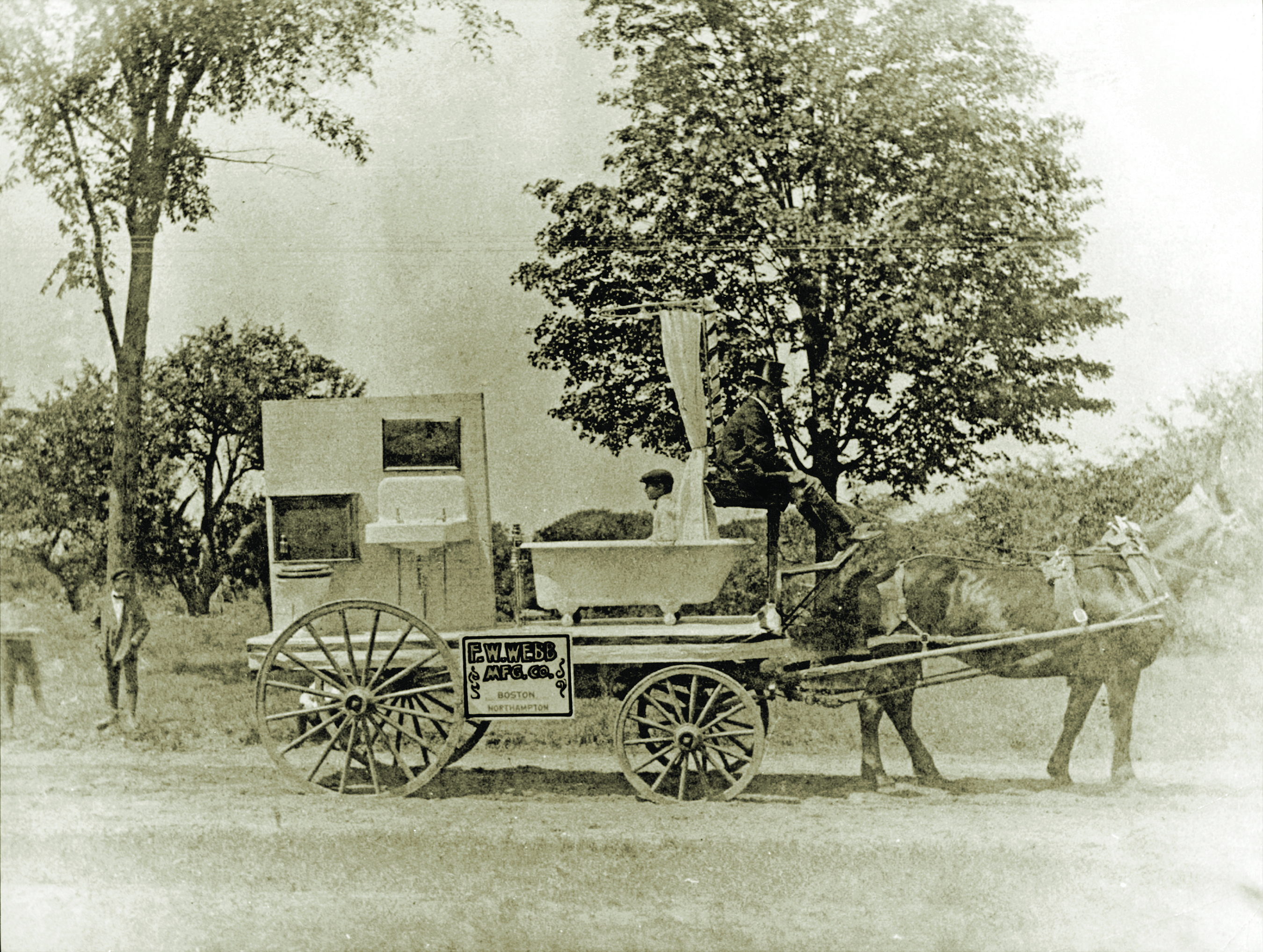
On April 11, 1866, one year after the Civil War ended, John Van Ness Stults opened a small wholesale plumbing supply business on Elm Street in Boston. As cities expanded and industries accelerated, Stults recognized the opportunity to help move the country forward. Without the internet, computers or our modern technology, growth came from knocking on doors and developing relationships that would help build companies, industries and communities — and support the growth of America as it charged forward.
That small company would eventually become F.W. Webb, one of the nation’s largest wholesale distributors in the Northeast.
Purchased by Frank W. Webb in 1899 and later by Roger Pope in 1933, the company continues under family ownership, with the third generation at the helm and the fourth working his way through the company to understand the nuances and heartbeat of a 160-year-old legacy.
F.W. Webb has lived through industrial revolutions, world wars, oil embargoes, housing booms, digital transformation and two global pandemics. It has grown, adapted and modernized, building and fostering a solid foundation while ensuring it takes care of its team members and customers.
Headquartered in Bedford, Massachusetts, the company operates 115 locations and more than 50 bath, kitchen and lighting showrooms across nine Northeastern states, serving 16 distinct areas of expertise, including plumbing, heating, HVAC and industrial customers throughout the region.
The company’s culture runs deep. More than 3,700 team members take great pride in delivering on the company’s motto: “We’ve Got It.” The “It” is more than inventory. It is accountability, partnerships in action, taking care of the customer and the customer’s customer. Most importantly, it is team members who understand that when they take a job with the company, it is not just a job; it is a career path rich in heritage, with opportunities to learn and advance.
One hundred sixty years is not only longevity; it is stewardship. Like the building of our nation, it takes stewardship and teams working together to understand the responsibility they carry, and the commitment required to sustain success.
The company has grown significantly over the last decade and, in growth mode, shows no signs of slowing down.
Here’s why.
Rooted in legacy
“This is Frank’s company. We’re just taking care of it,” says Jeff Pope, owner and president. This stewardship can be felt at every level of the company and continues to drive its growth. However, taking care of it requires forward thinking, balanced with a sense of legacy.
COO Bob Mucciarone joined the company in 1984 as an assistant treasurer. At the time, the company had around 12 locations and generated approximately $24 million in annual sales. He chuckles as he recalls his start, saying, “It was a unique atmosphere, and behind the times.”
Mucciarone is the kind of leader who identifies opportunities for growth and moves decisively — but never at the expense of the customer experience. Early in his career, he made a personal commitment that if he was going to stay with the company, he wanted it to be better than it was. He believed that meaningful growth could only happen by first fixing and strengthening operations, ensuring they functioned at a high level in every respect. Once that foundation was firmly in place, the organization could then turn its full attention to driving sales and delivering an exceptional customer experience.
That pivot became the foundation for the modern Webb business.
It aligns with the company’s motto, “We’ve Got it” tied together with “Every Customer Counts.” On the operational side, it shows as an educated workforce steeped in the company’s heartbeat — its culture, disciplined execution and ensuring the right products are on hand to meet customers’ needs. “You can have all the sales you want, but if you can’t satisfy the customer, it’s not good,“ Mucciarone notes.
He helped modernize the accounting department by transitioning to computing systems that accelerated processing of sales and invoices. “We took it step by step,” he says, building departments thoughtfully and identifying efficiencies that would ultimately drive a better customer experience.
He recalls advising then-President John Pope, Jeff’s father, that computers were needed at the counters to speed up the ordering process. Met with hesitation that they might slow things down, John agreed to test them in one location. Within a year, the company had outfitted all locations. Always forward thinking.
Today, Mucciarone oversees day-to-day operations, reinforcing an ownership mindset and building clear pathways for advancement. The company’s heartbeat is simple and consistent: take care of the customer, take care of the team — and growth follows.
Brendan Monaghan, senior vice president of operations and sales, joined the company 30 years ago and developed the company’s Continuous Improvement Program (CIP), which provides advancement opportunities while strengthening the bench. The program has been in place for more than 24 years and has been a changemaker for the organization.
Mucciarone outlines that the program develops individual business acumen while helping participants understand how the organization runs.
“They will learn the products along the way and develop their business acumen and learn how to run a profitable operation,” he explains. “Individuals can take the CIP as far as they want — from general managers to operation managers, store managers, etc. It gives them the path to get to the place they want to go, and has made an incredible impact within the company. Every one of our team members knows that our driver is our customers come first — and they have growth within the company toward a career here.”
And it shows.
When Jeff Pope became president in 2003, marking the third generation of leadership, the company had just over $350 million in revenue and roughly 40 locations. Over the years, revenue steadily grew, reaching $500 million by 2009, $1 billion in 2016, and $2 billion in 2022. Today, the company operates 115 locations across nine Northeastern states and generates approximately $2.6 billion in annual sales.
 If you build it, they will come
Over the past two decades, much of F.W. Webb’s growth has been engineered from within. Monaghan developed the company’s CIP more than 24 years ago; what began as an operational training initiative has become the backbone of leadership development across the organization. Today, roughly 80% of general managers, operations managers and store managers have come from the program.
Every participant starts in the warehouse, learning shipping, receiving and inventory control before moving through the ranks. “You really have to understand the job to be good at it,” he says. Over three to five years, they rotate through branches, participate in audits and gain exposure to different markets and customer types. The result is a deep bench of leaders who understand the business from the ground up and are prepared to carry it forward. Along the way, they build lasting internal networks — relationships that strengthen collaboration at the branch level and help drive the company forward.
Each of F.W. Webb’s 115-plus branches operates with its own profit-and-loss responsibility, fostering an ownership mentality at the local level. “We don’t overcomplicate working with each other to improve the customer experience,” Monaghan says. “My job is to support the team.”
As a family-owned and -operated company, decisions are made quickly and without layers of red tape. Accountability and autonomy go hand in hand. “We make more decisions by the file cabinets than we do in the boardroom,” Monaghan says. “I believe that’s why we have our success — because we can make decisions quickly and go.”
It is a model that reinforces a simple priority. “At the end of the day, is the customer happy or not? That’s what matters,” he says. And, having a team in place that understands the passion for excellence in taking care of the customer, Frank Webb’s legacy and having opportunities to advance.
The formula is simple but powerful: build leaders from within, give them ownership and empower them to serve customers without complications.
That same conviction shaped the company’s infrastructure strategy. Around 2013, Monaghan and Mucciarone brought forward a clear message to ownership. If the company intended to expand and serve a growing territory, it needed a larger central distribution facility to support its trajectory. “We need a much bigger building because this isn’t going to work out the way we’re growing,” Monaghan states matter-of-factly.
The duo approached the Pope family with urgency. Expansion was needed — and now. Mucciarone recalls, “I said to John Pope, ‘If you want to sit here and be what you are today, you can do that. If you want to be a viable growing company that can expand, then we need to do this.’” That hit home.
The result was the opening in 2018 of the company’s 1 million-square-foot central distribution (CD) facility in Londonderry, New Hampshire. Equipped with 80 dock doors, 50-foot ceilings and thousands of SKUs curated for current and future customers, it significantly expanded F.W. Webb’s capacity and reach.
The investment supported the company’s rapid growth, and growth roared forward.
“Our territory is expanding, sales are booming and products are moving,” Monaghan notes. Four years after completion of the new CD, expansion west and south once again demanded more capacity. It was time to build again — and now.
Set to open in 2027 in Hazleton, Pennsylvania, a new 750,000-square-foot distribution facility will introduce advanced robotics through a high-density automated picking system designed to significantly increase productivity and maximize storage capacity. “It’s going to allow us to triple our productivity in picks and out the door with much greater efficiency,” Monaghan says.
The newest CD will support continued expansion south and west.
However, buildings alone do not sustain a 160-year-old company — what does is so much more powerful. It’s the people, culture and institutional knowledge passed along and within its 3,700 team members.
The company’s growth strategy has never been solely about square footage or dock doors. It has been about building people who understand the responsibility that comes with wearing the Webb name — and who are entrusted to carry it forward.
Facilities expand territory, but culture expands legacy.
Adding value so customers thrive
The secret sauce at F.W. Webb is simple: help the customer succeed. And that takes more than product — it goes back to the beginning, where working side by side with its customers developed partnerships. It takes presence.
For Michael DelConte, vice president of heating and LP gas sales, that presence starts in the field: “I spend a lot of time in front of our customers, getting a feel for how we can better service them.” His days are spent riding with outside sales teams, walking branches and standing shoulder to shoulder with contractors, “helping to solve problems that might exist within our customers’ organizations, and how we can be a better service and add value on the day to day.”
Sometimes that presence arrives at 6:30 a.m. in a contractor’s parking lot.
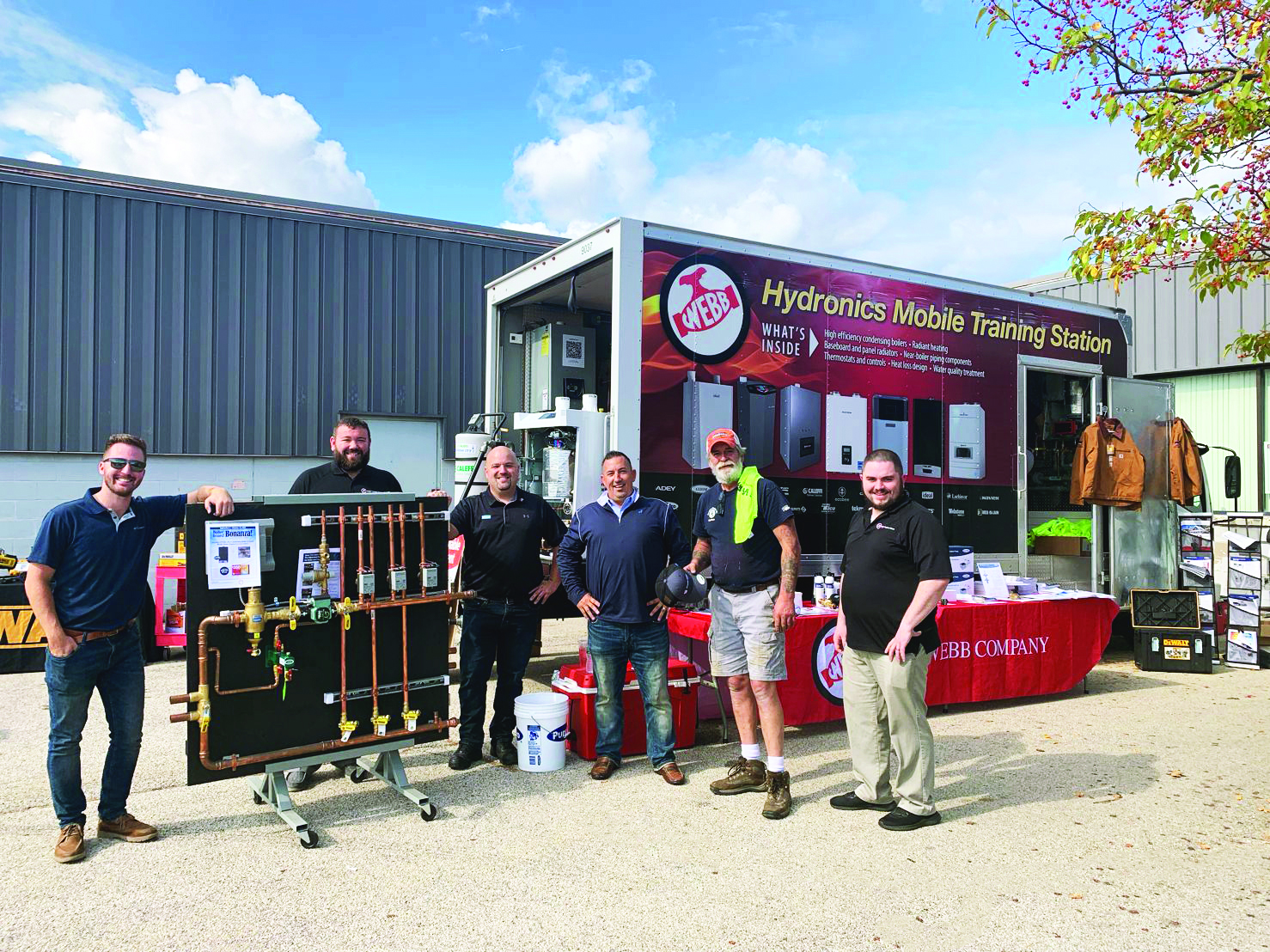
F.W. Webb’s Hydronics training truck pulls in — a 20-foot boiler showroom on wheels. DelConte notes that F.W. Webb has two mobile hydronics trailer trucks. Each truck carries multiple boiler manufacturers’ product along with “the latest products on hydronic water quality, radiant heating, combustion analysis, thermostats and controls,” he proudly states.
The goal is straightforward. “It’s a hands-on, visual way for our contractors to learn.” he adds.
While F.W. Webb offers classroom-style training at all its branches, DelConte said the real impact happens when “they see the truck pull up and they can actually take the jacket off the boiler, take it apart, put it back together.”
Because the trucks are fully outfitted, “it gives us a lot of versatility on which manufacturers we can train them to because we are in so many different markets,” DelConte explains. What’s popular in Bangor, Maine, may differ from Egg Harbor, New Jersey, or Albany, New York. The mobile platform allows the team to tailor each session accordingly. “We can take it in whichever direction the customer wants to take it in, and we’re pretty confident that whichever direction they want to take it in, we’re going to have products on that truck that are going to be of interest to them,” he adds.
As technology advances, so do expectations. “The technology is always changing. The products are always changing,” he says. Education matters — keeping everyone up to date in ways that fit their schedules, whether that is training at a branch or out on the road.
Speed and information matter as much as supply. “People are used to being able to get information right at their fingertips,” DelConte explains. “Today you have to get answers within the next hour or so, and that’s the expectation.” He adds, “How can we, as a leader in the industry, speed up that training for our customers and for their people, so they can continue to scale their businesses?”
One way is through education, and another is efficiency.
Consider the company’s boiler board innovation. “We’ve been able to turn a two-day job into a one-day job,” DelConte notes. “If we can make contractors’ lives easier, then we’ll continue to do business together.”
Still, for all the trucks, tools and technology, DelConte believes the core has not changed in 160 years: “People want to do business with people they trust and can rely on.” And that trust begins internally. “F.W. Webb takes care of its team members and they, in turn, take care of the customers. That strategy has continued to be a winning one for us.”
For DelConte, who has been with the company for more than 10 years, the pride is evident as he reflects on its history, heartbeat and momentum.
“If you go back 100 years, and if you fast-forward 100 years, the customers are going to say, ‘I want to do business with people I like, trust and can get the right product to the jobsite on time’ — that is the core of customer service,” he says. “We have a strong e-commerce and product management team, experienced general managers and some of the best outside sales and customer growth product specialists in the industry.” We have reliable, knowledgeable people who take great care of our customers. FW. Webb is a winning organization, and it makes me proud to be part of the culture and part of the team.”
And it shows.
The Webb Way
At 23 years with F.W. Webb, Chuck Fiorino, director of business development, has a straightforward mission. “It’s my job to get out there and talk about the F.W. Webb story so individuals understand who we are and what we do. And it’s a great story to tell,” he says.
“We’re a big, small company”, Fiorino says. As large as it has become, “you can call the owner of the company. You can talk to anybody on the corporate staff. We are all accessible at any level.” That accessibility, he believes, is the difference.
“Everybody wants competitive pricing, but most importantly, they want service,” he explains. “People want the individual who answers the phone to be knowledgeable, and what we promise and what they ask for, we deliver.” It’s part of the “We’ve Got It” mentality.
As contractors diversify their businesses, F.W. Webb’s depth becomes a differentiator.
“We’re involved in 16 different disciplines, with a large breadth of inventory, and industry experts,” Fiorino notes. “We can support them in their businesses if they change their business models.”
For Jeff Thompson, senior vice president of purchasing, he lives and breathes the nuances of the supply chain. Responsible for pricing, inventory levels and monitoring commodity markets, Thompson understands that customer experience begins with product availability in an ever-changing landscape.
During COVID-19, when the supply chain was challenged to its core, he recalls, “We were unloading water heaters on the dock at the distribution center. They weren’t being put away — they were going right out to the branches.”
Partnerships with its manufacturers are vital; however, to remain the supplier of choice, change was necessary. “We can’t sole source on any one product anymore,” Thompson says. When longtime suppliers limited allocations based on prior-year purchases, it forced a strategic pivot. F.W. Webb began carrying multiple brands in key categories. “We’re getting too big as a company,” he notes. “I can’t afford to put the company into that position.” It’s about providing customers with the products they need now and in the future.
While markets fluctuate and supply chains tighten, Thompson insists the company’s foundation remains unchanged. “It’s a relationship business,” he notes. “It’s our reputation and it’s our people that are in the field.” And the reputation is driven by the company culture.
After 36 years with the company, starting at the counter and rising through the ranks to the leadership team, Thompson is a great example of how one can match opportunity with drive. He still remembers 2009, when competitors furloughed employees and cut hours. “Webb didn’t do that, and we still gave out profit sharing,” he adds.
For Fiorino, the 160-year milestone is less about longevity and more about loyalty. “F.W. Webb invests in people,” he notes. “We are part of this company, and yet we feel like owners.” After more than two decades, he still does not feel lost in scale. The feeling of being part of something bigger, while maintaining one’s identity — it’s a part of the company culture that each team member carries out with pride. It’s the company heartbeat.
Driving the next chapter
With a solid foundation that is fostered and cared for with precision, for Ruth Martin, senior vice president of human resources, scaling up the business, having the talent to drive the company forward and building the bench is not merely a slogan. It is a daily investment in protecting the company’s momentum.
“We’re always hiring and continually building the bench,” she says. “We try to promote from within, and there is no limit to their growth.” And while the CIP program is one opportunity, the company offers management and outside sales trainee programs, along with Webb University. In addition, the company focuses on introducing distribution to interns, many from vocational schools. And oftentimes, “instead of going into the trade, they want to stay and work here,” Martin notes.
Martin sees growth as an obligation to stay accessible. “I want us to still be this big company, with that family feel and the culture doesn’t change,” she notes. Adding, “We have many experts around here who are long-tenured, but what’s nice is that we have people who are also growing to become experts.”
The company is intentional about preserving the institutional knowledge built by team members who have spent decades growing their careers within the organization. As hiring continues, so do retirements — bringing the transition not only of product expertise but also of deep customer relationships cultivated over a lifetime.
As an example, Mucciarone recalls receiving an email from a customer whose F.W Webb salesperson was retiring. The customer expressed concerns: “Who’s going to be taking his spot? Nobody can replace him.” Mucciarone responded, “I told him who was going to replace him and said, ‘I’ll tell you what — I’ll ask the retiring salesperson if he’ll stay on for a month to shadow the new person.’”
The customer later wrote back, thanking Mucciarone. “That is just one little bit of one little thing we did to make that customer so happy,” he says. And it mattered to the retiring salesperson as well. “He was emotional about leaving the company and leaving his customers, and emotional about not seeing them anymore.” In many cases, he said, “they almost become family.”
“When you’re here, you feel this connection,” Martin says. One big, growing family.
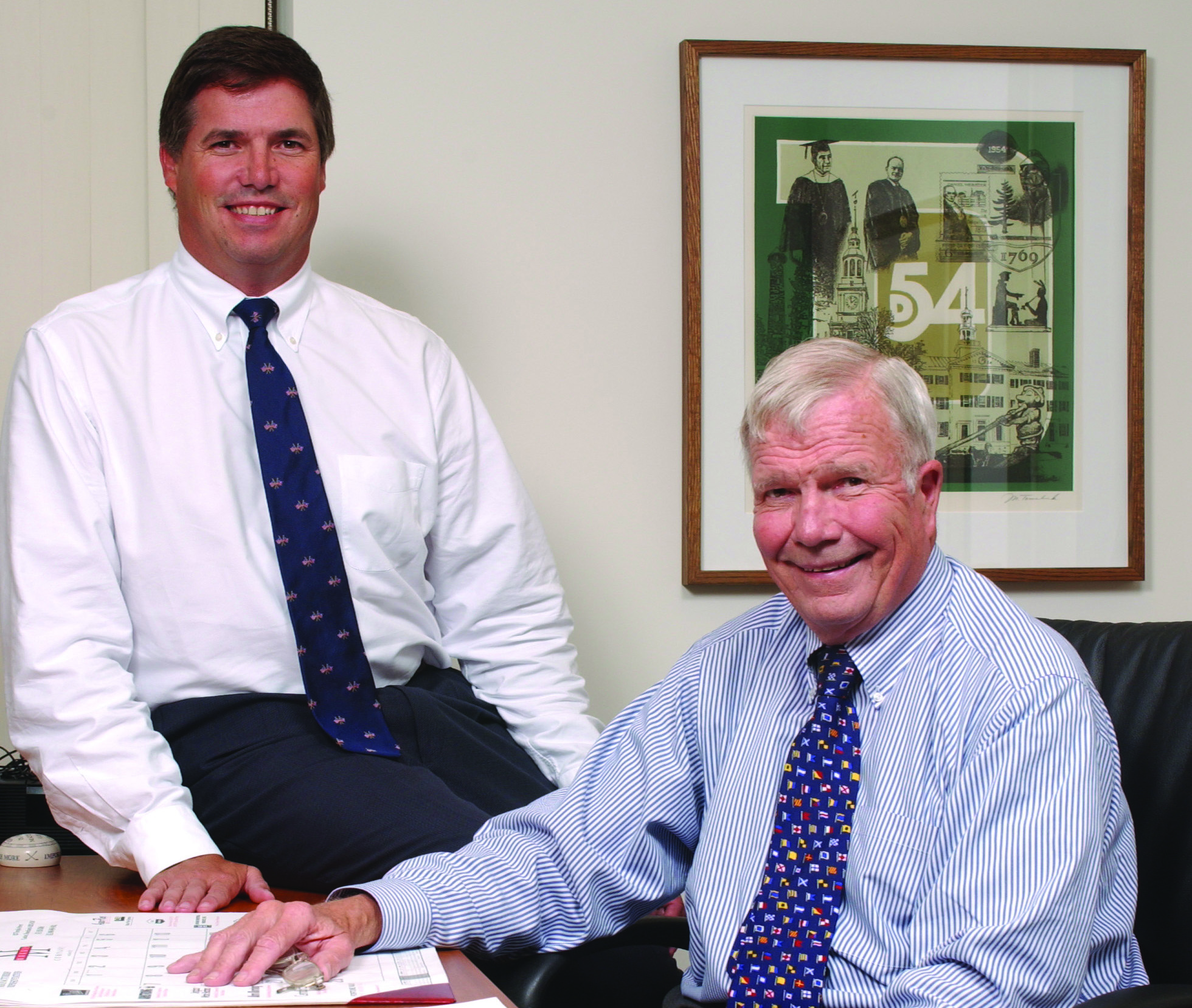
Sean Davis, vice president of marketing, drives home the “We’ve Got It” mantra. “My job here is to support the team – staying in constant communication to provide the tools they need.” With each branch being its own profit center, the friendly rivalry between them is cemented in the company’s culture of the customer experience.
“We want to ensure that our customers and relationships are first and foremost,” he says. “It’s about people, the F.W. Webb experience, longevity, customers and, of course, products.” And, as Davis points out, it’s not only about today — it’s also about building the future for its customers.
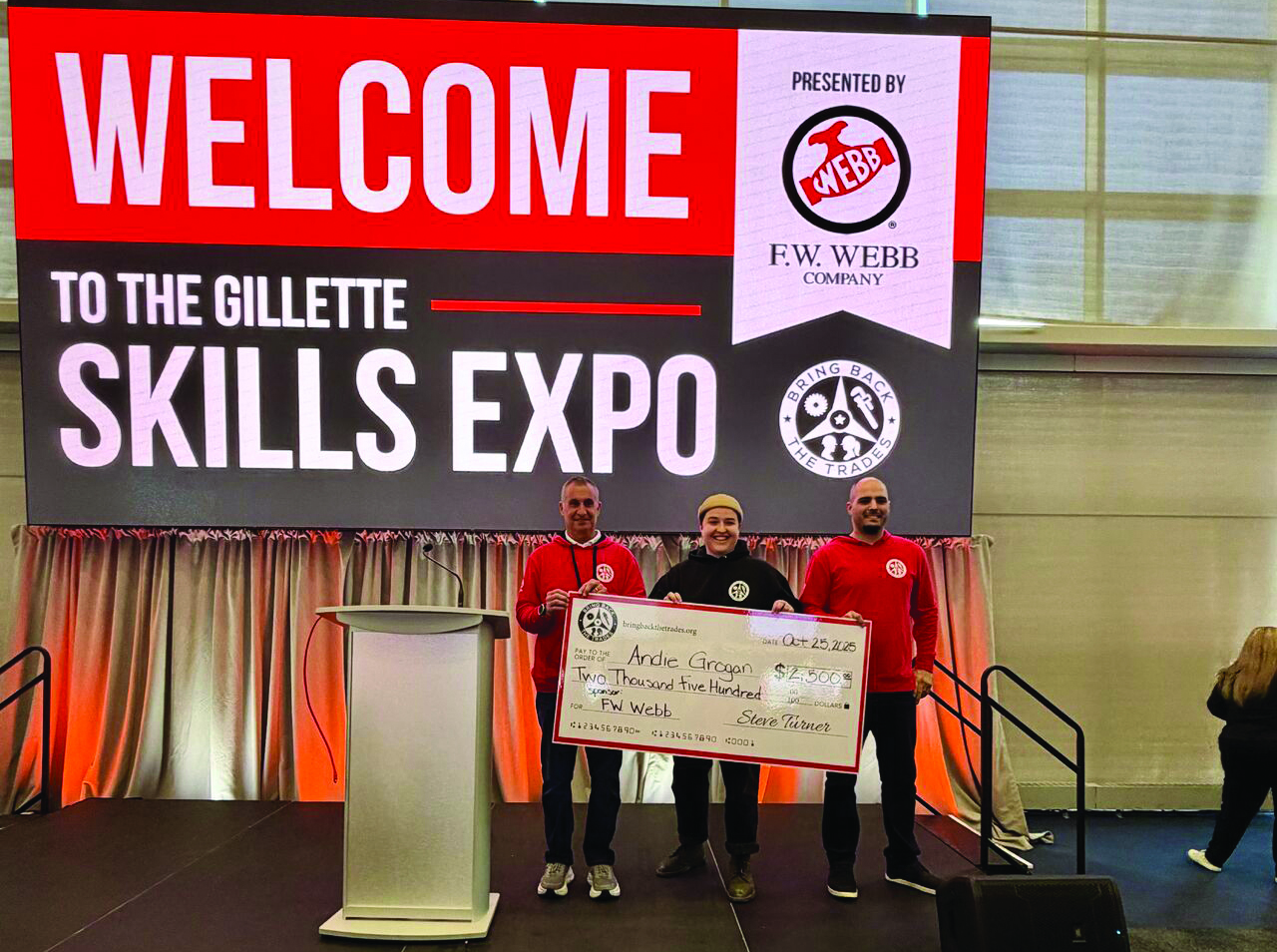
F.W. Webb has stepped forward in a meaningful way through its partnership with Bring Back the Trades (BBTT), taking action to address the growing skilled labor shortage. The company is supporting Spring 2026 Skills Expos that introduce students and families to career opportunities in plumbing, HVAC and the mechanical trades through hands-on engagement.
Beyond events, F.W. Webb has committed to a multiyear research initiative with BBTT to better understand workforce trends and barriers to entry, grounding solutions in real data. Together, the organizations also released a national economic impact report quantifying the shortage, reinforcing Webb’s belief that protecting the future of the trades requires leadership, collaboration and long-term investment.
That same long-term mindset has shaped the company’s growth over the past two decades. When Jeff Pope became president of his family-owned and operated company in 2002, the business had roughly 35 locations concentrated across New England. Today, it operates more than 115 locations throughout the Northeast, with additional expansion planned.
“When dad passed away, we had just cracked a billion dollars, and now we’re getting close to being three times that,” Pope says.
Growth, for him, has never been about numbers alone. It is stewardship. “My goal is to leave it better than I found it,” he says. The lesson instilled by his father still guides him: “If you take care of the players, the players will take care of you. Get out of their way, and give them enough of what they need to dominate the territory.”
Those players — 3,700 strong and growing — are the engine behind the expansion, the new pins on the map and the relentless push forward. I asked him what he is most proud of. “The growth,” he responds, and beams when he adds about his son, Dave, who is the fourth-generation Pope family member, working his way through the company. “I’m happy because he is my succession plan,” he says.
And while the company celebrates its 160th anniversary, there is another on the horizon. In 2033, F.W. Webb will celebrate 100 years under the Pope family ownership and leadership. “That will be more meaningful to me,” Jeff Pope notes.
Third generation at the helm, fourth generation in motion, a legacy intact, the bench strong, and the players still playing. After 160 years, it is not nostalgia driving F.W. Webb. It is momentum. Full steam ahead.