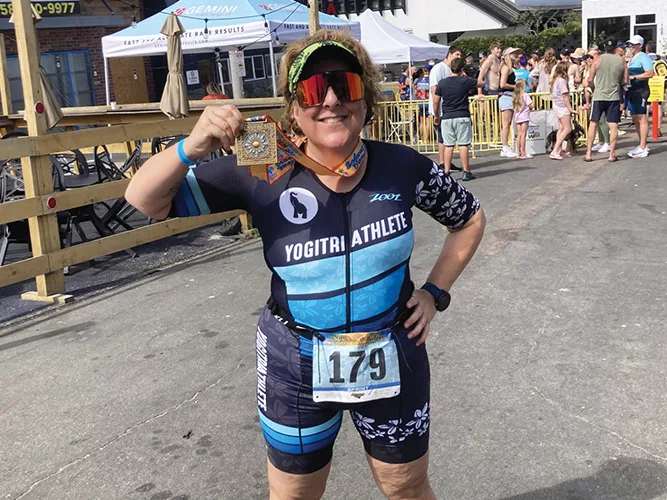
RUGGED Mind and Body is thrilled to welcome Valerie A. Stakes as our new Jobsite Safety columnist! Stakes is an accomplished safety and health professional with more than 20 years of experience working in the construction, aviation and manufacturing industries. Prior to this time, she was managing editor at Contracting Business magazine and continues to write for trade press such as PHCPPros.
Currently, Stakes is a safety engineer at General Atomics Aeronautical Systems in San Diego, California, where she champions health and wellness initiatives and their connection to total worker health and safety. When not onsite, she can be found be found on her bike, running trails, in the pool or ocean or on a yoga mat.
In this introductory article, Stakes shares her personal journey with physical and mental health.
Growing up, “athletic” is not a word I would have used to describe myself. Instead, I was an artsy theatre kid who made it through the mandatory two years of P.E. and had no hand-eye coordination for sports (apart from playing ultimate frisbee). Exercise was more of a means to an end, such as looking good in a wedding dress or at my high school reunion.
By the time I reached my 30s, fitness evolved into a commitment to physical health more than vanity. As the owners of our bodies, no one will take care of you but you. Being active became a non-negotiable lifestyle, and I saw no age limit to being strong and healthy.
Initially, I was a gym rat who took spin and step aerobics classes and lifted weights. One of my spin instructors was also an avid runner, cyclist and triathlete who encouraged everyone to take their fitness out of the gym and play outdoors.
One day, he came up to me with what sounded like an outrageous suggestion: “Have you ever thought of doing a triathlon?”
While I occasionally rode a bike and was a decent swimmer, my philosophy toward running was only doing so if I were chased. Nevertheless, he convinced me to sign up for the Cleveland Triathlon Super Sprint distance. After one race, I was hooked.
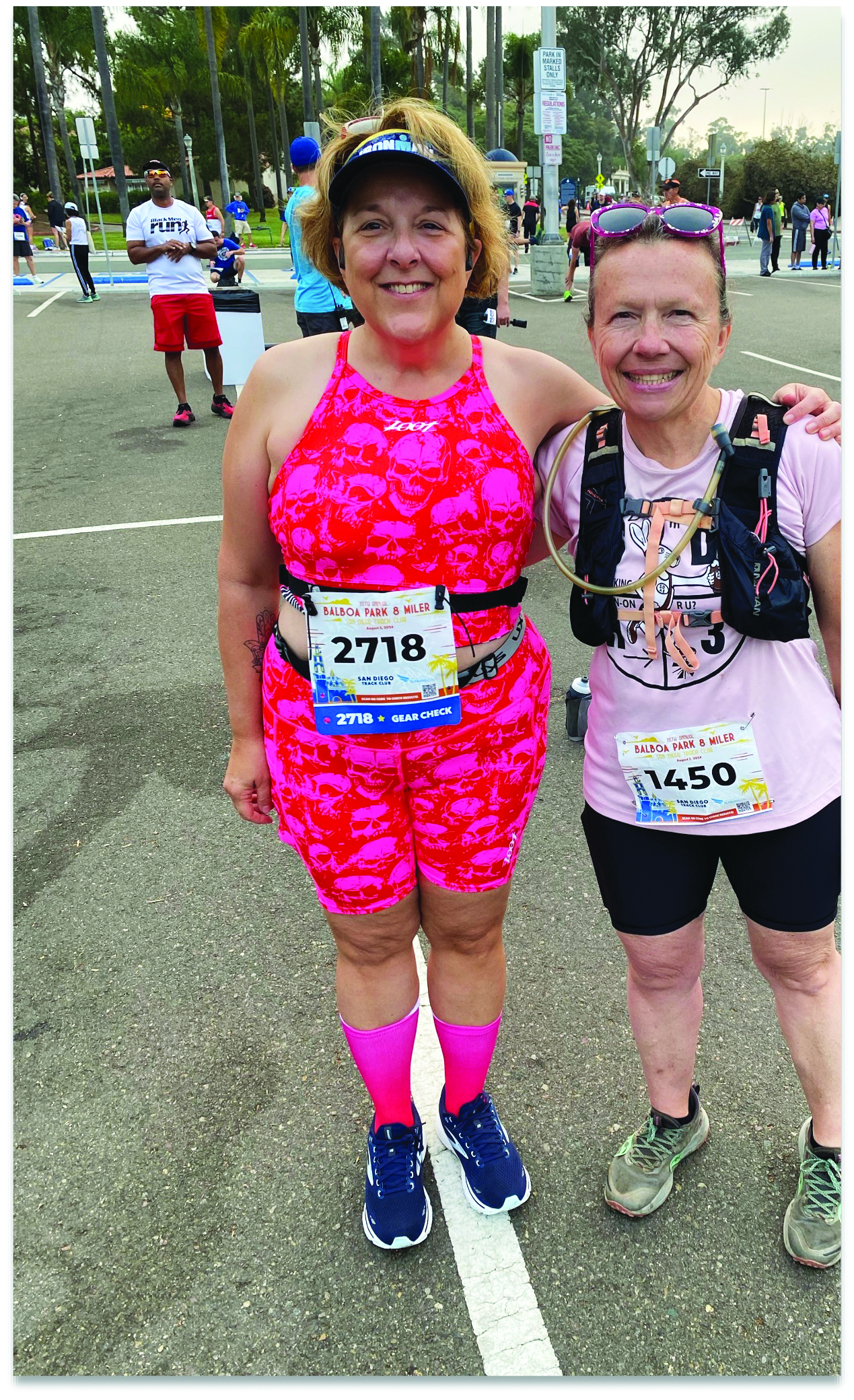
More than 20 years later, I have participated in many half and full marathons and triathlons, including seven 70.3 (half-Ironman) distance races. I love the camaraderie and community in training and racing, along with the inclusive nature of the sport. All ages and fitness levels are welcome. Check your ego at the door, as someone in a more mature age group will likely pass you.
Finally, I found that endurance racing led to increased mental fortitude and clarity, as well as the ability to show up and do hard things in all aspects of life.
The Power of Ohm + Calm = Strong
While exercise had a hugely positive impact on my mental health, I struggled with severe pre-race jitters — despite being an amateur, back-of-the-pack athlete. I began researching mindset training and sports performance. I eventually found the YogiTriathlete group, which specializes in endurance sports and mindset coaching.
Working with the group’s mindset coach, Jess, I was given meditation homework, starting with five minutes each day. I progressed to longer sessions and learned breathing exercises and pre-event visualizations, which have been beneficial before races, important meetings and conference presentations.
March 2023 and A Change of Plans
The beginning of 2023 had a promising start. I had just booked a yoga retreat in Costa Rica and registered for a full marathon and two 70.3 Ironman races later in the year. My primary care doctor told me how pleased she was with my overall health and fitness during my annual physical. She had just one request: “Please book your mammogram.”
Little did I know that this routine exam would lead to the following:
- A follow-up exam
- Three Biopsies
- A cancer diagnosis
- Six cycles of chemotherapy and 18 targeted drug infusions
- Four surgeries within two years
I immediately researched cancer and exercise and was pleasantly surprised to learn that patients are expected to be active during treatment. There is also research showing the benefits of exercising on the day of infusions to facilitate the movement of the drugs through your system and speed up recovery.
Before starting treatment, I promised myself that I would do a 5K walk/run per each cycle of chemotherapy. Having a new race plan gave me a sense of control and some normalcy during a chaotic time.
I moved every day during those six cycles of chemotherapy. The first week after each was always the roughest. I would start with a walk around the house, then the yard, the neighborhood and beyond. At the end of the three-week period in between cycles, I could even jog, often doing the 5K the morning before going to the infusion center. My perspective? Focus on what you can do, versus what you cannot.
In addition to cardiovascular exercise, I focused on strength training in advance of having surgery. The practical side of exercise is that recovery from surgery and the ability to take care of yourself are much easier and faster when fit. It also allowed me to continue working and being onsite, which can be quite physical.
Finally, my meditation practice and a focus on present mind awareness were crucial during this time. When you are not feeling well, it can feel as if you are living minute to minute.
This included visualizing being cancer-free each day and developing a pre-game surgery meditation ritual that enabled me to feel calm walking into the operating room four times.
Alive and Kicking
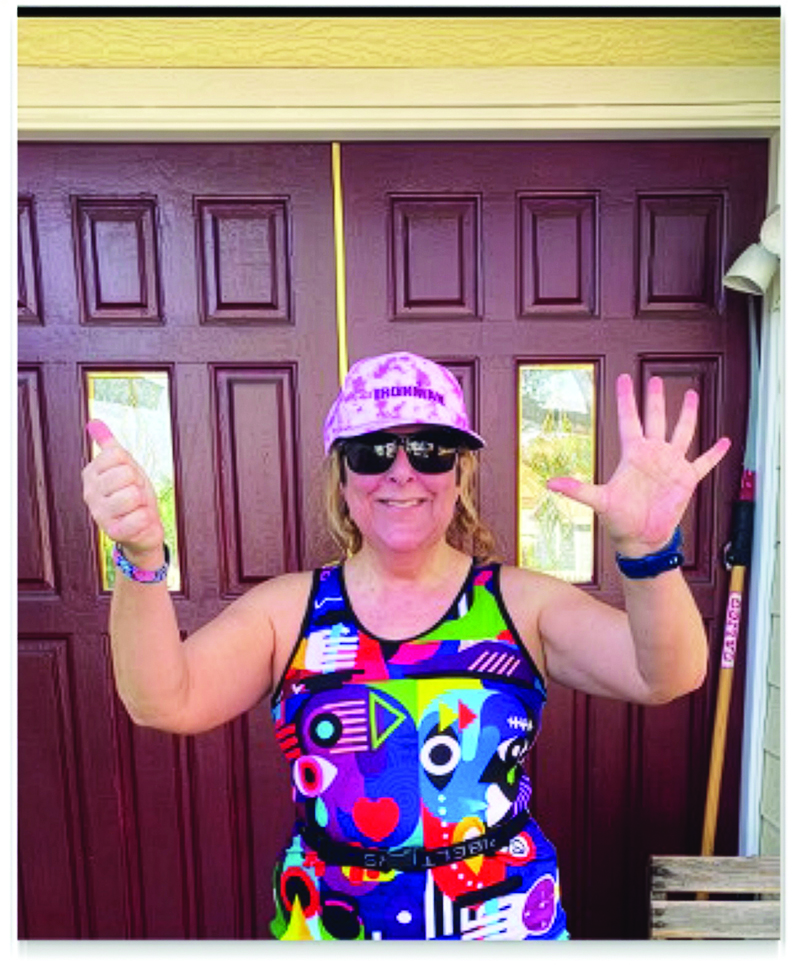
It has been three years since that diagnosis, and I attribute the focus on physical and mental health before, during and after my journey to thriving, not just surviving. Nevertheless, there are many mornings where I do not want to get up early to swim or feel that I am too busy at work to fit in a workout, let alone meditate.
The key to consistency is doing whatever activity brings you joy. If you’re struggling to move, remember that exercise leads to the following:
- Increased energy
- A reduction in fatigue and stress, which equals better sleep!
- Improved cognition and concentration. Movement boosts blood, glucose and oxygen levels, allowing for better concentration and focus on tasks. Additionally, exercise has been shown to increase the size of the area of the brain involved in memory and learning.
- Increased creativity and problem-solving skills
- A better mood from more endorphins
- Improved mental health
- Longevity and better quality of life
- In addition, don’t forget to breathe! Meditation and mindfulness can help with the following:
- Increased focus and the ability to concentrate on tasks, reducing mind-wandering
- Reduced stress and the ability to feel calmer
- Decision-making and more easily finding solutions
- Facilitating between tasks — take five breaths before going from one task to the next
Finally, by prioritizing our physical and mental health, we are choosing to show up for ourselves each day, and that commitment can transform not only how we feel, but how we live.
Be well, my friends!