We’re living in what economists and major news outlets are calling a “K-shaped economy,” a term you’ve likely seen in Bloomberg, Forbes, or CNN. It describes the widening gap between those whose wealth continues to rise and those who are experiencing increasing financial strain.
One line of the “K” trends upward, representing affluent, financially stable consumers. The lower line represents middle and working-class individuals facing tighter budgets and rising costs.
For the decorative plumbing and lighting industry, this divide has real implications. Your showroom audience, displays, and overall strategy must reflect where opportunity actually exists today, not where it existed years ago.
The affluent are still spending, but in new ways
Affluent consumers continue to drive growth across luxury, home, and travel markets. Their priorities, however, have shifted. They value privacy, time, trust, and personalized experiences. They look for products that combine beauty with performance and enrich daily routines.
To this buyer, a faucet is a ritual, a steam shower is part of a wellness routine, and a heated floor is an element of comfort, not indulgence. This is where the real opportunity lies, yet many showrooms still allocate square footage to entry-level products that no longer attract their core customer.
Why display budget products in an expensive space?
Running a showroom is costly. Every square foot should justify its existence. The middle and lower economic segments have largely shifted to online retailers and big-box stores, where convenience and price comparison drive sales.
Your showroom is not designed for that audience.
Affluent clients want curation, insight, and confidence. If your displays mimic a warehouse or your sales pitch leads with price, you are missing the expectations of the customers who are spending.
The wholesale mindset vs. the luxury mindset
Wholesale distribution succeeds by focusing on price, efficiency, and volume. Showrooms, however, thrive on emotion, aesthetics, and experience.
This contrast creates friction.
Wholesale owners often struggle to understand a client who finds a Brizo faucet not expensive enough. But today’s luxury buyer shops at Restoration Hardware, drives European vehicles, and expects their home to be a reflection of their identity.
Success in a showroom requires curation, storytelling, and trust — a very different mindset from transactional wholesale operations.
The training gap
This shift in mindset reveals one of the industry’s most persistent challenges: training. Showroom consultants must do far more than take orders. They must guide, inspire, and understand how products fit into a client’s lifestyle.
Example:
If a consumer is renovating a bathroom, the conversation shouldn’t stop at fixtures. Why not suggest a radiant floor system? And if you do, you must also recommend the compatible timer or thermostat. Without it, the customer may experience a cold floor and, worse, a cold feeling about your showroom.
Training, empathy, and mastery are the foundations of a successful showroom team, and they require intentional investment.
Boutique showrooms are setting the pace
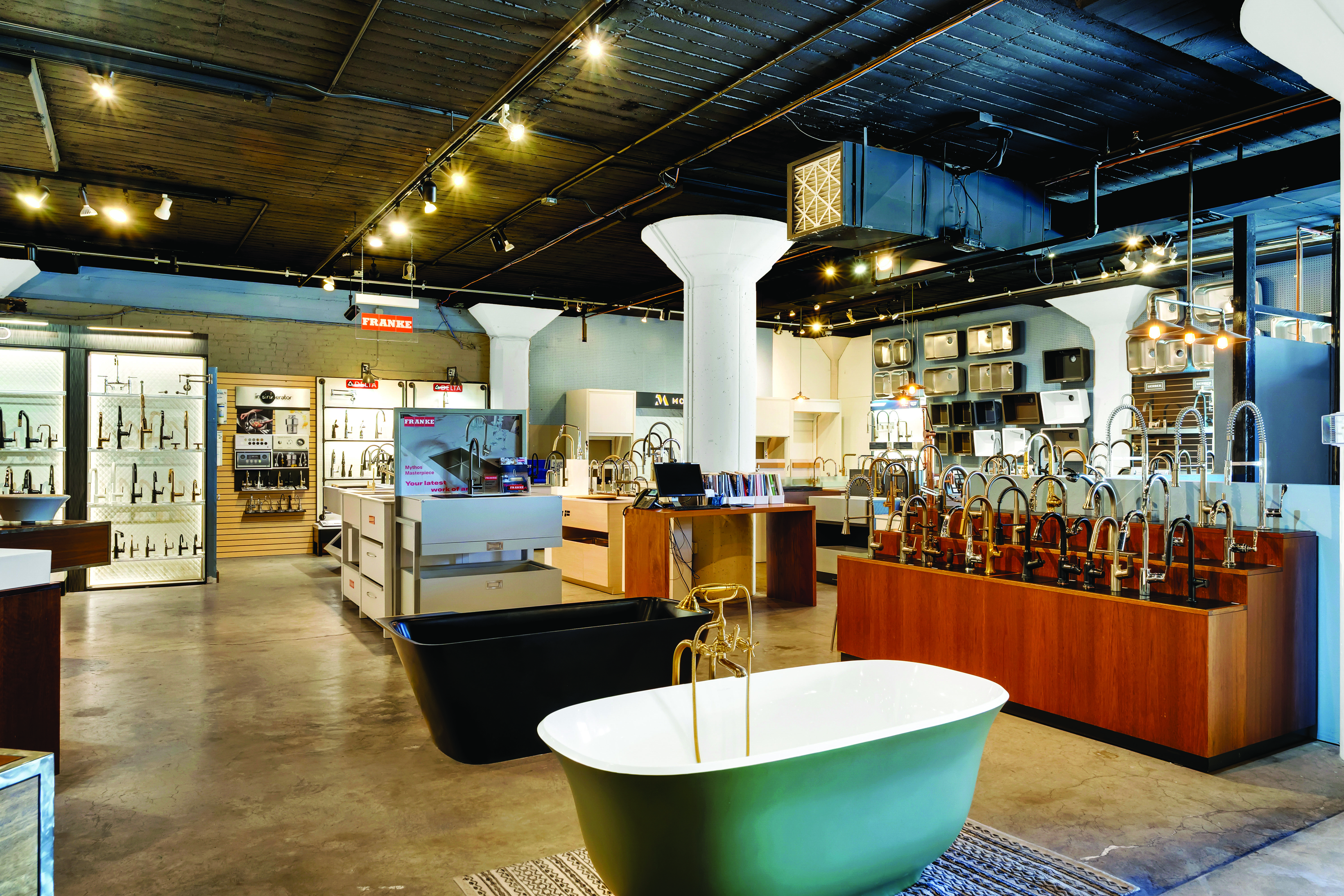
Boutique showrooms specializing in retail and design are already executing at this elevated level. They create immersive environments through lighting, scent, music, and thoughtful vignettes. Their staff act as consultants rather than clerks, and their curated displays build trust.
The result is clear, higher margins, higher close rates, and loyal clients who feel the difference. If leadership views the showroom as a nuisance rather than a growth engine, decline is inevitable.
Showrooms require continuous investment in people, product, and presentation. Outdated displays or unsupported staff send a message of indifference, and in a “K” economy, that message is costly.
While wholesale showrooms fall behind, boutique competitors are doubling down, capturing affluent clients, and strengthening relationships with designers, builders, and homeowners.
Failing to evolve risks becoming irrelevant.
The path forward
The future of the showroom is not about being the cheapest, but about being the most trusted, knowledgeable, and inspiring. To succeed, showrooms must:
Invest in training so team members understand design, function, and lifestyle integration.
Curate displays that highlight value through innovation.
Build strong partnerships with designers, builders, and plumbers.
Merchandise profitable, exclusive brands that reinforce credibility.
Market around wellness, lifestyle, and personalization — themes that resonate with affluent customers.
Final thought
The “K” economy isn’t temporary — it’s a redefinition of how money moves. The affluent will continue to spend, but only with businesses that meet their expectations. The value-driven segment will continue migrating to big-box retailers and online options.
You cannot serve both ends of the economy under one roof. It’s time to choose a direction.
Those who invest in expertise, experience, and elevated product lines will grow. Those who aim to be all things to all people will fade.
Now is the moment to choose which side of the “K” your showroom will stand on.