Commercial kitchens can be the most complex element of buildings with otherwise simple plumbing designs. Buildings with low fixture densities and uncomplicated plumbing systems, such as office buildings, schools and apartments, can be made significantly more complex with the addition of a kitchen, and the design implications can reverberate throughout the entire building. Additionally, code requirements can be hard to navigate and subjective to where the building is located and what type it is.
Many facets and details are involved in properly designing plumbing systems for a commercial kitchen. Discussing them all comprehensively would take several articles, so I’ll focus on some of the most critical pieces I’ve found to be consistently paramount, along with how to coordinate plumbing design with a kitchen consultant and what to expect.
Code requirements
Like plumbing engineering in general, the design and execution of kitchen systems is largely driven by code. However, sometimes determining which codes govern your design can be daunting. Plumbing codes sometimes have language around what needs to happen in a commercial kitchen, but they are often not the only codes with something to say about it.
Many states also have health codes with implications over mechanical, electrical and plumbing (MEP) systems in kitchens. Kitchens in healthcare buildings are often subject to further code requirements reserved specifically for healthcare, such as those from the Facility Guidelines Institute (FGI). Furthermore, many local municipalities have their own sewerage districts that impose other requirements around kitchen plumbing waste disposal that may be different from what is written in the plumbing code.
With kitchens being subject to several different code authorities, it’s important to understand which requirements govern which aspects of your design. Code requirements from these different authorities can sometimes even be contradictory; it’s then important to understand which requirements ultimately govern. The best way to determine this is always to get the various code authorities in a meeting together, have them discuss the requirements, document exactly what was decided and keep that document in a discoverable place.
I have noticed patterns in which authority governs certain aspects of the design; for example, the local sewerage district often has the final say on what fixtures and equipment discharge to the grease interceptor, and the healthcare code has the say on the hot water delivery temperatures. Outside of healthcare applications, many states allow for more stringent local control, but there are exceptions, such as in Wisconsin.
Connections to the grease interceptor
The discussion of code requirements brings up the next major design exercise for a commercial kitchen. Determining which fixtures and equipment get connected to the grease interceptor and which get routed to the building’s sanitary waste system can be time-consuming. Mistakes are often costly — rerouting underground piping, changing pipe materials and joining methods and resizing a grease interceptor are all risks of making a wrong decision.
Moreover, code requirements around these systems can vary greatly with different municipalities. It is thus safest to conduct a new code research exercise if you are working in an unfamiliar locality rather than make assumptions, even if you have worked on a project in the same state or county.
A common philosophy I’ve found among code authorities — which follows the International Plumbing Code and happens to align with my own — is that all grease-producing fixtures and equipment should be routed to the interceptor, except those introducing solids and degreasing detergents. Food waste solids and degreasing detergents hinder the function of the grease interceptor and should, therefore, be routed to the sanitary system unless code requires otherwise.
Following this logic, fixtures such as pot sinks, pre-rinse sinks, steamer oven drains, workstations and mop basins should be routed to the interceptor. However, discharge from food waste disposers should be routed to the sanitary system since they introduce solids, while dishwashers, warewashers and cart washers may introduce detergents.
Many codes deviate from this philosophy, however, such as in Wisconsin, where all fixtures and equipment in the food preparation area are routed to the interceptor, including hand sinks and floor drains. Others, such as some California municipalities, include all these fixtures except dishwashers. Some others require solids interceptors on all pot and pre-rinse sinks if they are routed to the interceptor. And still others include all kitchen waste except from floor drains.
With this level of variation in requirements, the need to consult the code and the governing authorities for direction should be obvious.
Water delivery temperature
The hot water temperature delivered to commercial kitchens can also vary greatly. The hot water temperature you design for can be driven by equipment requirements, kitchen designer or client preference, or plumbing or health codes. Kitchens located in healthcare buildings usually have water temperatures decided by the latter, such as a minimum of 140 F required by the FGI guidelines for sanitation and waterborne bacterial control.
Even if not required by code, 140 F is still a good baseline for the same reasons, and also because it makes pot and pan washing easier for staff. If code language or equipment requirements do not direct otherwise, ask your client and kitchen consultant if 140 F water is desired — they will usually say yes — and to which equipment.
Some kitchen equipment requires water hotter than 140 F. Dishwashers and warewashers are the most common example, as lipstick and other films can have melting points as high as 158 F. Some cookline hoods also include integral washdown features that require temperatures like these to scour grease from them. However, temperatures this high can prematurely erode water piping, especially copper, and pose a much higher scalding risk.
Where temperatures like these are required, it is usually best to provide the equipment with its own booster heater. Many dishwashers come with an integral booster heater option — you may ask your kitchen consultant to provide this if it’s not already included.
Hot water generation
Once you have established your kitchen’s hot water delivery temperature (or the equipment with higher temperature needs than others), it’s up to you to determine how to produce it. A common engineering approach is to use a dedicated water heater to produce temperatures that are higher than needed for the rest of the building. Therefore, if your kitchen or some equipment in it requires 140 F water while the rest of the building can use a lower temperature, a single water heater set to 140 F may be a valid choice.
However, I usually avoid this approach since it offers no redundancy, opting instead to build the kitchen hot water load into the central water heating system and use a dual-temperature system. The latter approach also tends to allow for additional capacity in the event of kitchen demand surges.
When sizing your water heating equipment, pay special consideration to the length of the anticipated peak demand. Kitchens in office buildings may only have a one-hour peak demand during the normal lunch rush, while restaurants in busy urban areas may have peaks of three hours or longer for dinner service. Discuss the intent of the comprehensive food service program with your kitchen consultant and client to get a better understanding of how long peak demand might last and when it might occur.
Coordination with your kitchen consultant
Your kitchen consultant is often one of the best resources in executing your design, so open communication channels with them early and coordinate with them often. Have them provide a detailed food service program as soon as it is finalized with the client, as it spells out numbers of daily meals, times and days of service, types of patrons and other information that is key to sizing water heaters and grease interceptors. Preliminary kitchen plans can also be helpful for planning even before equipment is selected (see Figure 1).
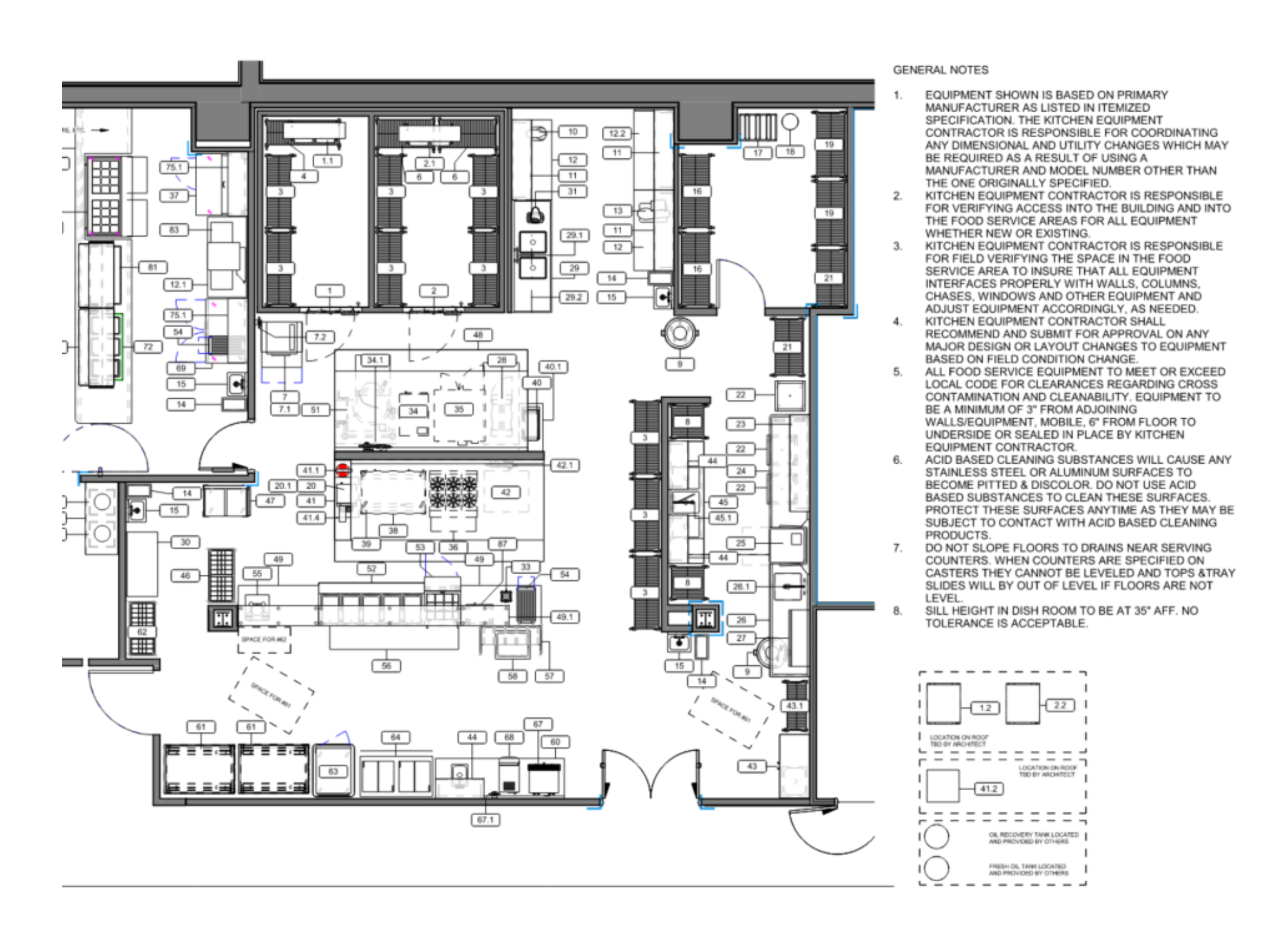
Kitchen consultants often release several iterations of their design as they have more discussions with the client, each with more detail than the last. Review each of these carefully. Kitchens are known for revisions as the design progresses, and even small changes can bring large conflicts and change orders if you do not account for them. Revision narratives accompanying each release can be immensely helpful in spotting these.
Once you’ve had a chance to absorb the information in each iteration, call a meeting with the consultant and make sure you’re aligned on intent.
Once equipment is selected, many kitchen consultants provide a utility schedule of equipment service requirements for plumbing and other MEP disciplines on their plans (Figure 2). (If they don’t, request this.)
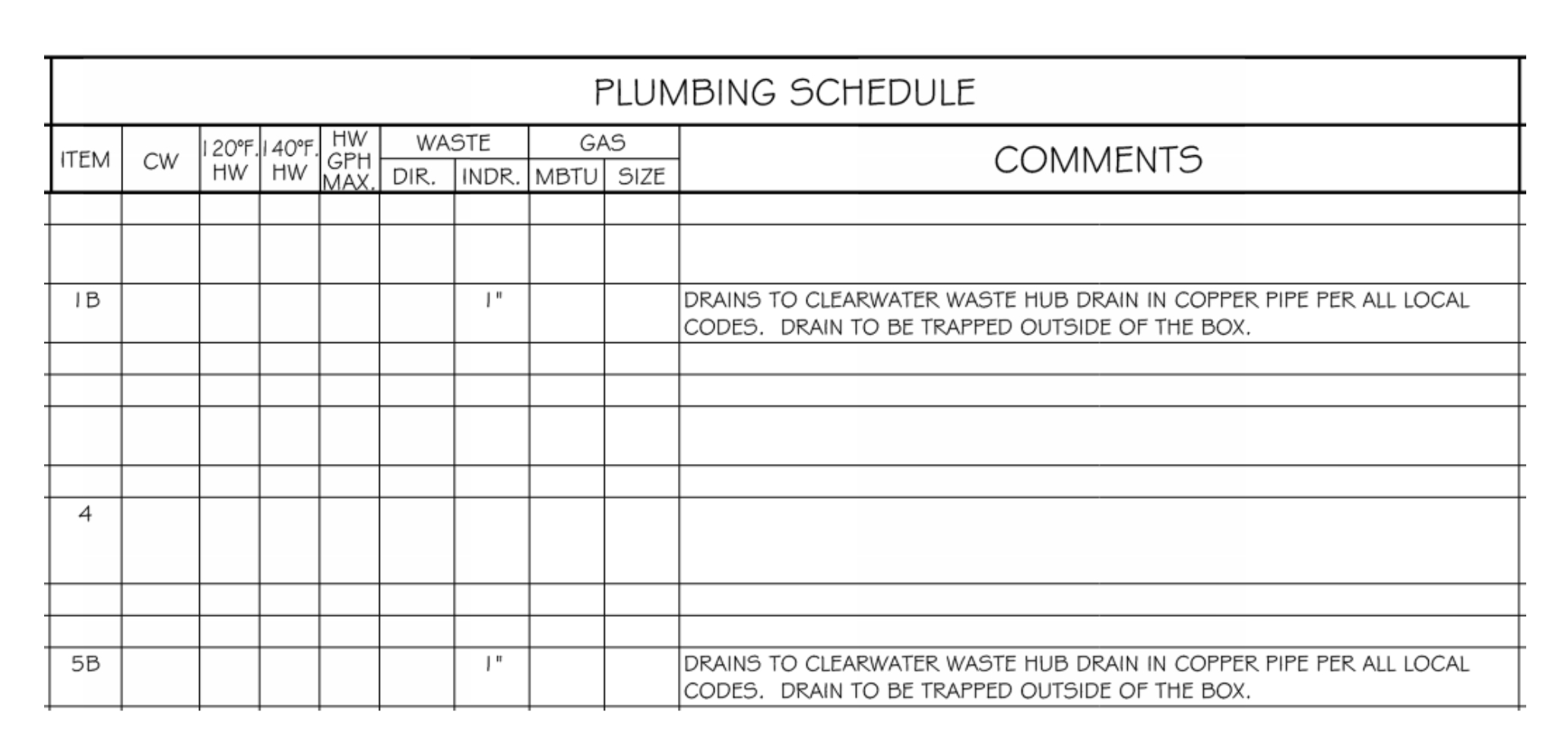
This schedule can quickly help you determine equipment requirements for pipe sizes, systems, water temperatures, what you are responsible for providing (trench and floor drains are common items), as well as other critical information for your design.
However, do not use it as a substitute for a full review of the kitchen equipment cutsheets and specifications. These often contain other details not included in the schedule, such as clues as to what type of backflow prevention might be required, what discharge temperatures to design for and equipment options that have not yet been selected but could affect you.
I have also occasionally found contradictions between the equipment cutsheets and the utility schedule; call these to the attention of the kitchen consultant if you find them and determine what the intent is. Finally, while kitchen consultants are great resources to guide your design, keep in mind that they are not plumbing engineers; you may need to ask numerous questions to get the information you need.
As with any cross-functional building design, communication and coordination are key to getting it right. Kitchens are complicated enough on their own, but identifying your code and design resources early and then leveraging them throughout the design process can temper the complexities.