Water scarcity is a critical issue affecting more than two billion people globally. Addressing this crisis has emerged at the forefront of sustainable design, particularly among kitchen and bath designers specifying plumbing fixtures used daily in homes across the world. Recognizing the unique role our industry plays in imparting meaningful, actionable change, the National Kitchen & Bath Association (NKBA) has turned to our global network of manufacturers and experts to advocate for product innovations that reduce leaks and waste and promote more efficient and sustainable infrastructure.
Addressing water scarcity as an industry
In a joint effort to emphasize the significance of this issue, in late 2024, Bill Darcy, global president and CEO of NKBA/Kitchen and Bath Industry Show (KBIS), signed the Windsor Declaration on behalf of the association’s 55,000 members: a promise among industry leaders to address water scarcity and antimicrobial resistance. Darcy is joined in this promise by representatives from both international associations and global manufacturers, including the UK’s Bathroom Manufacturers Association, International Code Council at PMG, UK Bristan Group at Masco, LIXIL International, Kohler and Toto USA.
The international assembly addressed urgent global challenges around water scarcity and the need for robust anti-microbial resistance initiatives. “The NKBA intends to raise awareness for these global health issues and support our members as they work to fulfill this commitment,” Darcy says, affirming the association’s dedication to a more sustainable future.
Even as this conversation takes hold at executive levels, NKBA research shows sustainability is still a growing topic and area where increased education is needed for many consumers as they begin construction projects. The 2025 Bath Trends Report found that 29% of designers agree that eco-friendly/sustainable design themes will be popular over the next three years, and 38% of industry respondents agree that it’s important for faucets to be water-efficient. Alternatively, 61% of designers agree that the EPA’s WaterSense will be a popular feature in the coming years, including toilets, showerheads and faucets.
As the industry takes accountability for water efficiency, it does so without sacrificing style or functionality for the end user. Caleb Anderson, NKBA Design Council member and principal designer at Drake/Anderson, has long prioritized sustainable design as a cornerstone of his own process. He believes that “the next frontier in sustainable interior design in the bath is understanding how much water we use. Water will be the new oil as we’ve depleted so much of our usable water; that consequence is beginning to be felt in dire ways around the world.”
According to Anderson, “toilets (30%) and showers (20%) make up half of an average residence’s water consumption on a given day,” so one example of mitigating water scarcity is sourcing “only low-flow WaterSense-certified fixtures for projects, as they reduce water usage by 20% to 60% without compromising on design.”
Modern technology is driving sustainable innovation, leveraging the Internet of Things for smarter water management, reducing environmental impact through cutting-edge materials and advancing eco-friendly product design. This key distinction — that water efficiency does not have to be at the expense of a dream home, but that it is growing more critical to consider — is one that wholesalers are well-situated to explain.
The role of the wholesaler
Wholesalers serve as a critical connector between sustainable product manufacturers and specifiers such as designers, builders and remodelers. The wholesale channel influences stocking decisions, installer familiarity and showroom visibility of water-saving solutions.
By educating dealer networks and contractor customers, wholesalers can accelerate the adoption of smart and water-efficient products. Hands-on demonstrations, promoting best practices, recommending proper installation techniques and highlighting the importance of regular maintenance to ensure long-term water savings are among the educational channels available to use.
Outlining key benefits, including the financial advantages of considering water conservation products, is a crucial conversation as well. Water-efficient products can often lead to long-term savings on water bills, making them budget-friendly options. Leak detection, meanwhile, is a worthwhile investment for any homeowner that has huge implications, both environmental and in property protection.
Manufacturers showing transparency with water-saving efforts pave the way for the industry to explain to consumers these impactful, sustainable changes. Despite water conservation not always being at the top of the list for homeowners, it is no longer a niche topic, thanks to the work of designers, builders, manufacturers, distributors and experts who advocate for change. Wholesalers are among these trendsetters and can impact the market by being some of the first to stock and promote these new technologies.
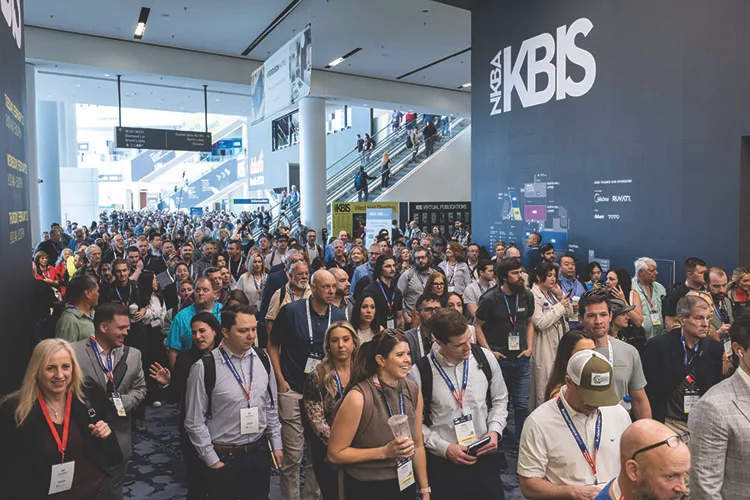
Moreover, the list of products supporting the initiative is ever-growing, as evidenced by exhibitors at the 2025 KBIS, owned by the NKBA, where brands launched many fixtures and technologies in line with sustainable plumbing solutions. Manufacturers are prioritizing smart plumbing systems with leak detection, usage tracking and automation features.
There has been recent growth in EPA WaterSense-certified products amongst exhibitors. The introduction of greywater recycling, touchless faucets and low-flow showerheads in recent years also points to a general shift toward sustainable design. Attending events such as KBIS provides a crucial launchpad for water-saving innovations, allowing wholesalers to gain early insight into what’s next for sustainable design and promote it to their own networks.
Looking ahead
Through KBIS and other association-led initiatives, the NKBA has long served as a platform for eco-forward brands to connect with specifiers and channel partners, promoting responsible design and product innovation through its research, education and brand partnerships.
At KBIS 2025, discussing the recent Windsor Declaration, Darcy expressed the need for a revolutionary discussion surrounding water conservation. “We don’t think about running out of water,” he said, “but it deserves the same consideration and attention as energy discussions in America. From a business perspective, we want to empower our network to talk about the brands they’re specifying with their clients. What are they doing to help the planet? What is their purpose?”
With those important conversations that extend the length of the supply chain, the industry will continue to see a trend toward newer, better and more sustainable water conservation practices.
By NKBA/KBIS.