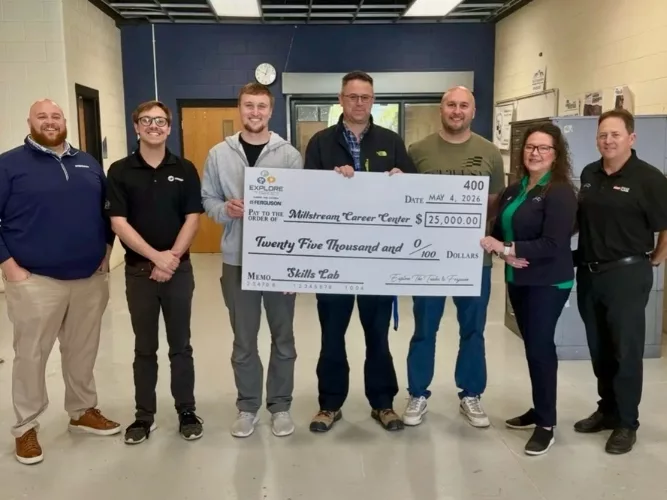
Through education, partnerships and community initiatives, Ferguson is working toward a goal of connecting 50,000 young people to the skilled trades by 2030 — helping more students see what’s possible and take the first step toward meaningful careers.
That goal is closely connected to another long-term need: the ability to build and maintain the homes and infrastructure communities rely on.
That need is clear. The average home in the U.S. is now more than 40 years old, and the country remains millions of housing units short of current demand. Older homes require ongoing repair, replacement and modernization, while new construction depends on skilled professionals across plumbing, HVAC, lighting, water systems and other essential trades. Billions of dollars are being mobilized to upgrade and replace critical water infrastructure.
Meeting those needs depends on dedicated, skilled tradespeople.
Rising Demand Meets a Changing Workforce
Large-scale infrastructure and capital projects continue to grow, and industry partners are working to connect more young people to careers in the skilled trades. More than 80% of contractors report actively seeking skilled workers for housing and infrastructure projects, creating meaningful opportunities for the next generation entering the field.
With AI and automation reshaping the workforce, skilled trades careers offer another important path for the next generation. This path is rooted in technical expertise, hands-on problem-solving and work that directly supports the infrastructure and essential systems communities rely on every day. For young people seeking stability, long-term opportunity and real-world impact, the trades remain a meaningful and future-focused career choice.
Expanding Access Through Skilled Trades Education Programs
Ferguson strengthens the skilled trades pipeline by expanding access to education and experience. Melissa Hazelwood, Director of Social Impact, says, "A strong workforce starts with providing real opportunities, support and clear industry entry points."
Programs like the Explore The Trades Skills Lab, Built by Ferguson, provide schools with industry-grade tools and equipment that help students gain hands-on experience to the trades. This early access can spark interest and help students better understand future career opportunities (learn more about the latest grant recipients and program expansion here).
Ferguson supports this work through:
- Partnerships with organizations like ACE Mentor Program of America, Trades for Tomorrow, Tools & Tiaras and the mikeroweWORKS Foundation.
- Programs that provide funding, mentorship, job shadowing and access to modern tools and technology.
- Local initiatives, including community-based experiences, field trips and job-site visits.
These efforts come to life through early, hands-on exposure such as middle schoolers exploring career pathways and girls building confidence and technical ability. Local Ferguson branches also create experiential learning opportunities in their communities, including a recent Southern Idaho visit where students toured a Ferguson Ship Hub and saw firsthand how distribution supports construction behind the scenes.
The Long-Term Impact of Investing in Skilled Trades
When Ferguson invests in and support the skilled trades, it is making a generational investment in people, families and communities. That commitment extends far beyond any one person or project, supporting students as they discover a calling, apprentices as they gain confidence and graduate as they build a career.
These young professionals become the builders, mentors and leaders who will help shape the homes, businesses, infrastructure and essential systems communities rely on every day. Through continued investment in education, partnerships and hands-on experiences, Ferguson is helping create opportunity today — and building a stronger, more resilient future for generations.



