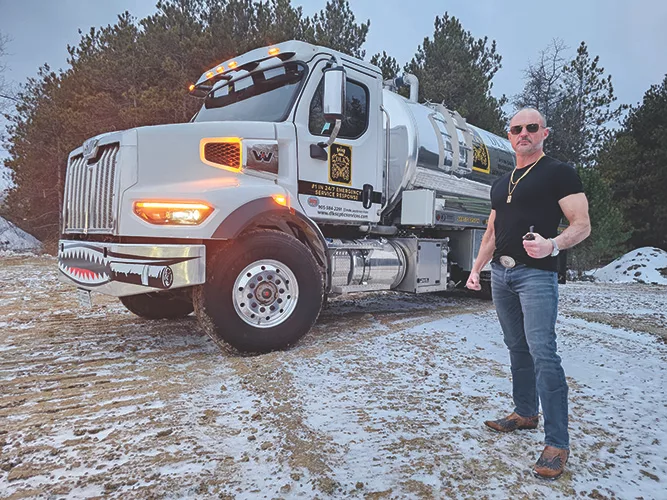
“You idiot! Do you realize you died last night in the back of that ambulance?” Shaun Carlyon was in the middle of a two-hour standoff with the police after reaching the tail end of a five-day bender. The night before, he had overdosed on cocaine and was revived by paramedics. Shockingly, he was out of the hospital just four hours later and quickly returned to the same cycle of paranoia and substance use. And no, he did not realize he had died. In that moment, the reality of how far he had spiraled hit him.
“I lost my life, and thank God I was brought back,” Carlyon says. “But after that night, I also lost my wife, my kids and my house. I had to leave to get help.”
After surviving childhood trauma, business failures and the psychological toll of firefighting, Carlyon, president of DLK Septic Services Inc., had reached the final breaking point in his lifelong battle with addiction. But Carlyon had risen from the ashes before, and he would do it again. And this time, he would use his hard-earned recovery to help other tradespeople stop suffering in silence.
Growing Up in the Shadow of Violence
Carlyon (pronounced Car-Lion) was born in Ajax, Ontario, Canada, in 1978. His parents divorced shortly after due to domestic violence, and his mother raised him alongside his stepfather. It wasn’t until Carlyon was an adult that he started piecing things together from his childhood that hadn’t initially made sense.
Carlyon realized that to spite his mother, his father had tried to murder him seven times. In one case while at his father’s farm, Carlyon was told to stand behind a van at the bottom of a hill while his father pushed an old truck downhill. Carlyon just happened to wander away moments before the truck smashed into the van.
“That was only one of many times where, as I started looking deeper into these events, I determined those weren’t accidents — those were setups,” Carlyon says.
Carlyon believes growing up in these high-risk situations he assumed were normal as a kid set the stage for his hypervigilance and addiction issues. He began using “mild” drugs and alcohol at the age of 12, around the same time he started his first job at a local golf course.
“I just wanted my family to be proud of me,” Carlyon says. “I would get praised for having a job, so it became a mindset: ‘The more I work, the more I get love.’”
Work, Work, Work
Following years of moving around, Carlyon’s family settled in Bolton, Ontario, when he turned 14. A “C student,” he did not have much interest in school. However, he enjoyed a class that ignited his passion for entrepreneurship and made him dream of starting his own landscaping company.
After graduating high school, Carlyon gained experience in the field working for a local landscaping business. In the off-season, he worked as a material handler for Husky Injection Molding. Eventually, he moved onto drywall installation with his father before working at Sears Canada as a forklift operator. He finally settled at Metro Canada Logistics loading trucks with 7,000-pound rolls of paper.
“I just worked, worked, worked,” Carlyon says. “I’d be pulling these wild 16-hour days trying to make money and save for a house.”
As he worked longer hours, Carlyon’s substance use worsened. He describes Bolton as a “party town” where you couldn’t show up to someone’s door without a full case of beer in hand. Heavy drinking and drug use became normal behavior for him.
From Forklift Operator to Firefighter
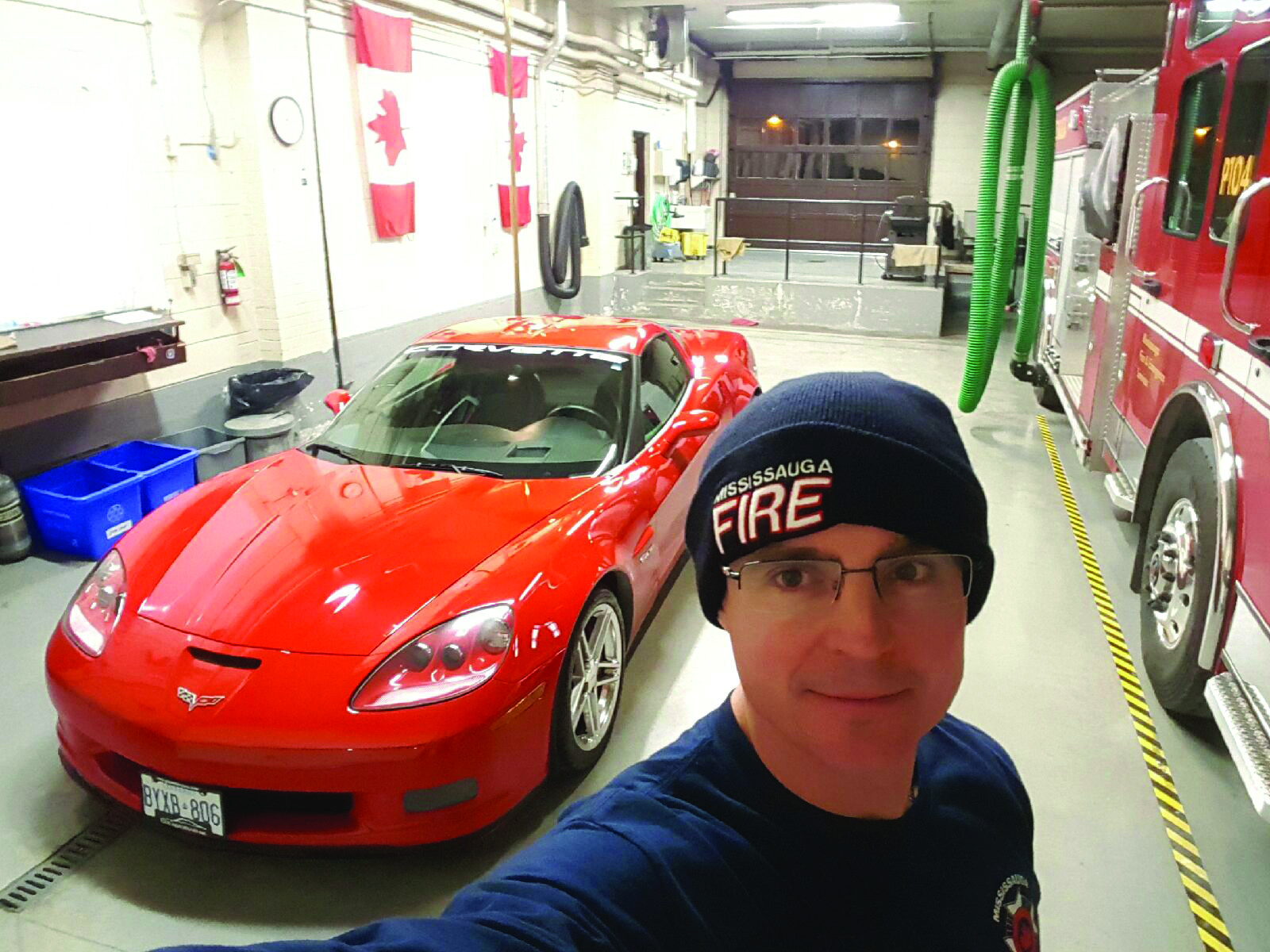
Carlyon’s hectic lifestyle was about to become even more so. In 2001, he decided to train to become a firefighter at Humber College in Toronto, Ontario. Carlyon also decided to enroll as a volunteer firefighter for the Caledon Fire Department. Accepted on the same day, he became the youngest firefighter in Caledon history at 22 years old. Carlyon was inspired by both his then girlfriend’s father and uncle, firefighters themselves, as well as an epiphany he had after visiting a friend out of town.
“My bus home stopped in about seven towns on the way, five of which had a fire hall with a fire truck parked in front,” Carlyon says. “I just thought, ‘You know what? That looks like something I want to get into.’”
Although he was fulfilling his new dream, the workload added up quickly. He would leave an 8-hour shift at Metro Canada Logistics at 11 p.m. and started his mornings at 4 a.m. at another company dropping off propane along a delivery route — before heading back to Metro Canada for another afternoon shift. In the winter, Carlyon also had a job with his now wife’s same uncle, Peter, running a backhoe and snowplow.
For nearly two years, Carlyon pushed through his relentless schedule while taking exams and applying for competitive full-time positions at local fire departments. He finally got hired by the Mississauga Fire Department and quit most of his other jobs. But, just as Carlyon’s career began taking off, life dealt him a series of devastating blows. First, his stepfather died from a heart attack the day after Father’s Day.
“I was supposed to see him on Father’s Day, and I canceled,” Carlyon says. “That haunted me for years, because I didn’t get to say goodbye.”
A year later, Peter, who mentored Carlyon and helped him get on the Caledon Fire Department, passed away at 46 from colorectal cancer.
Carlyon picked up Peter’s snow removal contracts for the region and started his first business, J-Rock Inc., in 2004. After working 24-hour shifts at the fire hall seven days a month, Carlyon would then work another 10 or 12 hours at J-Rock. One-hundred-twenty-hour work weeks became the norm.
An Intervention
During that same time period, Carlyon lost six extended family members. His drug addiction went to the next level, and he began using “hardcore” drugs more frequently to address his pain and suffering. He reached the point where he was only eating and sleeping seven times a month when he would work his shifts at the fire hall.
“Let the record show I wasn’t doing this for fun anymore,” he says. “The first year or two of doing it was fun. And then after that, it was just an absolute nightmare. I realized, ‘Oh my God, I can’t stop myself.’”
Ashamed, Carlyon didn’t know where to turn. In the firefighting world, he says addiction and mental health issues run rampant but are rarely discussed openly due to the fear of being blacklisted. Thankfully, in 2007, Carlyon’s loved ones held an intervention. He took his first trip to rehab in Quebec, leaving his pregnant wife to get much needed help. After four months, Carlyon was able to properly grieve the losses in his family.
Feeling renewed, he and his wife moved from Bolton to Tottenham and had their first child, Drew. But six months later, he reconnected with a man he met in rehab.
“I made this stupid error of experimenting and thinking, ‘This time will be different.’ Only it was worse, and now I was back on the drugs,” Carlyon says. “I was back to living in silence, and I was hiding it so well.”
Carlyon continued to experience major life changes as well. He and his wife had their second child, Luke, 18 months after Drew. In 2012, his father passed away, further worsening his addiction issues until he took his second trip to rehab in 2014. His 45-day stay was a “huge eye-opener.” Carlyon was able to discover and unpack his childhood trauma with his father, and he also began dealing with his anger issues toward people who had wronged him.
Relapse
Carlyon found himself swinging to the other extreme when he returned from rehab. Still maintaining his sobriety while on a 14-month parental leave from the fire department to prepare for the birth of his daughter, Kate, Carlyon worked with a partner to start a new business focused on landscaping, demolition and excavation — J-Rock Ontario Inc.
“I realized I traded one addiction for another,” Carlyon says. “I got off the drugs, but now my addiction was work. I went from very little work-life balance to absolutely no work-life balance at all.”
However, business soared — so much so that many of his firefighter colleagues had made bets he wasn’t going to return. Carlyon was still passionate about helping people, so the decision to come back made sense for him. When his paternal leave was over, he returned to the fire department at a new station, even taking on a new leadership role as the acting captain whenever the main captain was out.
On his third shift back, the department received a code blue call for a suicide attempt. A man had jumped in front of a train, and when Carlyon went to retrieve him from the tracks, the situation hit him harder than he expected after so long away from the job.
“I’m lifting him, and I’m just thinking, ‘Why is he so light?’” Carlyon says. “Well, he’s missing his leg; He’s missing his arm. I’m trying to stop a massive bleed and keep him alive, and it was as though he was a big ball of fabric all twisted up.”
Despite the crew’s efforts, the man passed away, and the experience led Carlyon to relapse again. This time, he didn’t even try to hide it.
“Everybody knew I was using,” Carlyon says. “I didn’t care. So now, I’m just like this animal — I was so filled with ego and pride that I didn’t even realize were in me at the time.”
Financial Ruin
Even at the height of his addiction. Carlyon’s entrepreneurial spirit prevailed. Unhappy with his business partner, he decided to close J-Rock Ontario. In 2017, he opened J-Rock Landscape and Construction Inc., which specialized in excavation in sewer and water mains. The company expanded at a rapid-fire pace and soon reached $5 million in sales.
“I had no idea what I was getting myself into as far as commercial work, where there’s a completely different set of rules,” he says.
It turns out that to reach $5 million in sales, J-Rock Landscape and Construction had spent $6.3 million. While studying to become a full-time captain at the fire hall, Carlyon asked his general manager to temporarily run the business. Within just two months, the company lost $1.3 million. By the time Carlyon had caught on, it was too late.
“The biggest mistake I ever made was trusting someone else to run my dream business and take care of it,” Carlyon says. “I took my eyes off of the prize.”
He owed a lot of people a lot of money. In damage control mode, Carlyon sold his commercial properties, took out a second mortgage on his house and borrowed loans to pay off his debts to others. But now, he had his own debt that he had to pay off.
“I had three options: go bankrupt and never show my face again in the community; kill myself for the $1 million life insurance policy so my wife could pay out the debt; or stay and fight,” Carlyon says.
He chose the third option, and Carlyon decided to return to rehab.
PTSD
Carlyon’s third trip to rehab forced him to confront the psychological toll his firefighting career had taken. He realized he was experiencing post-traumatic stress disorder (PTSD) from the 33 suicide calls he took throughout his time on the job, on top of the thousands of other calls he was exposed to.
One particular call that had stuck with Carlyon was a father who shot himself at home. The man’s three young daughters screamed in terror the entire time Carlyon was on the scene.
“The sound of screaming girls haunted me,” he says. “Well, what do babies do? They scream. When my daughter was born, her cries drove me up a wall and I couldn’t listen to them.”
Carlyon moved forward with new tools to address his PTSD after completing his third round of rehab. He also worked toward paying off his debts and stabilizing his business. Carlyon was even ready to launch another company, DLK Paving Inc. Then, COVID hit, and he decided to back off. J-Rock Landscape and Construction had grown too fast, and the correct people and systems weren’t in place to handle the challenges of the pandemic.
“Getting up every day to grind it out and go to work knowing I was losing was one of the hardest things I ever had to go through,” Carlyon says.
He refused to give up and was able to finish every job he committed to, even though it meant taking on more debt again. During the chaos of it all, he relapsed. By late 2020, the emotional weight of his firefighting career had also reached a breaking point when another suicide call came in.
When Carlyon and his crew arrived, they found a man hanging from a tree. Carlyon’s heart dropped when he initially mistook the victim for one of his closest friends. After cutting him down and removing his glasses, he realized he was mistaken — though the resemblance was striking.
“I remember saying to myself, ‘I can’t do this anymore. This job is literally killing me,’” Carlyon says.
That’s the day he decided to leave the fire department. Carlyon’s only regret was that he didn’t get to say a proper goodbye to his colleagues.
“I just could not do that job anymore to the capacity that I was able to do it before because of the severe amount of trauma I was exposed to,” he says. “It hurt to leave, it really did.”
The Final Benders
Carlyon continued to work on his business for the next few years between bouts of relapses and wild benders.
In January 2024, he spiraled into a drug-fueled psychosis, convinced someone was trying to kill him. Sitting in his home office with a loaded handgun, Carlyon heard a noise and fired — emptying the magazine inside his house. Believing he had been shot, he ran into the freezing cold morning screaming for help until a neighbor rushed him to the hospital.
“That was one of the most embarrassing moments of my life,” Carlyon says. “I was such a responsible gun owner, and I’d never done anything like that before.”
The incident pushed Carlyon to commit to his sobriety for the next seven months until he experienced two terrifying events with his children. After picking up Luke from summer camp, a torrential downpour suddenly hit the highway, causing Carlyon to lose control of his beloved Corvette.
“I’m spinning out of control and Luke’s about to be t-boned and killed,” Carlyon says. “At the last second, I pulled the emergency brake to spin my car around, because if someone was going to die, I wanted it to be me, not him.”
Miraculously, both escaped unharmed — but just two days later, the best friend of Carlyon’s other son, Drew, died in an ATV accident.
“It ate me alive: ‘That could have been me. That could have been Luke,’” Carlyon says. “And I saw what it did to the community, I saw what it did to the boy’s father. I couldn’t take it.”
Carlyon relapsed, and a few weeks later, died in the back of the ambulance.
A New Approach to Recovery
This bender was the straw that broke the camel’s back. Given a second chance at life after being revived by paramedics, Carlyon decided to try a new approach to fight his addiction issues. He found a sponsor through an Alcoholics Anonymous (A.A.) program and lived with him in his house rather than return to a rehab facility.
“My life was a dumpster fire, and I was trying to survive,” Carlyon says. “All I did was focus on getting sober properly and examining why I kept returning to drugs and alcohol.”
As part of the recovery process, his sponsor tasked him with creating a resentment list — a written inventory of the people and experiences that still fueled anger or blame in Carlyon’s life. After 100 hours of handwritten notes, it stretched to 96 names.
For each individual, Carlyon had to identify his role in the conflict, no matter how large or small. Then, after accepting ownership of his role in all the resentments, Carlyon had to forgive everyone.
“I decided to get rid of all this dog shit in my pockets I was holding onto that was killing me,” Carlyon says. “The anger and mental energy I was wasting every day thinking about old resentments — done. I forgave them all.”
Carlyon also made amends with people he had hurt over the years and asked for their forgiveness, focusing on “cleaning up his side of the street.” At the time of writing, he’s on his 18th month of sobriety — the longest stretch he’s ever gone.
This past year, Carlyon has focused on setting daily routines to help him rebuild and love himself. He wakes up at 4:30 a.m. every morning and meditates, frequently spending time in the sauna, doing cold plunges and red-light therapy, and exercising.
“Just like you brush your teeth and wash your body, I’m washing my brain in the morning before I go to work,” he says.
DLK Septic Services
Today, the foundation of Carlyon’s recovery is simple: take care of himself first. The discipline that once fueled his relentless work schedule has been redirected toward something more sustainable, and the change is clear at DLK Septic Services. Carlyon says he now has more mental clarity, with room to breathe and focus that he didn’t have in his prior businesses.
DLK traces its roots back to Carlyon’s neighbor and beloved community member, Brian Snell. In late 2021, shortly after Carlyon retired from the fire department, Snell asked Carlyon if he wanted to buy his business out. His offer was a four-year-old pump truck and a phone number that had been serving the area since 1950. Snell also challenged Carlyon to get his On-site Sewage (Part 8 of the Ontario Building Code) license and take the Ontario General Legal/Process exam.
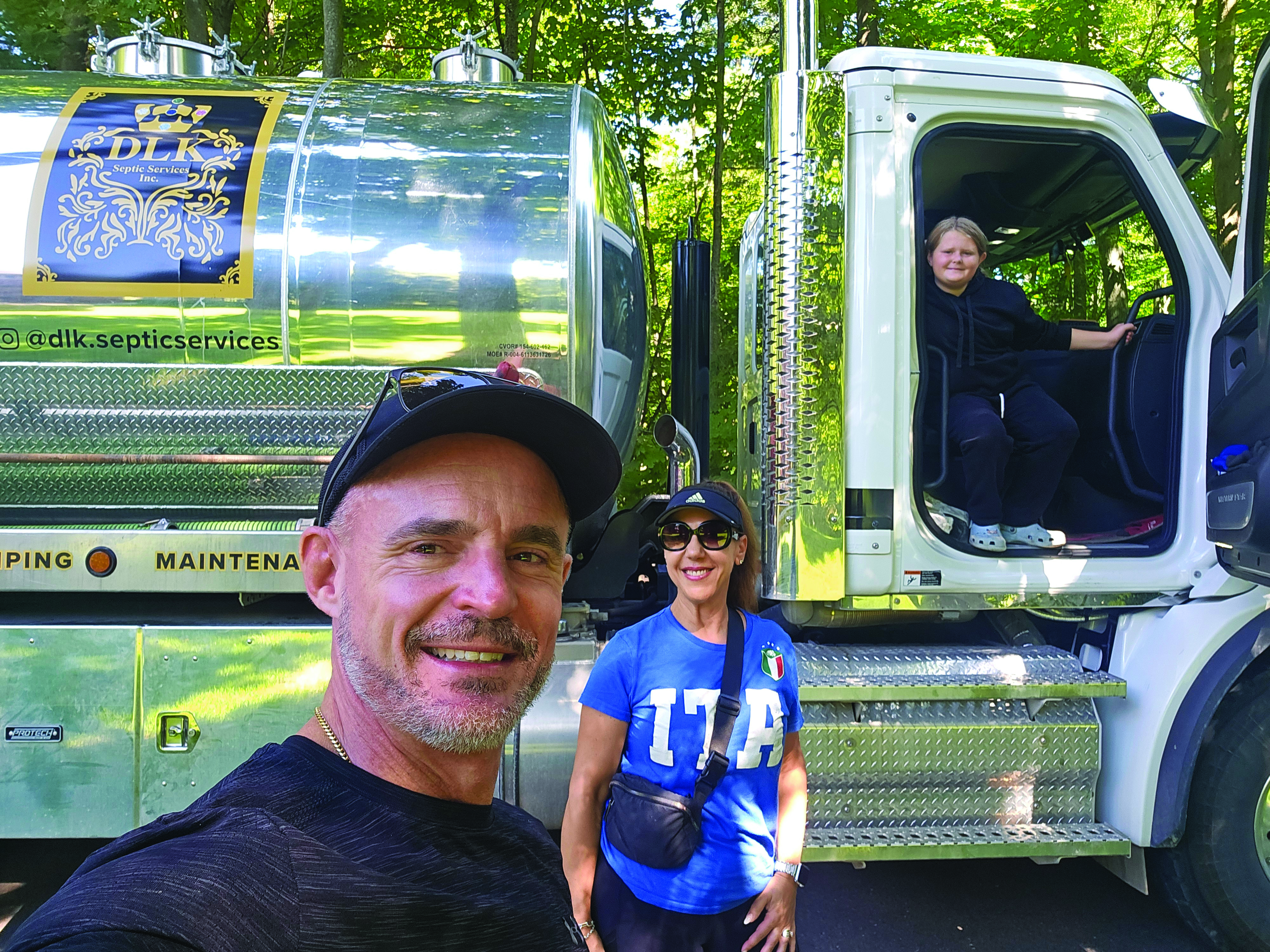
Carlyon complied, and after he had closed out his jobs at J-Rock, he slowly shifted his focus toward his new septic business — which he named after his three children.
“I’m proud of the septic industry,” Carlyon says. “It reminds me a lot of firefighting because we also make emergency calls after hours, on weekends and during holidays. There are a lot of correlations, like driving trucks, pulling hoses and helping people. I just love it.”
Let’s Talk Sh*t Show
In December 2025, while Carlyon was on one such emergency septic call, he had a sudden realization while speaking to his girlfriend, Luisa: He wanted to launch a podcast at the 2026 WWETT Show the following February.
The idea seemed like a natural next step for Carlyon. He’d been helping people most of his life as a firefighter and received help in return from countless others during his journey to sobriety. The podcast would be his way of giving back.
“I have so much experience in so many things that I know people are going through in their own lives, but they’re ashamed to talk about,” Carlyon says. “We need to be more mindful that people are living in silence, and we’re losing them because of it. I want to talk about the real shit people go through — no fluff, no glamour.”
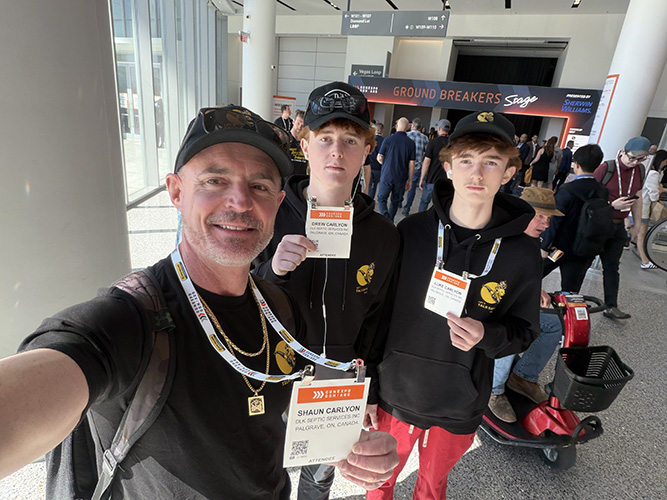
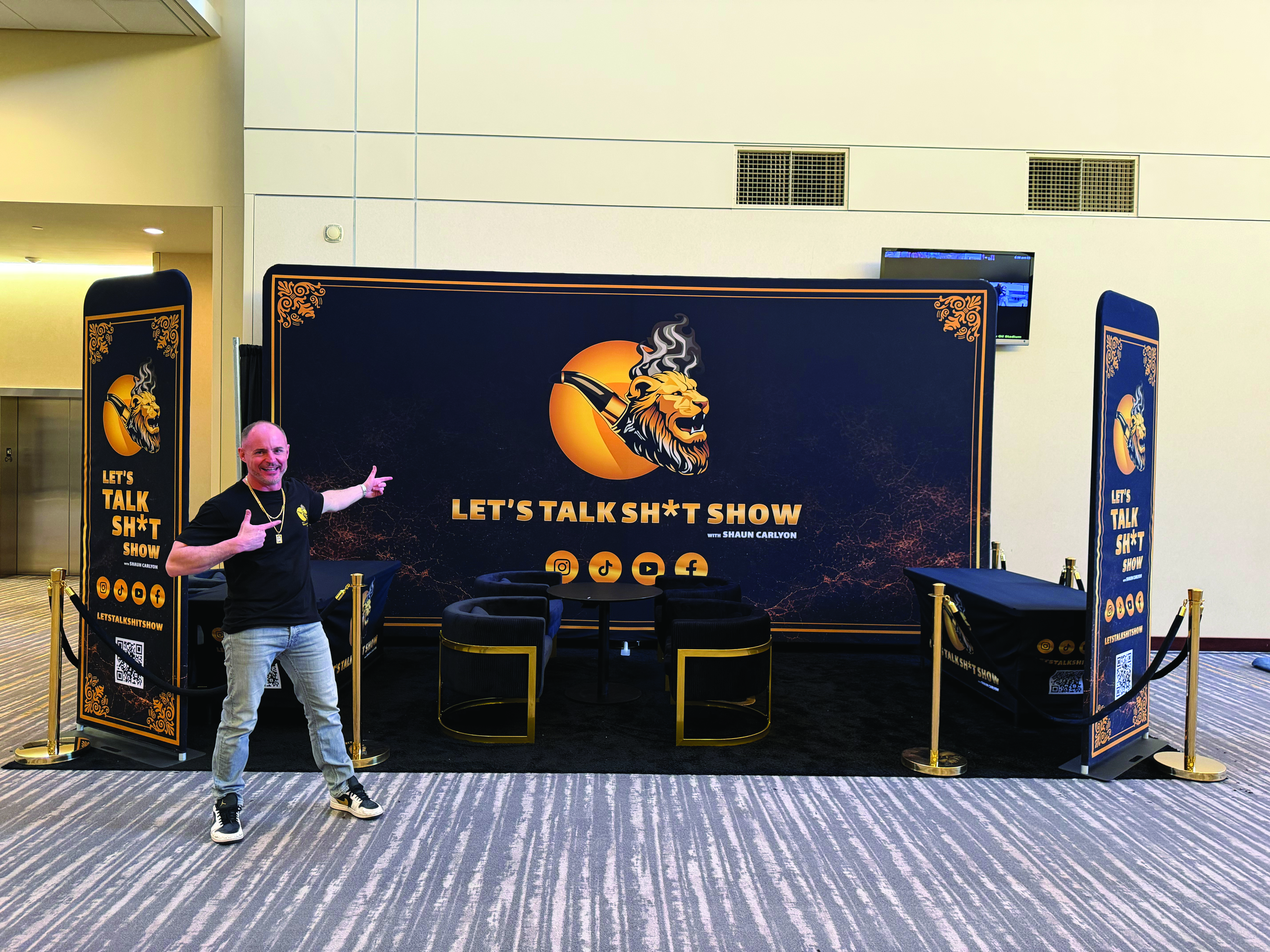
With the goal of giving people the courage to speak up in a safe space, the Let’s Talk Sh*t Show was born. Carlyon and Luisa worked to assemble a marketing team, and over the course of three days at WWETT, they held more than two dozen interviews with individuals across the wastewater industry.
The response they received from attendees was powerful and provided confirmation for Carlyon that he was on the right path. He’s excited to see what’s in store for the podcast — both at future trade shows and through its regular episode releases each week.
“No drug will ever replace the high I’m getting from helping others right now,” Carlyon says.
Never Giving Up
Beyond the podcast, Carlyon aims to bring these conversations to even larger audiences through public speaking and a book he plans to publish within the next year: “Out of the Flames.” He hopes through his work, he can help other entrepreneurs and business owners avoid the same mistakes he made.
“I know for a fact that any die-hard entrepreneur has lost something on the way to getting to where they are,” Carlyon says. “I’m tired of hearing people say, ‘Oh, you’ve got to man up and grind it out.’ There are tolls to pay for that, and I’ve paid them all. The ultimate one was losing my life and family.”
Since becoming sober, Carlyon has worked to repair his connection with his children and describes his current relationship with them as “amazing.” He says he has been able to spend more quality time with Drew, Luke and Kate, now all between the ages of 11 and 17. They also enjoy attending trade shows together, which Carlyon hopes will inspire them and open their eyes to all the opportunities there are in the trades.
Looking at where he is now compared to just two years ago, Carlyon has one key piece of advice for others.
“Never give up,” he says. “There are so many times I fell flat on my face, and I still got up. I have no idea how I’m still alive. But every time, I just dusted myself off and did it again. Just get out of your own way; There’s help out there.”