The behavioral health sector is one of the fastest-growing segments in the healthcare construction industry. The American Society for Health Care Engineering’s 2025 Healthcare Construction Survey (https://bit.ly/4mWuYq5) reported that 45% of respondents working on specialty hospital projects are involved in behavioral health projects. Since 2015, behavioral health/psychiatric hospitals have ranked No. 1 in specialty projects.
Facilities dedicated to behavioral health are designing every room to be ligature-resistant, regardless of risk level. Previously, solutions were based on patient and room risk levels, with some rooms being ligature-resistant and others with traditional fixtures. Now, fixture selection leans toward all ligature-resistant solutions.
Acute-care hospitals are transitioning between 10% to 30% of patient rooms and emergency rooms to be fully ligature-resistant.
This trend includes ligature-resistant drains, as drains have been reported in self-harm and suicide attempts. Zurn added the Z415-LR drain to its portfolio to meet the demand for better ligature-resistant drains. It is ligature-, looping-, cut- and wedge-resistant, with superior water evacuation at 7.5 gallons/minute at 1/2-inch head. Zurn developed ligature-resistant strainers to quickly retrofit traditional rooms into ligature-resistant rooms.
Focus on sustainability
Hospitals can achieve plumbing-related sustainability goals in three ways: seeking products with long life cycles, looking for products with long-life replacement parts and tracking sustainability milestones.
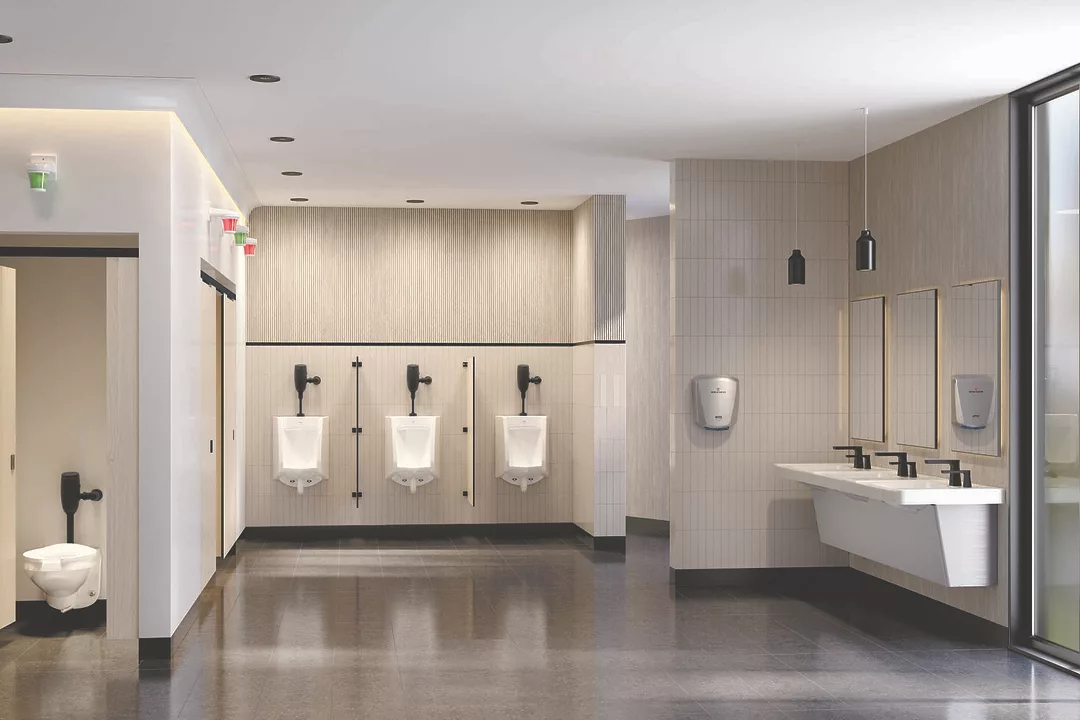
Hydro-technology in faucets and flush valves meets these standards. A turbine engine generates its own energy with a few activations per day, reducing electricity consumption. The two backup batteries last 10 years, or the life of a typical commercial restroom, reducing energy consumption and the need for battery purchases.
Connected faucets enable hospitals to set flushing protocols based on water volume, mitigating the risk of Legionella sustainably. Manual flushing wastes water, as it occurs regardless of faucet activation or water volume. Flushing with Zurn’s patented plumbSMART connected system enables hospitals to flush based on a pre-set schedule or water volume, providing safety and sustainability. The system detects water flow through each faucet and initiates a flush if a preset parameter isn’t met, flushing only when necessary.
Faucets using gear-driven ceramic cartridge technology instead of traditional solenoids are less susceptible to debris and buildup, leading to fewer maintenance issues and longer lifespan, typically exceeding one million cycles. The ceramic cartridge withstands chlorine, monochloramine and extremely hot water temperatures, extending its life.
Flush valves can last longer with thermoplastic elastomers than with traditional black rubber material. In addition to being more resistant to chemicals, thermoplastic elastomers conserve water, since they don’t break down like rubber filters, preventing run-ons, leaks, inconsistent flush volumes and double flushing.
Smart solutions to improve water safety
System flushing enhances water quality and safety by minimizing environments that promote biofilm and Legionella, reducing stagnation, decreasing water age and increasing the reach of supplemental disinfection. The best practice is to flush each faucet for five minutes on both the cold and hot lines, first flushing the cold side for five minutes, then the hot side until it reaches max temperature, then flushing both for an additional two minutes.
In the healthcare setting, flushing isn’t only a good idea, it’s required. Both the Centers for Medicare and Medicaid Services and the Joint Commission require regular flushing, and hospitals that are out of compliance can lose Medicare and Medicaid reimbursement.
Most hospitals have an assigned staff person to manually flush faucets, with some implementing weekly protocols and others flushing based on occupancy levels; however, this approach invites inconsistency and human error.
Remote automated flushing enables hospitals to flush outlets based on water volume, tracking water flow through each outlet and programming flushes based on volume parameters or schedules.
At 15 minutes/outlet/week, a 300-room hospital with two outlets per room would save 7,800 man-hours/year for an annual savings of $230,000. Automated flushing all but eliminates this expense while conserving water.
It also ensures flushing is done correctly and for the allotted time, and it generates documentation to prove proactive Legionella risk mitigation in the event of legal or regulatory challenges. Automated flushing may also help lower health systems’ insurance premiums.
Technological innovations driving operational efficiency and labor savings
New hydro-power and gear-driven faucets lead to increased efficiency by lowering maintenance, repair and operations (MRO) expenses, reducing labor hours and costs, and decreasing maintenance issues.
Gear-driven ceramic cartridges last longer than solenoids, have lower operation costs and don’t break down from chemical exposure or high water temperatures. With no water hammer, the faucets perform better, and the sensor can be adjusted to preferred activation, resulting in fewer complaints. Predictive maintenance insights allow facility teams to schedule maintenance routines smartly and proactively.
Hydro-powered flush valves also benefit hospitals, with reduced MRO expenses due to fewer diaphragm purchases and no battery requirements for 10 years. The triple-filtered liner diaphragm design results in fewer leaks and clogged toilets, and withstands chlorine, monochloramine and high water temperatures more effectively. Usage insights from the connected platform allow for efficient maintenance scheduling, reducing labor hours and overall expenses.
Hospitals will see reduced labor hours spent on changing batteries, adjusting sensor activation, replacing solenoids and diaphragms, and fixing leaks and backed-up toilets all for about the same cost as traditional sensor faucets.
Based in Cary, North Carolina, Bob Carter is product manager for Zurn Elkay Water Solutions’ commercial brass business. He has more than 25 years of experience in the commercial plumbing industry, mostly focused on water conservation product development, including introducing the first pint-flushing urinal to the market. Carter holds four patents and earned both his bachelor’s in mechanical engineering and plastics engineering and his MBA from Penn State University.