Wholesale distributors and manufacturers in the HVAC, plumbing, and PVF sectors face a unique challenge in their warehouses: extreme variation in product size, shape, weight, and material-handling requirements. Within the same facility, goods can vary from small parts, such as fittings and valves, which are often palletized, to bulky air-handling units, coils and long pipe. Managing warehousing space safely and efficiently is increasingly complex with this challenging scenario.
Considering all the above, many companies are finding that their current warehouse layouts and conventional material handling equipment are unable to maintain safe, efficient operations and are no longer fit for purpose.
Optimizing warehouse space
Poor layout design leads to wasted space, double-handling of materials and product damage, which raises operating costs and limits productivity.
When available warehouse space becomes tight or insufficient, expanding or relocating to new facilities can be costly, disruptive and long-lasting.
In today’s competitive world, where every square foot counts and land prices continue to rise, optimizing existing storage space has never been more crucial.
Maximizing current facility space offers a more efficient, sustainable and cost-effective solution, while unlocking new potential without major investment or downtime.
Material handling specialist Combilift’s “improving, not moving” approach is a practical strategy. It ensures that every square foot of a warehouse facility is optimized, avoids bottlenecks in material flow and offers numerous advantages in terms of costs, efficiency and sustainability.
For wholesale distributors and manufacturers in the HVAC, plumbing and PVF sectors that handle a wide range of products, the right warehouse design is not only an operational consideration but a strategic advantage. A smart layout maximizes storage, improves flow and enables faster, safer handling that keeps loads moving, orders fulfilled and customers satisfied, all without expanding footprints.
Smarter solutions for material handling
From the perspective of material handling equipment, best practices now lie in using smarter, more versatile models that support lower emissions, higher storage density and safer, more flexible operations.
Every material handling operation is unique, but the challenge is always the same: how to store more product, move faster and work safer within the same footprint. Traditional forklifts often require wide aisles, particularly when handling long or awkward loads. Wide aisles and inefficient flow patterns waste valuable floor space that could otherwise be used for storage.
By choosing the right material handling equipment, companies can increase storage capacity by up to 50% within their existing buildings without expanding their facilities. Narrower aisles, improved flow patterns and better use of vertical space allow operators to unlock capacity.
A strong example of this approach comes from Writech Fire Protection, a fire sprinkler systems specialist with more than 40 years of industry experience. As its business grew, the company began running out of space and considered relocating to a larger warehouse to provide additional storage capacity.
Dessie Baker, Writech’s operations supervisor, chose the Combilift Aisle Master articulated forklift to significantly increase the company’s existing storage capacity, efficiency and productivity without requiring relocation.
“We’ve gone from storing about 200 pallet spaces to being able to accommodate up to 760,” he explains. “And the height has also increased.”
With lift capacities of up to 6,000 lb. and both indoor and outdoor operation, the forklift can operate in aisles as narrow as 72 inches and can lift up to 49 feet high, enabling up to 50% more pallet positions within the same footprint.
Using the right material handling equipment along with simple layout changes, such as narrowing aisles and raising racking height, optimizes vertical space and maximizes storage capacity.
This approach avoids costly and disruptive relocations, boosts throughput, and cuts travel distances.
Warehouse layout design for space, efficiency and growth
However, wholesale distributors and manufacturers in the HVAC, plumbing and PVF rarely handle pallets alone. Long and awkward loads, such as piping, are also part of their product portfolio.
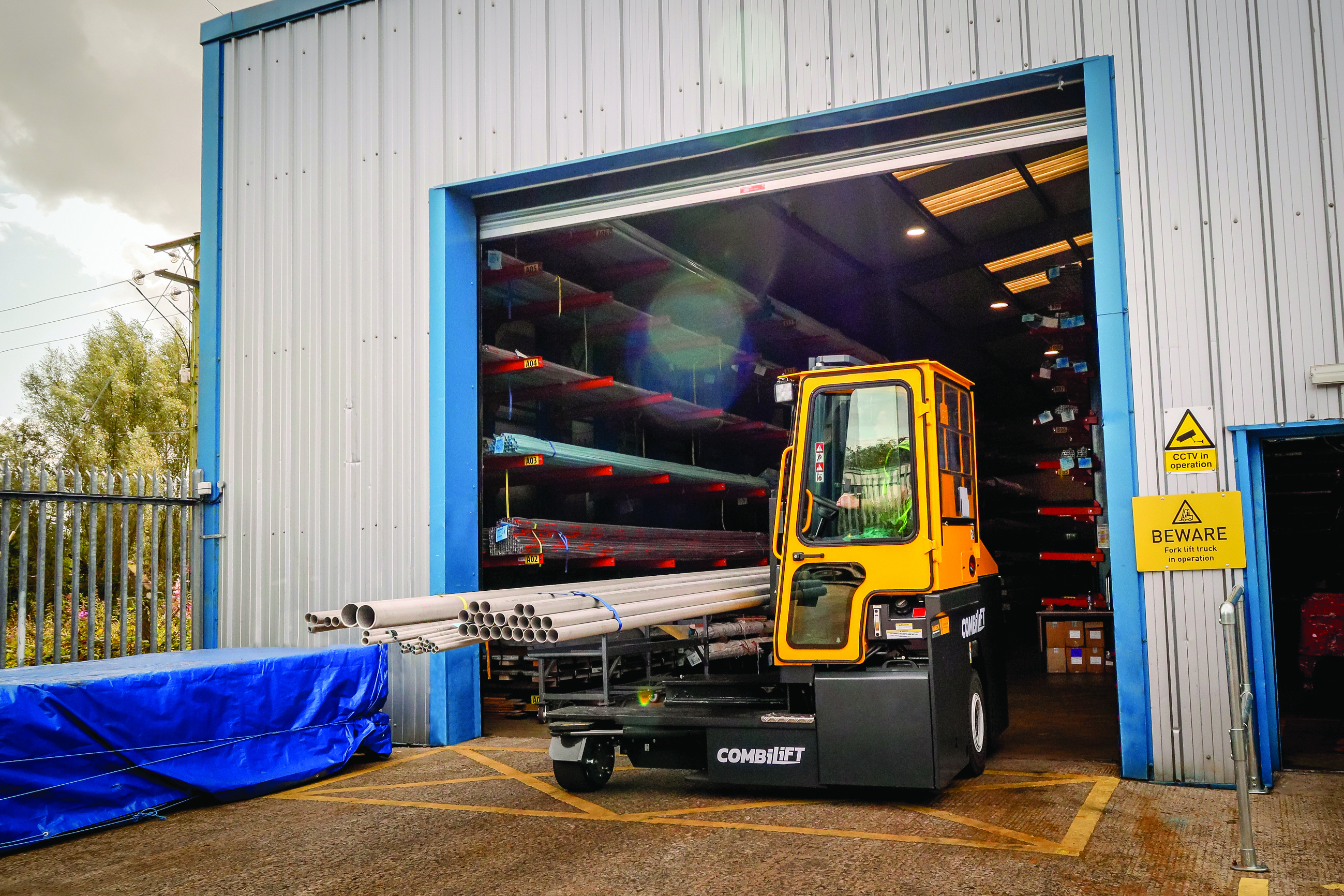
Handling long loads can be difficult with standard forklifts, as they require wide aisles to maneuver safely. Multidirectional models, such as the Combilift C-Series and Combi-CB range, overcome this challenge by travelling sideways, allowing operators to move long and bulky materials easily through narrow aisles, doorways and confined spaces.
This sideways travel eliminates the need for overhead carrying and significantly reduces the risk of collisions, injuries or product damage. Additionally, it allows for better and cost-effective use of all available space, resulting in a safer working environment. Further safety features include exceptional operator visibility and a low center of gravity, allowing for low-to-the-ground load movement.
“It has been a game-changer for us; we’re probably able to store twice as much, and we can pick it twice as quickly,” Baker says. “It really has helped with the growth of the company.”
Sustainability and energy efficiency
By storing more per square foot, operators can heat, light and maintain smaller buildings, leading to lower total energy use and a smaller carbon footprint.
Combilift offers customers a free, no-obligation customized warehouse and yard design from its dedicated in-house team of design engineers and layout consultants.
By reducing aisle widths and using vertical space, companies can achieve up to 50% more capacity while improving workflow and safety.The intelligent layout enables racking to be positioned closer together, making full use of every square metre, lowering operational costs, and eliminating the expense and disruption associated with building expansion.
Maria Sanchez is a marketing assistant with Combilift.