Nearly one in five tons of the nation’s greenhouse gas emissions comes from household appliances. That’s a big number, and it means our trade is sitting right in the middle of the energy transition helping homeowners navigate new technologies while identifying products that balance performance, affordability and sustainability.
Contractors who know how to talk about energy-efficient water heating appliance options have the edge. Homeowners are asking about this equipment, codes are tightening up and the DOE keeps raising the bar. The contractors who get ahead of this won’t just be checking boxes, they’ll be the ones customers call first.
“Decarbonization” sounds like just another buzzword. But HVAC customers aren’t asking about carbon credits. What they are interested in is cutting their energy bills and extending the value of investing in a new water heater over the system’s lifetime. When a contractor can show them how a heat pump water heater cuts their annual energy costs from $750 down to $170, that’s a conversation that sells itself.
The combination of performance, compliance and cost savings makes decarbonization a practical path forward for both installers and their customers. When a contractor can explain why spending a little more upfront means a lot less spent over the next 10-15 years, these systems practically install themselves.
What contractors need to know
Electrification: Water heating is one of the easiest places to start when a homeowner wants to cut emissions. By drawing warmth from ambient air rather than generating it through electric resistance, heat pump water heaters deliver the same hot water while using a fraction of the energy.
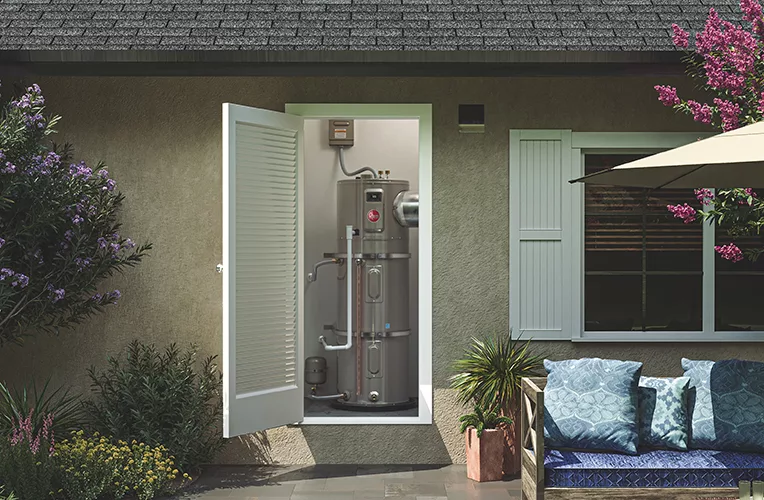
For example, Rheem’s ProTerra is up to four times more efficient than a standard electric tank model. Four times. That’s the kind of number that makes homeowners stop and listen, especially when utility rates aren’t getting any cheaper.
Virtual power plants: This one’s a little more next-level, but it’s coming fast. Virtual Power Plants, or VPPs, connect devices such as heat pump water heaters or, for that matter, solar panels or electric vehicle chargers, to the power grid so utilities can manage energy demand in real time.
For contractors, installing water heaters that operate during off-peak hours reduces grid strain, supports renewable energy adoption and, in some cases, protects communities from outages. As utilities expand demand-response programs, professional installers who understand and install VPP-ready equipment will be essential partners in building resilient, efficient communities.
Energy efficiency: Homeowners can always make a significant impact by upgrading to high-performance systems that consume less energy and, therefore, lower monthly costs.
A standard 65-gallon electric heater meeting minimum DOE efficiency uses about 5,300 kWh annually. Typically, that will cost $750 to operate. Swap it for a heat pump model, however, and the energy use drops to 1,225 kWh per year, or around $170 annually.
Energy savings along with a smaller carbon footprint makes a great case that contractors can back up with math when telling customers their options to upgrade their water heating appliances.
High efficiency gas: Electrification isn’t aways the best choice for every project. Maybe the house doesn’t have the electrical capacity. Maybe the customer just isn’t ready to make the switch. When that’s the case, high-efficiency condensing gas water heaters are a great option.
Condensing units capture heat that would normally vent out and puts it back to work through a secondary heat exchanger. These appliances can hit a Uniform Energy Factor of 0.96, which means less wasted energy and lower monthly bills. Contractors can still save customers money by steering them toward high-efficiency units that will only add up over time.
Leading the transition
The water heating market is changing, and the contractors who figure this out first will lead the way. Whether it’s installing heat pumps, hooking into VPPs, or choosing high-efficiency gas units, contractors can provide plenty of options to their customers.
With the DOE’s 2029 standards on the horizon, now’s the time to get familiar with what’s coming. Decarbonization isn’t a one-size-fits-all. It’s about knowing your options, understanding what your customer needs, and being able to explain the payoff in plain English. Do that, and you’ll be the contractor to call.
Scott Petty is senior product manager for Rheem.